








The R151bn Property Portfolio SA could unlock
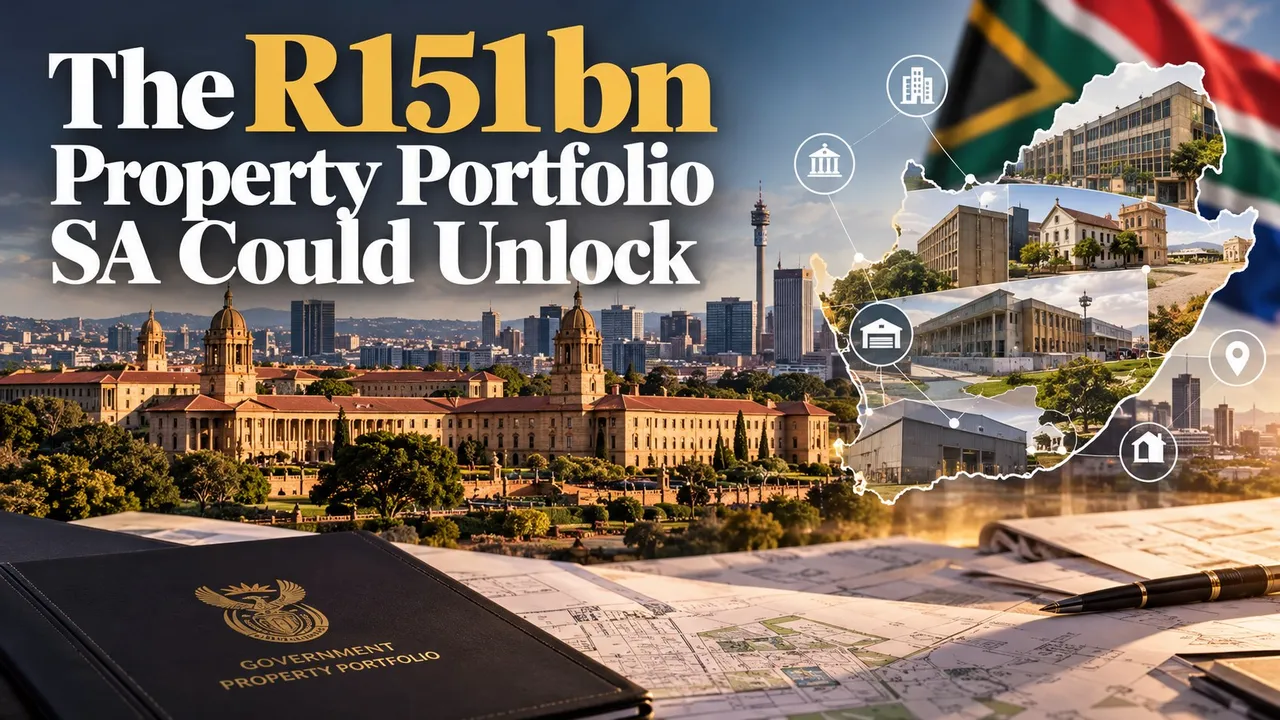
Government controls a vast R151bn property portfolio. Better data, active management and smarter repurposing could unlock significant value from these assets.
- National government is estimated to control more than 80,000 property assets with a combined value of approximately R151 billion.
- Better data could identify which properties should be retained, leased, improved, redeveloped, repurposed or sold to release capital for other priorities.
- Galetti CEO John Jack says the starting point is visibility: understand what government owns, how it performs and what each asset could become.
One of South Africa’s biggest property opportunities
What if one of South Africa’s largest untapped property opportunities is already owned by the state?
National government is estimated to hold more than 80,000 property assets valued at around R151 billion. To put that scale into perspective, some of South Africa’s biggest listed property companies manage substantially smaller domestic portfolios.
Redefine’s South African portfolio comprises around 228 properties valued at approximately R67.8 billion, while Growthpoint’s South African portfolio comprises approximately 300 properties valued at R65.6 billion, excluding offshore assets.
Government’s portfolio is different. It includes offices, land, operational facilities and properties serving a wide range of public functions. But the comparison demonstrates the extraordinary scale of the asset base and raises a critical question: Could South Africa extract significantly greater economic and public value from property it already owns?
For John Jack, CEO of Galetti Corporate Real Estate, the answer begins not with selling buildings, but with understanding them.

“The public sector has an extraordinary asset base. The question is how we create greater visibility around those properties so that better decisions can be made about what each asset could become.”
Jack recently addressed the subject at the 16th Annual Public Sector Property & Asset Management Conference, arguing that better data, visibility and active portfolio management could transform the way public property is managed.
The opportunity in numbers
The scale alone makes the portfolio strategically important:
- 80,000+ estimated national government property assets
- R151 billion estimated portfolio value
- R67.8 billion approximate value of Redefine’s domestic portfolio
- R65.6 billion approximate value of Growthpoint’s domestic portfolio
But the R151 billion valuation is only one part of the story.
The bigger opportunity is understanding what every property is doing.
- Is it occupied?
- Is it underutilised?
- Does it generate income?
- What does it cost to maintain?
- Could it accommodate another government department?
- Could part of the property be leased?
- Could it be redeveloped?
- Could it support housing?
- Could it be repurposed?
Or would government create more value by selling it and deploying the capital elsewhere? Those questions turn a property register into an asset-management strategy.
Seeing the opportunity more clearly
Imagine a decision-maker being able to view the national property portfolio through a single dashboard. At a glance, they could potentially identify:
- Occupied and vacant properties
- Current and potential rental income
- Operating and maintenance costs
- Upcoming lease expiries
- Underutilised land and buildings
- Redevelopment opportunities
- Assets suitable for alternative uses
- Properties potentially suitable for disposal
For Jack, that visibility is fundamental. “You cannot make a decision about a building you don’t have a full view of.” The private property sector provides a useful lesson.
REITs employ dedicated asset managers who continuously assess occupancy, rentals, leases, operating costs, capital expenditure, tenant demand and the strategic role of individual properties.
Government property obviously cannot be managed purely according to commercial returns. A police station, court, school, government office or other strategic facility serves a public function that cannot be reduced to a rental yield.
But the underlying asset-management discipline remains relevant: know what you own, understand how it is being used and determine what purpose it should serve.
With more than 80,000 properties, that cannot depend on individual institutional knowledge. It requires data and systems.
“That is where data visualisation becomes incredibly powerful,” Jack says. “Once you can see what you own and understand how each asset is performing, you can start asking much more useful questions about what should happen next.”
Underutilised assets can create new value
One of the biggest mistakes would be assuming that an underperforming or underutilised government property should automatically be sold. Jack argues that there are several potential strategies.
1. HOLD
Some properties are strategically important and should remain in government ownership. The question is whether they are being used efficiently and maintained appropriately.
A property may not generate direct income but could still deliver substantial public value.
2. LEASE
Vacant or partially occupied space could potentially be leased where appropriate.
Instead of carrying the full cost of an underutilised asset, available space may have the potential to generate income.
3. IMPROVE
Some buildings may be fundamentally sound but require capital expenditure to improve their performance or usefulness.
Investment in refurbishment, energy efficiency or infrastructure could extend the property’s economic life and reduce longer-term operating costs.
4. REPURPOSE
A building’s existing use may no longer be its best use. Across the private sector, older office buildings are increasingly being converted into residential accommodation or adapted for alternative purposes.
Jack says the same thinking can be applied more broadly. “Sometimes there is nothing wrong with the building. The opportunity is simply to use it differently.”
Public properties could potentially be considered for housing, community facilities, mixed-use development or other purposes depending on location, demand, zoning and public requirements.
5. REDEVELOP
Land or ageing buildings in strategically important locations may offer redevelopment potential.
Rather than selling an asset outright, government could potentially explore development partnerships or structures capable of creating greater long-term value.
6. SELL
There will also be assets that government no longer needs.
Selling these properties could release capital that can be redirected towards higher-priority infrastructure, property upgrades or other public needs.
The key is that disposal should be a strategic decision rather than the default response to an underutilised asset.
“The lesson is not that every asset should be sold,” Jack says. “It is that every asset should have a purpose. Sometimes the opportunity lies in holding it, sometimes in improving it and sometimes in unlocking the capital for something else.”
What government can learn from REITs
Capital recycling is standard practice in listed property. A REIT may sell a mature or non-core property and reinvest the proceeds into assets offering better growth prospects.
Recent activity from Spear REIT Limited provides an example. The Western Cape-focused landlord sold Hamilton & Chiappini House for R107 million, representing a 33% premium to its 2024 acquisition price, while deploying capital into acquisitions and new development.
During the same period, it secured R1.4 billion in new acquisitions and invested R140 million in new industrial development. Redefine has similarly highlighted the “optionality” within parts of its portfolio: assets can remain long-term income producers or potentially become sources of capital through future disposals.
Government’s objectives are clearly different from those of a REIT. But the underlying principle is useful: Capital should not remain trapped indefinitely in an asset simply because that asset has historically been owned. Every property should have a clearly understood purpose. Turning decisions into outcomes.
Identifying the right strategy is only the first step. The next challenge is execution. If an asset is earmarked for disposal, for example, the appropriate route to market needs to be selected. That could include:
- Private treaty
- Public auction
- Sealed bids
- Competitive tender
- Development partnerships
- Long-term leasing structures
Different properties require different approaches. A straightforward commercial building may attract a broad buyer pool, while a complex redevelopment opportunity could require detailed due diligence and a much more specialised investor.
“The route to market should fit the asset,” Jack says. “The objective is to create a process where the right buyers can see the opportunity, understand it and participate with confidence.”
- Transparency becomes particularly important with public assets.
- Buyers need adequate information.
- Government needs competitive market tension.
- And taxpayers need confidence that the process is transparent and that appropriate value is being achieved.
Connecting public property with private capital
This is also where greater collaboration with the private property sector could become valuable. Government already owns the land and buildings.
Private-sector investors, developers, financiers, architects, asset managers and property specialists can bring capital, expertise and market knowledge.
Better information could make it easier to identify opportunities where those capabilities can intersect. That does not necessarily mean privatising public property. It could mean asking a more practical question: Where can private-sector expertise help an existing public asset work harder?
Jack puts it simply: “Government already owns the assets. The opportunity is to make them more visible, understand what each one could contribute and then connect those opportunities with the market.”
Public value, not just property value
There is an important distinction. The objective should not simply be to extract the highest possible financial return from every government building. Public property exists to serve the public.
Some assets may need to be retained even when they generate no income because their social, operational or strategic value outweighs their commercial value. Others could potentially support:
- Affordable or social housing
- Urban regeneration
- Economic development
- Government service delivery
- Private investment
- Employment creation
- Rental income
- Capital recycling
The real opportunity is therefore to define what value means for each property.
“A public asset does not have to maximise financial return to be valuable,” Jack says. “But if we understand what we own, we can make much more informed decisions about how each property can contribute.”
From 80,000 properties to 80,000 decisions
That may ultimately be the most important way to think about South Africa’s public property portfolio.
R151 billion is an enormous headline number. But it is not one property investment. It represents tens of thousands of individual assets, each requiring a decision about its purpose, condition, utilisation and future.
- Some should be retained.
- Some could work harder.
- Some could generate income.
- Some could be redeveloped.
- Some could be repurposed.
- And some could be sold.
The opportunity is to ensure those decisions are informed by accurate data and a coherent portfolio strategy rather than being made in isolation.
The REI take: make every public asset count
South Africa does not need to start from scratch to unlock another source of property and development opportunity. A substantial asset base already exists.
- The first step is visibility: establish what is owned, where it is, how it is being used, what it costs and what potential it holds.
- The second is strategy: decide whether each asset should be held, improved, leased, repurposed, redeveloped or sold.
- And the third is execution: connect viable opportunities with the expertise and capital capable of turning those decisions into measurable outcomes.
As Jack concludes: “The exciting part is that the opportunity already exists. The assets are there. The next step is creating the visibility and information needed to unlock their potential.”
With an estimated R151 billion property portfolio, even incremental improvements in utilisation, management and capital allocation could have significant consequences. The question is no longer simply what government owns. It is what South Africa could do with it.