








Could you become SA’s next property developer?
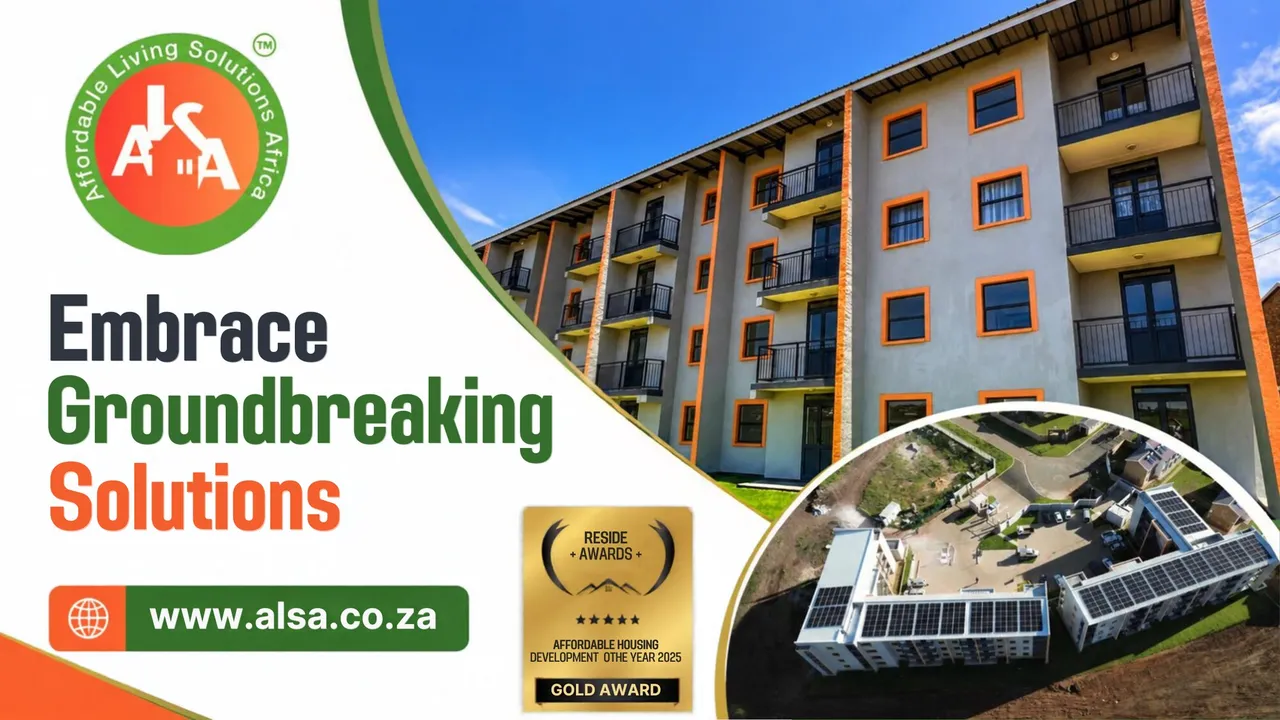
South Africa’s 2.2-million-home shortage is creating a major affordable housing opportunity. ALSA believes its development platform can help investors make the leap from buying property to building it.
- South Africa faces an estimated 2.2-million-home backlog, creating sustained demand for well-located and genuinely affordable housing.
- ALSA gives aspiring developers access to feasibility, design, project-management and development systems instead of navigating the development journey alone.
- More than 3,500 units are under development, with ALSA reporting a pipeline exceeding 7,700 homes across six provinces.
From property investor to property developer
Most property investors start with a familiar strategy: buy a property, secure a tenant, service the bond and gradually build a portfolio. But what if your next investment isn’t another existing property?
What if you build the property instead?
South Africa’s affordable housing shortage is creating an opportunity for investors and entrepreneurs who can identify genuine housing demand, secure suitable land, structure viable projects and deliver homes working South Africans can afford.
Affordable Living Solutions Africa (ALSA) believes its franchise-led development model can lower some of the barriers traditionally preventing smaller investors and entrepreneurs from entering property development. Its proposition is straightforward: Don’t develop alone.
Why affordable housing is such a big opportunity
South Africa faces an estimated 2.2-million-unit housing backlog, while urbanisation, household formation and constrained public-sector resources continue putting pressure on supply.
A major challenge sits in the gap market, households earning approximately R3,500 to R22,000 per month. Many earn too much to qualify for traditional fully subsidised housing, yet struggle to access homes delivered by the conventional private development market.
For developers, that mismatch represents both a social challenge and a potential investment opportunity. But successful affordable housing development isn’t simply about building cheaper homes.
It means delivering:
- The right product for the local market.
- In the right location close to jobs and infrastructure.
- At a price the target household can actually afford.
- At a development cost capable of producing an acceptable margin.
- At sufficient scale to make the project commercially viable.
The starting point therefore isn’t the land. It is the customer.
What ALSA brings to the developer
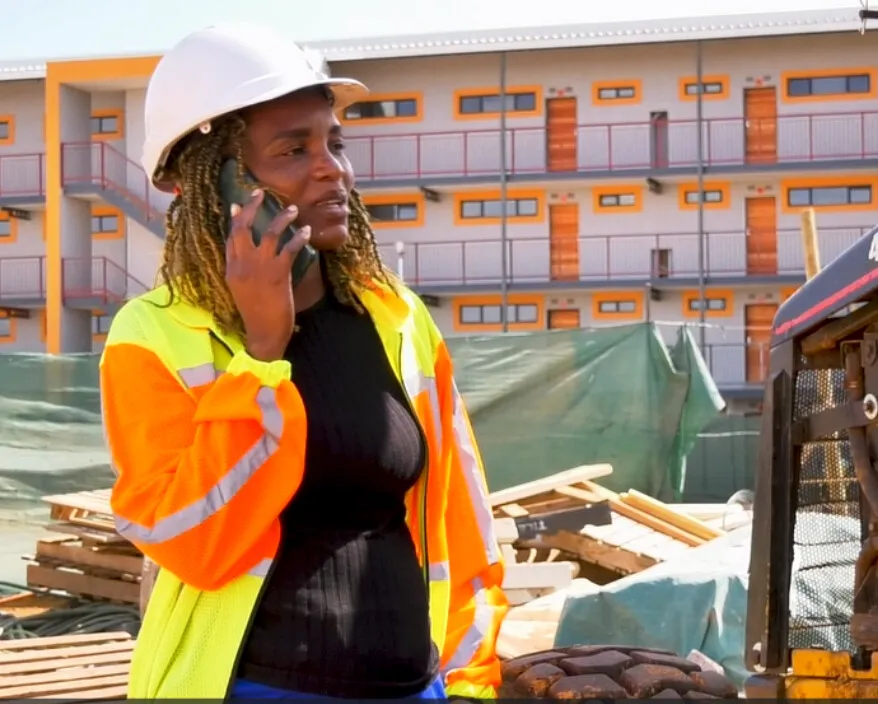
Property development involves far more than construction. Before a brick is laid, the developer may need to deal with market research, zoning, municipal approvals, infrastructure, architects, engineers, construction costs, finance, sales, buyer affordability and cash flow.
Get one major assumption wrong and an attractive-looking project can quickly become unviable. ALSA’s model is designed to give local franchise partners access to a broader development platform, including:
- Feasibility modelling
- Architectural designs
- Bills of Quantities
- Credit-origination systems
- Project-management processes
- Development systems and support
Local franchisees can identify and originate opportunities while drawing on a central development platform rather than having to create every capability from scratch.
The objective is to create multiple development businesses operating across different markets, potentially allowing affordable housing delivery to scale nationally.
7 steps from investor to developer
So how do you actually make the transition?
1. Find the demand first
Don’t begin by asking: “What can I build on this land?” Ask:
- Who needs housing here?
- What do those households earn?
- What can they afford monthly?
- Which housing products are undersupplied?
- What are competing developments achieving?
- How quickly are units selling?
Action: Build the project around proven demand, not around a piece of land you happen to find.
2. Find land that supports the numbers
Once demand is established, look for land capable of servicing it.
Analyse the purchase price, zoning, development rights, bulk services, transport links, employment nodes, schools, amenities and potential unit yield.
A cheap piece of land can become very expensive if infrastructure and approvals work against the project.
Action: Never evaluate land on purchase price alone.
3. Do the feasibility before you buy
This is arguably the most important discipline in development. Your calculation needs to include:
- Land plus
- Professional fees
- Approvals
- Infrastructure
- Construction
- Finance
- Marketing
- Contingency
- Taxes
- Other costs.
Then compare total development cost against realistic sales revenue. Not hoped-for revenue. Realistic revenue.
Action: Stress-test selling prices, construction costs, interest rates and timelines before committing capital.
If the numbers don’t work on paper, construction is unlikely to rescue them.
4. Structure the development properly
ALSA says projects are delivered through ring-fenced special purpose vehicles (SPVs). This helps separate the funding, governance, economics and risk of individual developments.
That becomes increasingly important when developers want to progress from one project to multiple projects.
Action: Think like a business owner from the first development — not simply a property buyer.
5. Solve both sides of the finance equation
Affordable housing has two financing challenges.
- Who finances the development?
The developer requires capital for land, infrastructure and construction. - Who finances the buyer?
There is little value in developing a R700,000 or R1-million home if the intended customer cannot obtain the finance required to buy it. That makes buyer affordability and credit origination part of the development model from the beginning.
Action: Understand your end buyer’s finance ability before construction, not after completion.
6. Control construction relentlessly
Affordable housing margins can be highly sensitive to costs. Small increases multiplied across hundreds of homes can materially change the project’s profitability.
Developers therefore need tight control over:
- Procurement and materials
- Contractors and specifications
- Construction timelines
- Variations and quality
- Cash flow and contingencies
Action: Protect the development margin throughout procurement and construction.
7. Complete, learn and scale
One successful project can become the foundation for the next.
The progression is: Experience → track record → credibility → funding relationships → larger projects → scale.
Unlike buying an existing investment property and waiting for rental income and capital appreciation, developers seek to manufacture value by transforming land into completed property.
ALSA’s pipeline is already scaling
According to ALSA, it currently has more than 3,500 units under development and a pipeline exceeding 7,700 homes across:
- Gauteng
- Western Cape
- Eastern Cape
- KwaZulu-Natal
- Limpopo
- North West
The geographic spread matters because affordable housing demand isn’t confined to Johannesburg, Cape Town or Durban.
Opportunities can emerge wherever population growth, employment and household formation are running ahead of suitable housing supply.
Five reasons investors may consider development
Moving from investor to developer changes the property investment equation.
- Create value rather than simply buy it
A developer seeks to manufacture value through land, approvals, construction and execution. - Manufacture equity
Where completed project value exceeds total development costs by an adequate margin, development can create equity. - Address structural demand
Affordable housing serves a substantial underlying need rather than relying entirely on discretionary demand. - Build at scale
Development can take an investor from owning individual properties to delivering dozens or potentially hundreds of homes. - Build a business
Successful development requires systems, teams, professional advisers, finance and repeatable processes.
Done properly, you aren’t simply building houses. You’re building a property development business.
The REI take: start with the problem
Property development isn’t easy money. It brings planning, funding, construction, sales and execution risk. But South Africa’s affordable housing shortage creates an enormous underlying market for developers capable of solving the equation.
The opportunity starts with a simple discipline: Find the housing problem before you find the property.
Understand the customer. Establish affordability. Find the right land. Run the numbers ruthlessly. Structure the finance. Control the costs. Deliver the product. Do that successfully and you could move from buying property to creating it.
Ready to take the next step?
Could you become South Africa’s next property developer?
ALSA is inviting aspiring developers, property investors and entrepreneurs to learn more about its affordable housing development and franchise model.
Affordable Living Solutions Africa (ALSA)
Website: ALSA.co.za
Next step: Register with ALSA to find out more about becoming an affordable housing developer.