






Women lead South Africa's property revolution

- Women now own more non-subsidised residential properties than men across South Africa.
- Security, lifestyle and affordability are driving strong demand for sectional title and estate homes.
- Women aged 35- 55 are leading the market, while younger buyers are entering homeownership in growing numbers.
New Lightstone research shows women now own more homes than men, reshaping the country's residential property market and building long-term wealth
Women are rewriting South Africa's property story
Women's Day may have been celebrated yesterday, but the latest residential property data suggests South African women are giving themselves something even more meaningful than flowers or gifts - financial independence through property ownership.
New research by Lightstone Property reveals that women now own more non-subsidised residential properties than men, highlighting one of the most significant shifts in South Africa's property landscape over the past decade.
While men still own properties with a slightly higher average value, women have become the dominant force in residential ownership, particularly in affordable housing, sectional title developments and secure lifestyle estates.
The findings reinforce the growing role women are playing in wealth creation, long-term financial security and intergenerational asset building through property.
It is worth noting that approximately 20% of all non-subsidised properties are registered in legal entities, such as trusts, companies and government bodies. Of the remaining market, 48% are owned by a single individual, making this analysis particularly relevant as it focuses exclusively on sole ownership.
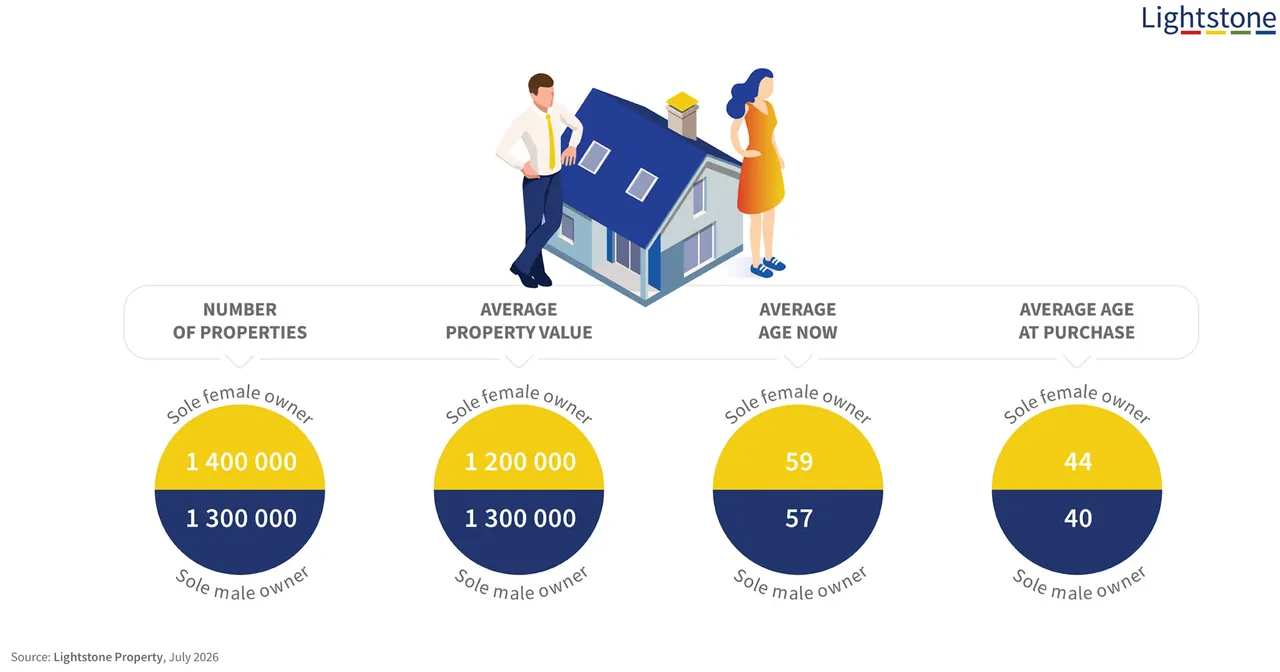
While sole female owners account for approximately 1.4 million residential properties, compared with around 1.3 million owned by sole male owners, the average value of properties owned by men remains slightly higher.
Women purchase property later in life than men on average, buying at around 44 years of age, compared with 40 years for men. Today, the average sole female homeowner is 59 years old, versus 57 years for men.
The data suggests women are steadily building wealth through long-term ownership rather than chasing higher-value assets earlier in life.
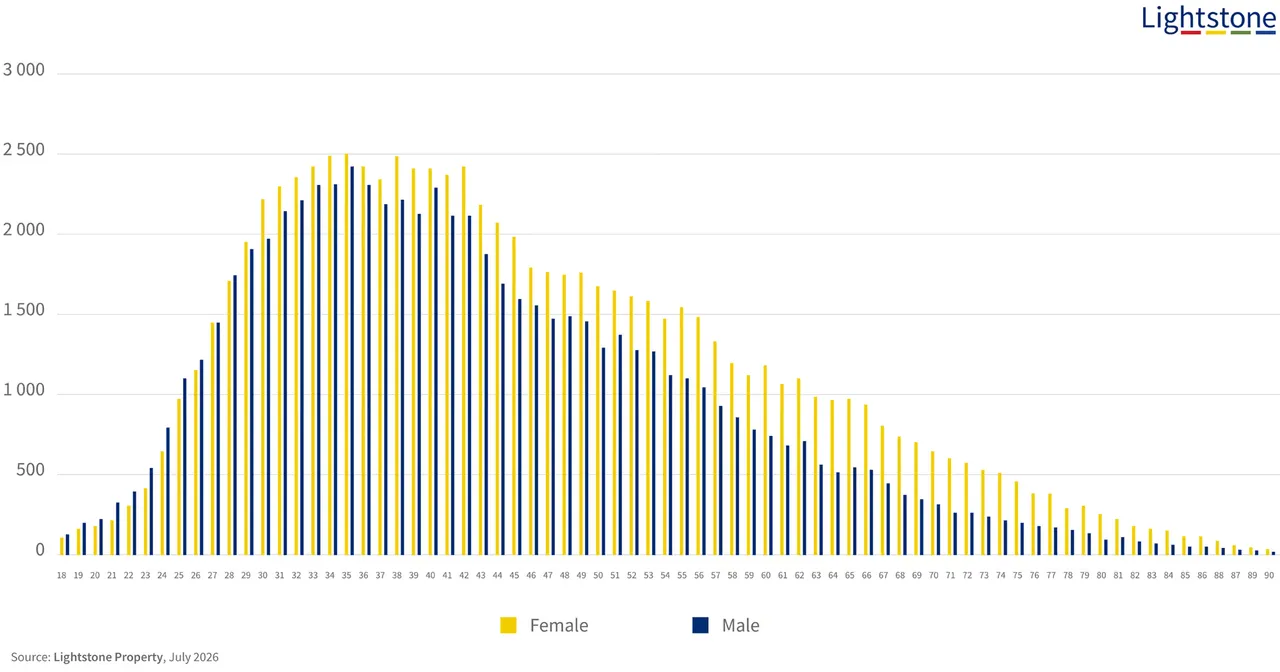
Current buying trends show a remarkable generational shift. Women begin purchasing homes at similar levels to men during their twenties, but from age 29 onwards, sole female buyers consistently outnumber sole male buyers across every age category.
The strongest buying activity comes from women aged 35 to 55, demonstrating that mid-career professionals remain the driving force behind female homeownership.
The trend also reflects growing financial independence, improved access to finance and increasing participation by women in the formal economy.
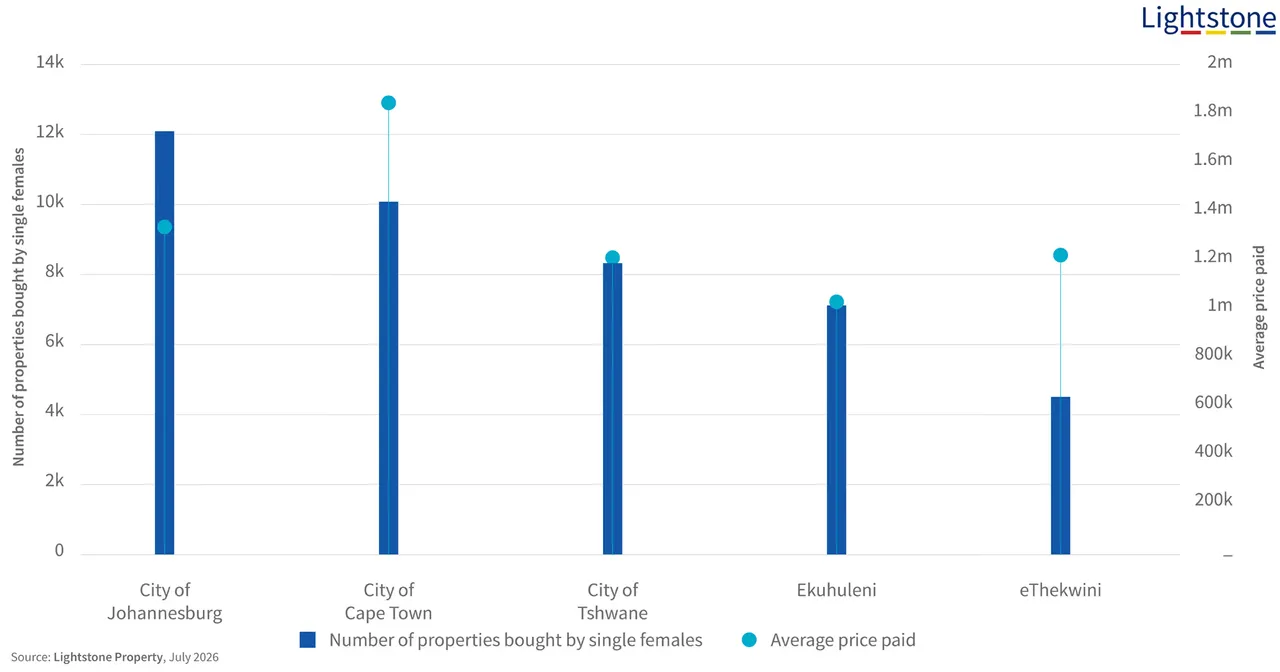
The country's five largest metropolitan municipalities accounted for 60% of all purchases by single women during 2025.
Gauteng remained the clear leader, with Johannesburg, Tshwane and Ekurhuleni accounting for two-thirds of all purchases among the major metros.
Cape Town, however, stood apart in one important respect. Although fewer women purchased homes there than in Johannesburg, the average purchase price reached approximately R1.8 million, well above Johannesburg (R1.3 million), Tshwane and eThekwini (around R1.2 million) and Ekurhuleni (approximately R1 million).
This reflects both Cape Town's higher property values and continued demand for well-located residential property.
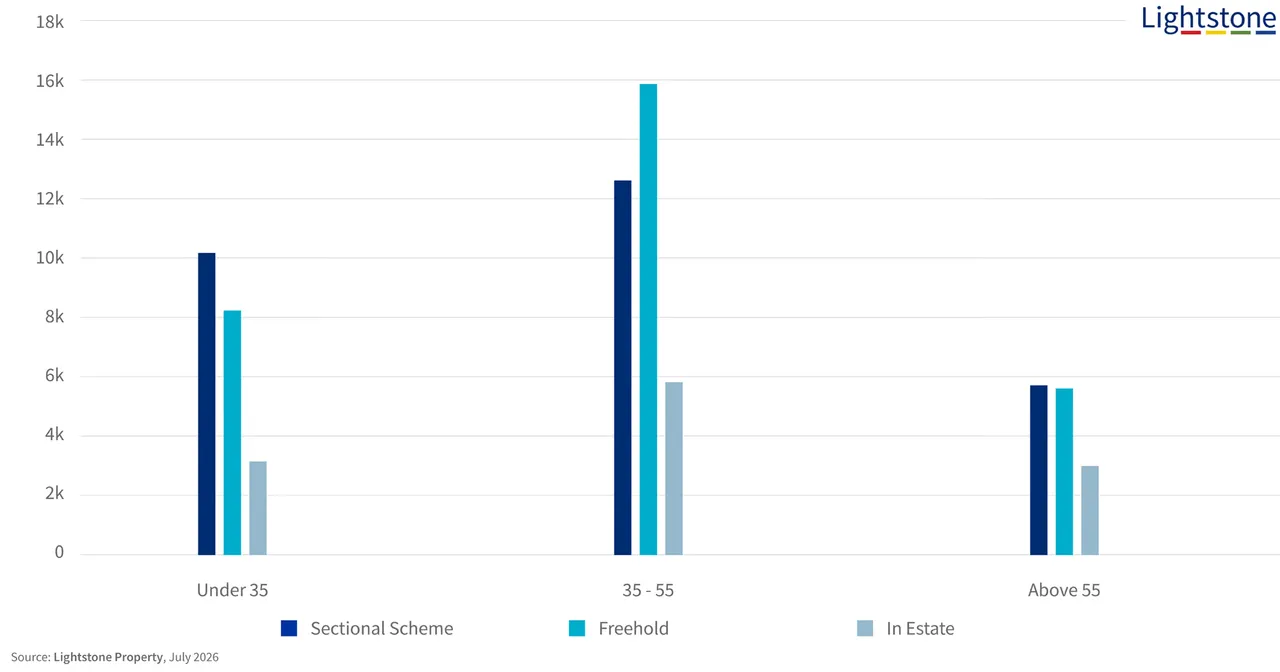
One of the strongest themes emerging from the research is women's preference for secure housing. Women own proportionately more properties in Sectional Title developments and Estates than men.
For every 100 male owners of sectional title properties, there are approximately 130 female owners.
That ratio narrows to 112 women for every 100 men in residential estates, while freehold ownership is almost evenly balanced.
The findings suggest security, convenience, lower maintenance requirements and lifestyle amenities continue to influence purchasing decisions, particularly for women buying on their own.
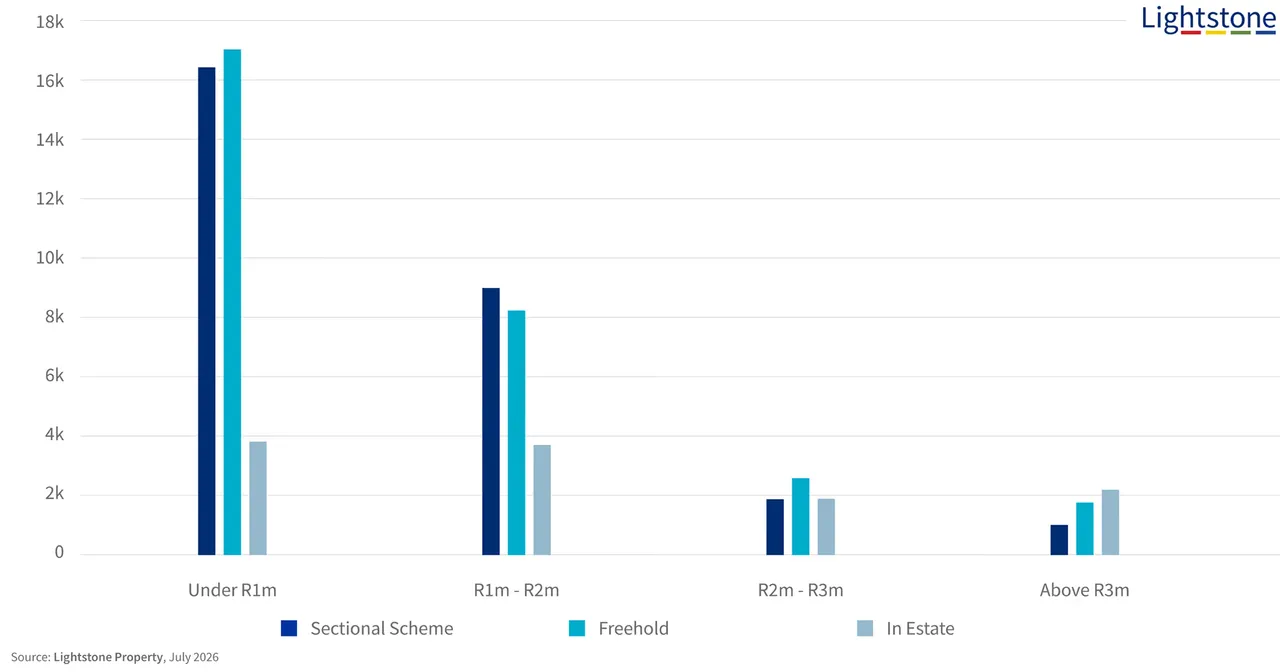
Affordability remains the biggest driver of buying activity. Across every property type, homes priced below R1 million recorded the highest number of purchases, followed by properties valued between R1 million and R2 million.
Sectional title and freehold properties dominate these price bands, reflecting both affordability and accessibility for first-time buyers and investors.
While purchases above R2 million remain comparatively limited, activity in this segment continues to grow steadily, particularly among established professionals.
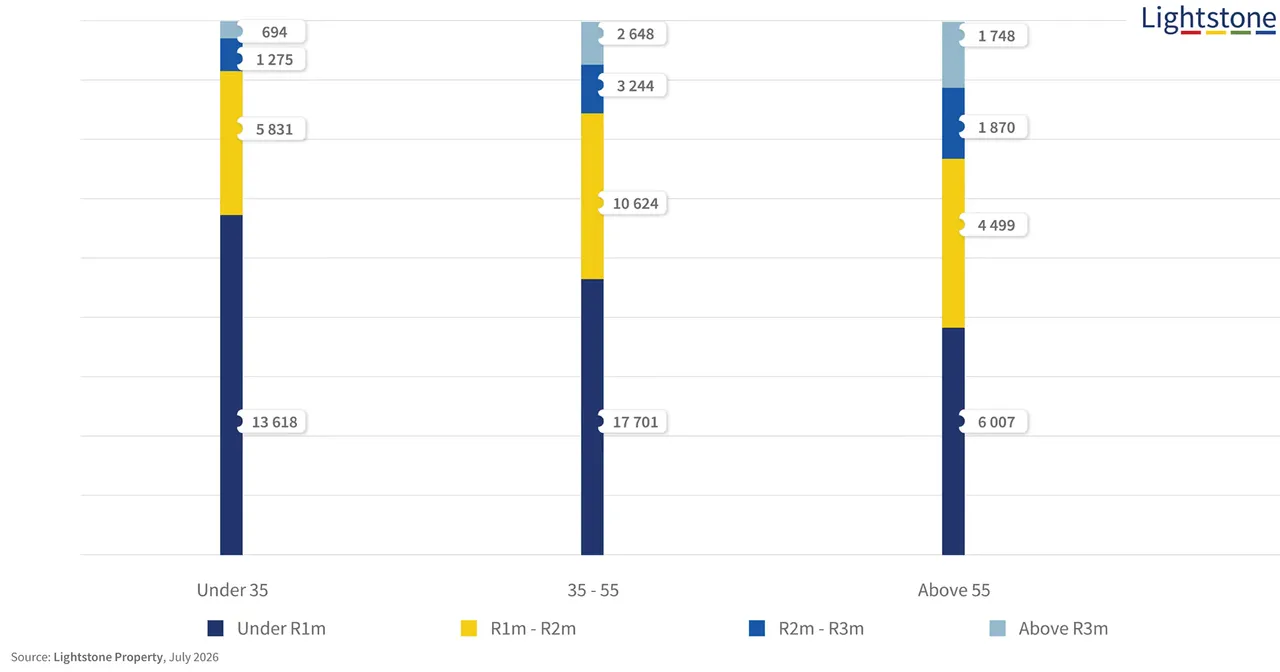
Women aged 35 to 55 accounted for the largest share of residential purchases during 2025. This age group purchased around 34,200 properties, comfortably ahead of women under 35 and those aged over 55.
Properties priced below R1 million remained the most popular choice across all age groups, followed by homes valued between R1 million and R2 million.
Higher-value purchases above R2 million were naturally less common, but still significant. Around 2,000 women under 35 bought homes above R2 million during the year. That number increased to almost 5,900 among women aged 35 - 55, while approximately 3,600 women over 55 also purchased properties in this premium segment.
The data illustrates how purchasing power grows through different life stages as careers mature and wealth accumulates.
Younger women continue to rely on home finance
Lightstone's data also highlights the important role home finance continues to play. Women under the age of 35 accounted for almost half of all bonded transactions during 2025, followed by buyers aged between 35 and 55.
Women over 55 represented just 11% of bonded purchases, reflecting higher levels of accumulated equity and outright ownership among older homeowners.
Women are reshaping South Africa's housing market
The latest Lightstone research confirms a profound shift in South Africa's residential property market. Women are no longer simply participating in homeownership, they are leading it.
From first-time buyers entering the market before the age of 30, to experienced professionals expanding their property portfolios and retirees securing long-term wealth, women are driving demand across virtually every segment of the residential market.
While men continue to own marginally higher-value properties on average, women now account for the larger share of homeowners, particularly in the affordable and mid-market sectors that underpin South Africa's housing market.
As Women's Month continues, the figures provide a powerful reminder that property ownership has become one of the country's most effective tools for building financial independence, creating generational wealth and strengthening economic resilience.