





Two women lead Africa’s next Green Building chapter
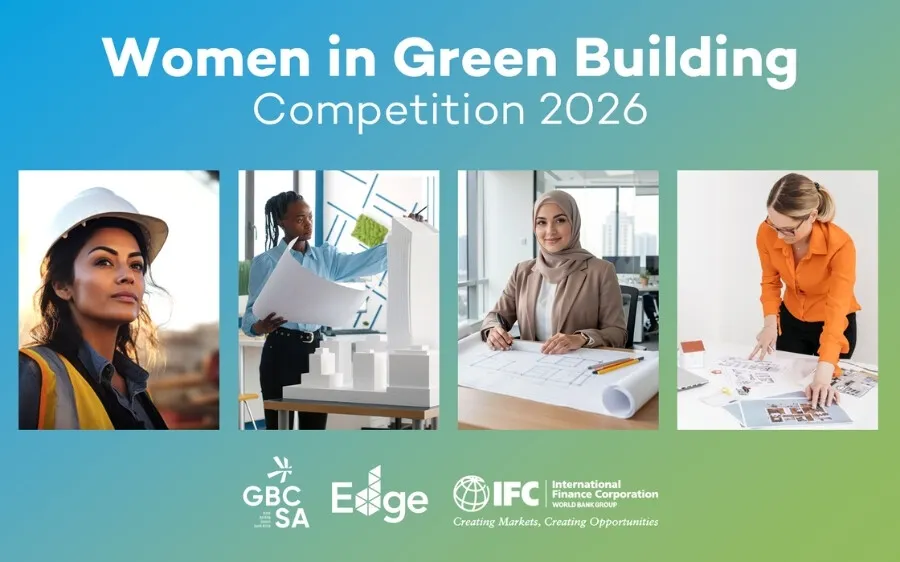
GBCSA and IFC have named Tshepiso Kobile and Refiner Anene winners of the 2026 Women in Green Building Competition, recognising skills shaping Africa’s sustainable built environment.
- Tshepiso Kobile and Refiner Anene have been named winners of the fifth annual Women in Green Building Competition.
- Ten finalists completed IFC EDGE training before the two winners were selected based on their examination results.
- The programme is expanding green-building expertise across property, investment, architecture, engineering, finance and affordable housing.
Two women recognised for shaping greener property
Two property and infrastructure professionals working at the intersection of investment, affordable housing and sustainability have been named winners of the 2026 Women in Green Building Competition.
The Green Building Council South Africa (GBCSA), in partnership with the International Finance Corporation (IFC), announced Tshepiso Kobile of South Africa and Refiner Anene of Nigeria as this year’s winners.
Now in its fifth year, the competition is designed to build technical capacity and elevate women working across the green building sector in Sub-Saharan Africa.
This year’s theme, “Your Perspective Matters”, focuses on the contribution women can make towards creating a built environment that is not only more environmentally sustainable, but also more inclusive and responsive to Africa’s changing climate and development needs.
The competition also recognises the challenges women continue to face in establishing and advancing their careers within the sector.
From ten finalists to two winners
Ten finalists were selected to undertake EDGE (Excellence in Design for Greater Efficiencies) training, a globally recognised green building standard developed by IFC.
EDGE equips property professionals with practical tools to assess and improve resource efficiency, including energy, water and the embodied carbon associated with building materials. Following the training, the two winners were selected based on their examination results.
For GBCSA CEO Georgina Smit, however, the significance extends beyond producing another generation of green building specialists. It is about integrating sustainability skills throughout the property value chain.
“Developing green skills is increasingly about integrating sustainability into all the professions that shape our built environment, from property and investment to architecture and design, engineering and finance.”
Smit says the Women in Green Building Competition enables participants to add sustainability expertise to their existing professional capabilities.
“The Women in Green Building Competition is valuable because it supports women to strengthen their existing expertise with this additional skill set. Our partnership with IFC allows us to create these opportunities while helping to embed green skills across the professions that will shape the future of the built environment.”
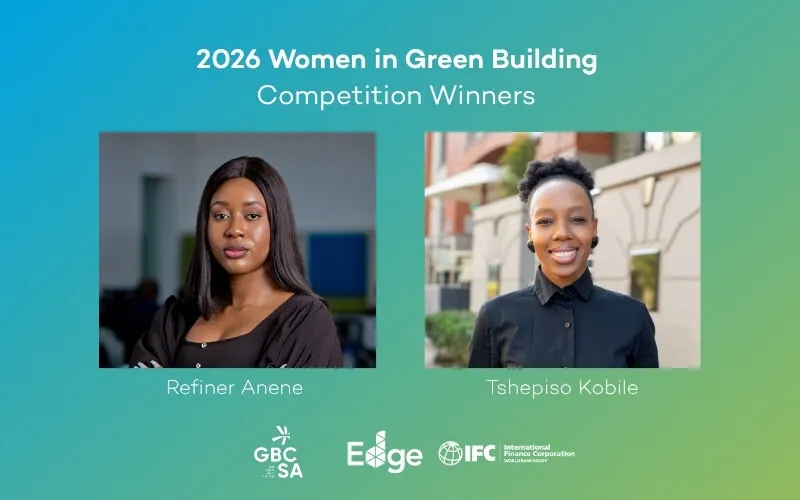
Meet winner Tshepiso Kobile
Tshepiso Kobile is a South African investment and infrastructure professional specialising in property finance, sustainable infrastructure, ESG and affordable housing.
Her background illustrates how sustainability is increasingly moving beyond building design and engineering into the financial and investment decisions underpinning property development.
A former CEO of SAVCA, Kobile now serves as a Non-Executive Director of the National Housing Finance Corporation and Communicare NPC. Her work includes contributing to ESG strategy and measurement within the affordable and social housing sector.
That intersection between capital, housing and sustainability is becoming increasingly important as Africa confronts the challenge of delivering significantly more housing while simultaneously reducing the environmental impact of the built environment.
Meet winner Refiner Anene
Refiner Anene is a Nigerian property and infrastructure investment professional working across green building, sustainable finance and affordable housing. Her experience demonstrates the potential to connect green building principles directly with large-scale investment.
Anene led a $12.5 million green housing transaction supporting more than 1,000 homes and up to 1,220 jobs, while incorporating IFC EDGE certification.
She has also managed an investment pipeline exceeding $100 million, focused on scaling climate-responsive development. Her work demonstrates an increasingly important principle for African property markets: sustainable development needs to move beyond individual showcase projects and become capable of attracting institutional-scale capital.
IFC: Building Africa’s pipeline of women leaders
Kushinga Kambarami, Green & Resilient Built Environment Lead: Africa at IFC, says the competition demonstrates the depth of female talent already emerging across Africa’s built environment.
“The Women in Green Building Competition demonstrates the depth of talent, leadership, and innovation that women are bringing to Africa’s built environment.”
Importantly, Kambarami says the initiative is not simply about recognising achievement, but creating a pipeline of professionals capable of applying sustainability principles at scale.
“By recognising and supporting practical solutions with the potential to scale, the competition helps build a stronger pipeline of women leaders who can help to shape buildings and cities that are greener, more resilient, and more inclusive.”
Green skills are moving across the property value chain
Another notable development is who is seeking green-building expertise. Sustainability skills were once primarily associated with architects, engineers and specialist environmental consultants. That profile is broadening.
Gretchen Williams, Education Manager at the GBCSA Academy, says this year’s competition demonstrated increasing interest from professionals throughout the property sector.
“We are seeing people across architecture, property, engineering and increasingly those working in property finance, management and investment, looking to upskill in sustainability.”
This is significant for property owners, developers and investors. A building’s environmental performance can increasingly intersect with its operating costs, financing, investment criteria, ESG requirements, market positioning and long-term asset performance.
Williams says programmes such as Women in Green Building and EDGE training therefore have a broader role to play. “The Women in Green Building Competition and the EDGE training play an important part in the necessary integration of sustainability across the full built environment value chain.”
What is EDGE?
Developed by IFC, EDGE (Excellence in Design for Greater Efficiencies) provides developers and property professionals with a practical framework for designing and delivering more resource-efficient buildings.
Its software helps identify opportunities to reduce energy and water consumption and embodied carbon in building materials by at least 20%. EDGE certification is also recognised by major green-finance standards, creating an important connection between the environmental performance of buildings and the capital required to develop them.
That link is particularly relevant in emerging markets, where the challenge is not simply to build greener properties, but to make sustainable development commercially viable and scalable.
Creating opportunities and multiplying their impact
For GBCSA, the success of Kobile and Anene demonstrates what can happen when women already working within property and infrastructure are given access to additional technical capabilities.
Williams congratulated both winners:
“We congratulate our winners and look forward to their continued contribution to sustainability using their newly acquired skills. These two women are a clear example of the calibre of women that can emerge when those opportunities are made available.”
That may ultimately be the broader significance of the Women in Green Building programme. Africa needs enormous investment in housing, commercial property and infrastructure over the coming decades. At the same time, climate pressures and resource constraints mean that the continent cannot simply replicate yesterday’s development models.
The people making decisions about where capital is invested, how projects are designed, how buildings operate and how communities are developed will increasingly need sustainability expertise alongside their existing professional skills.
By combining those capabilities, initiatives such as Women in Green Building can help create a deeper pool of professionals equipped to turn green-building principles into practical investment and development decisions.
For Tshepiso Kobile and Refiner Anene, winning the 2026 competition is therefore more than an individual achievement.
It provides another platform from which two African property and infrastructure professionals can help influence the transition towards a greener, more resilient and more inclusive built environment.
For more information, visit Green Building Council South Africa and EDGE Buildings.