








Where to invest in property in 2026
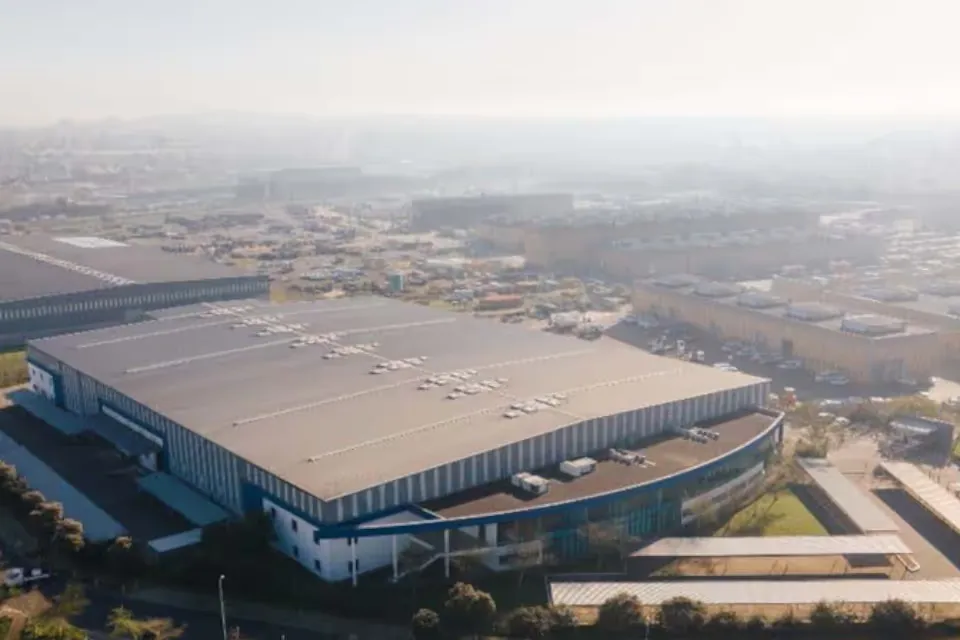
- Industrial property in Gauteng remains the most resilient, demand-driven sector.
- Office-to-residential conversions are reshaping prime urban nodes.
- Coastal growth and Dubai offer selective, high-conviction opportunities.
Investing with intention, not Emotion
After several uneven years, South Africa’s property market is entering 2026 on firmer footing. Interest rates have eased, infrastructure reliability has improved, and investor sentiment is measurably stronger.
But this is not a rising-tide market. It’s a selective one.
According to John Jack, CEO of Galetti Corporate Real Estate, the next cycle will reward precision over expansion.
“2026 is about investing with intention. The opportunities are there, but they’re increasingly concentrated in specific regions and asset classes where fundamentals are strong and demand is measurable.”
The message is clear: scale alone won’t drive returns, positioning will.
1. Industrial: Gauteng’s anchor asset
If there is one consistent performer heading into 2026, it is industrial property, particularly in Gauteng.
Demand for tenanted industrial assets in the R10 million to R40 million bracket remains robust, especially along key logistics corridors. The N1 route from Waterfall through Midrand and Louwlardia continues to attract logistics operators, while the eastern belt from Kramerville to Pomona remains active.
Investors are targeting:
- Well-located warehouses
- Assets with redevelopment or rental uplift potential
- Buildings aligned to logistics and distribution growth
The fundamentals are straightforward: South Africa’s supply chains run through these nodes. E-commerce growth and distribution optimisation continue to underpin demand.
The caution? Avoid overcapitalising. Rental increases must remain market-related. Industrial works best when cash flow fundamentals drive the deal, not speculative pricing.
2. Office nodes: Structural reset, not recovery
Office is no longer simply “recovering.” It is resetting.
Justin Thom, Director at Galetti Corporate Real Estate, explains that prime nodes such as Bryanston, Rosebank, Sandton and Umhlanga are undergoing structural transformation.
“We are seeing older commercial office stock withdrawn through residential conversion. Large vacancy pockets are being absorbed not only through leasing, but through repositioning and rezoning.”
This is critical.
Rezoning and redevelopment cycles, often 18 to 36 months, permanently remove excess office stock from the market. That tightens supply and stabilises rentals in remaining A-grade buildings.
Even more important is the secondary impact:
- Increased residential density
- Improved live-work integration
- Retail and amenity expansion
- Stronger long-term ecosystem resilience
Rosebank and Sandton are prime examples of this densification trend. Investors should focus on quality buildings in improving nodes, not outdated stock hoping for cyclical recovery.
3. Coastal Growth: Western Cape, George and KZN
Semigration is no longer hype, it is embedded behaviour. The Western Cape continues to draw residential and commercial migration, reinforcing demand in industrial and decentralised office nodes.
In Cape Town, the Northern Suburbs industrial corridor, the Central Industrial Belt and the Airport precinct remain attractive due to port and airport access.
Decentralised office nodes such as Somerset West, Paarl and Tygervalley are gaining traction as businesses follow residential migration into the Winelands.
George has quietly evolved into a strategic regional hub. Once viewed purely as a lifestyle town, it now benefits from
- Population growth
- Expanding airport capacity
- Rising office demand
- Strong residential absorption
KwaZulu-Natal is also regaining investor confidence. Durban’s logistics strength continues to underpin commercial activity, while the KZN South Coast is experiencing its strongest confidence levels in more than a decade.
Coastal investing in 2026 is about infrastructure-backed growth, not speculative lifestyle purchases.
4. Offshore Diversification: Dubai in Focus
As local investors seek geographic diversification, Dubai is emerging as a serious consideration.
Galetti’s expansion into Dubai reflects growing appetite from South African investors. Transaction volumes in the emirate have surged from around 200,000 annually to approximately 270,000, with total transaction values reaching roughly AED 680 billion.
Jack notes: “This level of activity is only set to continue into 2026 and beyond. Traditional sales methods can struggle to keep pace, which is why auctions and structured transactions are becoming more prominent.”
Dubai offers:
- Strong transactional velocity
- International buyer demand
- Tax-efficient structuring
- Access to high-growth urban development
However, offshore exposure should complement, not replace a well-positioned local portfolio.
What defines a smart 2026 investment?
Across sectors, three filters stand out:
- Infrastructure-backed nodes
- Supply-constrained or supply-reducing markets
- Clear demand drivers, not sentiment
Industrial in Gauteng, repositioned office in prime nodes, Western Cape and regional coastal hubs, and selective offshore exposure all meet these criteria, when carefully underwritten.
2026 will not reward passive investors. It will reward those who understand node fundamentals, infrastructure cycles, demographic shifts and governance stability.
Industrial remains the anchor. Office is evolving through conversion. Coastal markets are consolidating growth. Offshore diversification is gaining momentum.
The opportunity exists, but only for investors prepared to be deliberate. In this cycle, selectivity is strategy.