







When trees become lawsuits between neighbours
- Tree disputes are rising as older suburbs densify and property boundaries come under pressure.
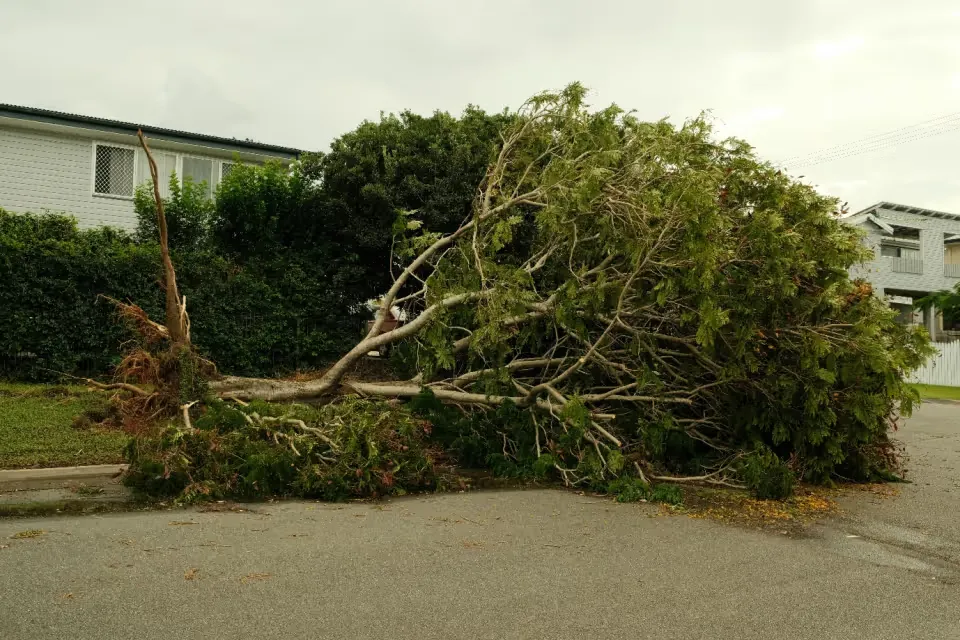
- Storm-damaged trees often fall under “Act of God” protections unless negligence can be proven.
- Body corporates can face major liability claims for failing to manage dangerous common property trees.
South Africans love their trees, until those same trees crack a boundary wall, block out sunlight, damage paving, clog gutters or collapse onto a neighbour’s property during a storm.
According to Ann-Suhet Marx, Director and Head of Litigation at Van Deventer Dowlath & Marx Incorporated, tree-related neighbour disputes are rising sharply across South Africa as urban densification, ageing suburbs and increasingly mature tree canopies create growing conflict between property owners.
“South Africans love their trees, until those same trees crack a wall, block out the sun, or drop a season’s worth of leaves into a neighbour’s gutters. And then they become one of the most common sources of neighbour conflict,” says Marx.
“The law doesn’t expect perfection, but it does expect responsibility. A tree becomes a legal problem when it causes real, unreasonable interference with someone else’s property.”
Background to growing tree disputes
As residential properties become more compact and boundary lines increasingly tight, disputes around roots, overhanging branches, blocked views, cracked walls and storm-damaged trees are becoming far more common.
The legal reality, however, is that South African courts attempt to balance property rights with practical urban living.
Marx says the courts generally expect neighbours to tolerate a reasonable degree of inconvenience associated with mature trees, including falling leaves, limited shading and minor maintenance frustrations.
But once the damage becomes structural, dangerous or unreasonable, legal liability can quickly follow.
“Ownership comes with a duty of care,” says Marx. “If your tree causes predictable, ongoing structural damage, legal liability follows.”
Storm damage & uprooted trees: Who pays?
Following severe storms across parts of South Africa recently, one of the biggest questions property owners are asking is: Who pays when a tree falls during extreme weather?
Marx explains that under South African common law, violent storms are generally classified as an “Act of God” (vis maior).
“If a structurally sound, healthy tree is uprooted by severe winds and crashes into a neighbour’s property, the tree owner is generally not legally liable because the event was unpredictable and unavoidable,” she explains.
In most cases:
- The damaged property owner must claim from their own insurance
- Debris removal is usually handled by each property owner individually
- Liability only arises if negligence can be proven
That negligence threshold becomes important. If a tree was visibly diseased, unstable, dead or dangerous and the owner ignored warnings to remove it, the owner may become personally liable for damages caused during a storm.
Marx also points out that many insurers will not cover tree removal costs unless a fixed structure such as a roof, wall or fence is actually damaged.
Sectional Title Schemes: Who is responsible?
In sectional title environments, the responsibility shifts significantly from individual owners to the Body Corporate.
Under the Sectional Titles Schemes Management Act (STSMA), trustees and Body Corporates carry a legal duty to manage and maintain all common property vegetation and trees.
“If a tree rooted on common property falls, drops branches onto a vehicle, or invades an exclusive use garden area with its roots, the liability sits squarely with the Body Corporate,” says Marx.
Importantly:
- Owners cannot simply cut down common property trees themselves
- Formal written maintenance requests must be lodged
- Trustees are expected to mitigate risks proactively
According to Marx, Body Corporates that ignore documented warnings around dangerous trees could face negligence claims if damage or injuries occur later.
Four key legal principles governing tree disputes
Marx says South African common law relies heavily on “objective reasonableness” when resolving tree-related disputes.
1. Real damage vs Everyday inconvenience
Courts distinguish between ordinary urban annoyances and serious interference.
Minor issues like leaves in pools or small repairable cracks may need to be tolerated. However, major root damage, lifting paving or structural threats cross the legal line.
2. Overhanging branches & Self-help limits
Property owners may legally trim branches or roots crossing onto their property, but only up to the boundary line and after giving reasonable notice to the neighbour.
“You may trim what crosses your boundary line, but you cannot simply destroy the tree or enter someone else’s property without consent,” Marx explains.
3. Municipal trees follow different rules
Residents often mistakenly assume municipal street trees can be treated like private property trees.
Marx warns that municipal trees are protected under local by-laws and may not be pruned or removed without official municipal authorisation.
In Johannesburg, illegal cutting or destruction of municipal trees can attract fines reaching hundreds of thousands of rand depending on the tree’s age and heritage value.
4. Protected indigenous trees carry criminal liability
The legal risks escalate dramatically where protected indigenous trees are involved.
Species protected under the National Forests Act cannot legally be removed, damaged or disturbed without ministerial approval, even if located on private property.
Marx warns that unlawful removal of protected indigenous trees can result in serious criminal prosecution.
A rising trend & a call for early intervention
Marx says the number of neighbour disputes involving trees, roots and boundary damage is increasing steadily as residential areas become denser and infrastructure ages.
Her advice is simple: Communicate early, document risks properly and intervene before disputes escalate into litigation.
“Most of these matters can be resolved over a polite conversation long before they reach a courtroom,” says Marx. “But when the structural damage is real, or the interference becomes genuinely unreasonable, the law is there to protect your property rights.”
The broader message for homeowners, trustees and property investors is increasingly clear: Trees may add beauty, shade and value to a property, but when maintenance, responsibility and legal boundaries are ignored, they can quickly become expensive legal liabilities.