









Rebosis collapse: How debt wiped out REIT shareholders
Listen · 1-minute summary
0:00 / 1:27
Read the summary
Rebosis collapse: How debt wiped out REIT shareholders. In 2016 Rebosis Property Fund was a R9 billion-plus REIT, one of the JSE's standout black-managed property companies. A decade later, its shareholders have lost almost everything. In July 2025 the JSE delisted Rebosis altogether, after the company spent years in business rescue failing to fix compliance problems. What's left is a pile of debt. Rebosis owed its banks about R9.5 billion, most of it to Nedbank, and shareholders rank behind that debt, which makes their unlisted shares almost worthless. The warning signs were there for years. Gearing climbed from a loan-to-value ratio of 51.6 percent in August 2018 to roughly 72 percent by 2022, far above the 40 percent level most fund managers prefer. A related-party deal with founder Sisa Ngebulana's Billion Group, a costly UK write-down, and a struggling government-tenant office book all added pressure. The share price tells the story on its own: R11.50 in August 2016, just 16 cents when trading was suspended in August 2022, and now nothing at all. Read the full story by Alistair Anderson on rei.co.za.
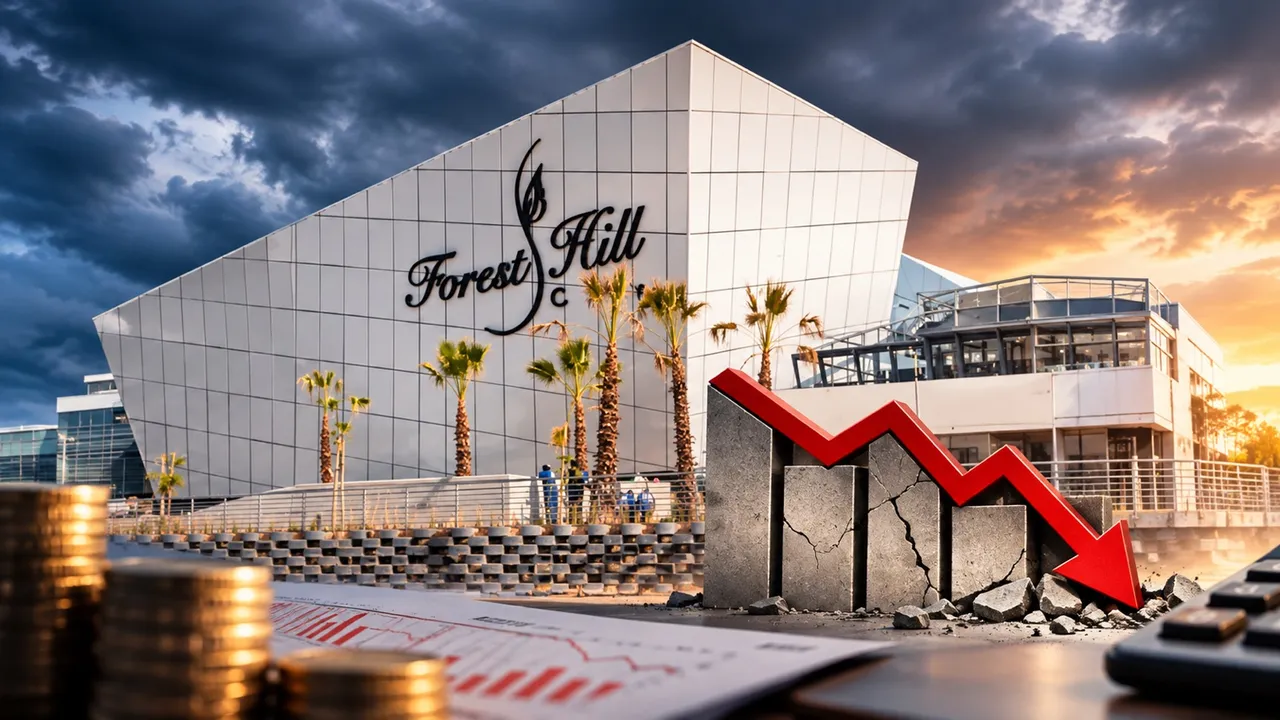
In 2016 Rebosis Property Fund was a R9bn-plus REIT and a symbol of transformation in listed property. A decade later its shares are worth nothing, its listing is gone and its assets have been sold to pay the banks. No JSE REIT has disappointed investors more.
- Rebosis Property Fund has delisted from the JSE, leaving shareholders holding unlisted shares worth almost nothing behind R9.5bn of bank debt.
- Gearing climbed sharply, with the loan-to-value ratio moving from 51.6% in August 2018 to roughly 72% by 2022, well above the 40% ceiling many fund managers prefer.
- A related-party deal with founder Sisa Ngebulana's Billion Group, a UK write-down and a government-tenant office book combined to sink the balance sheet.
Plenty of South African REITS have had a miserable decade. The sector peaked in 2016 and then went through the Resilient-stable crash, Covid and the long office slump. But most survivors at least still have a share price.
Rebosis Property Fund doesn’t. In August 2016 the company was planning around a share price of R11.50 when it bought Baywest and Forest Hill City malls from its founder’s Billion Group. Six years later, in August 2022, the B shares were trading at 16c when Rebosis went into business rescue and the JSE suspended trading. FTSE Russell then removed both share classes from the Fledgling Index at a price of zero.
In July 2025 the JSE removed the listing altogether. Rebosis never fixed the compliance failures that had piled up since its suspension. Shareholders were told they would remain holders of shares in an unlisted company. Those shares rank behind about R9.5bn of bank debt, so they are almost certainly worthless.
That is a loss of close to 100% in under ten years, for a company that was once the JSE’s first black-managed and substantially black-held property fund. It was also, for a while, one of the better-performing property counters on the board.
Delta Property Fund, Accelerate Property Fund and the inward-listed Hammerson have all given investors a terrible ride since 2016. Each has a case for the title. But they are still listed and still trading, and Delta has even been rallying. Rebosis is the only one where the story has ended, and it ended at zero.
The numbers
Rebosis’ slide wasn’t a sudden collapse. It was a steady decline over six years, with almost no relief rallies along the way. It was run by greedy management including its founder, Sisa Ngebulana.
Date | Rebosis B share | What was happening |
Aug 2016 | R11.50 (price assumed in deal circular) | Buying Baywest and Forest Hill from Billion Group |
Jan 2017 | R10.71 (Billion reinvestment price) | Billion forced to reinvest part of its cash proceeds |
c. 2018 | R8.41 | UK retail write-downs, rising gearing |
c. 2021 | 31c | Shareholder fight between Ngebulana and Moti |
Aug 2022 | 16c | Business rescue; trading suspended |
Jul 2025 | Delisted | Shareholders left holding unlisted shares |
The balance sheet tells the same story. Rebosis listed in 2011 with seven properties worth R3.3bn. At its peak it marketed itself as offering investors access to a R23bn portfolio of malls in South Africa and England.
Gearing was the problem. Loan-to-value rose from 51.6% in August 2018 to about 72% by 2022, the highest among listed property funds. Local fund managers generally want LTVs of 40% or lower. When Rebosis went into business rescue it owed banks about R9.5bn, most of it to Nedbank.
The 2016 deal circular put Rebosis’ pro forma net asset value at R13.21 a share. Investors who bought near that level, or at the R10–R12 range where the share traded through 2016, have lost essentially everything. There was no rights-issue lifeline and no merger exit. Distributions stopped long before the end.
For comparison, the broader sector has been weak but nowhere near this bad. Moneyweb calculated that the S&P SA Composite Property Capped Index fell by more than a third between August 2018 and August 2023.
The overall JSE property index declined by an annualised 3.5% on a total-return basis over the five years to September 2023. Since then SA Reits have recovered strongly, returning more than 30% in 2025 alone. Rebosis shareholders got none of that rebound.
So many things went wrong
Rebosis didn’t fail for a single reason. It ran into several problems at once: a badly timed offshore bet, an expensive related-party deal, a government-heavy office book, and a balance sheet that could absorb none of it.
- The Billion deal
In October 2016 shareholders approved Rebosis’ purchase of Baywest City in Port Elizabeth and Forest Hill City in Centurion from Billion Group, the developer founded by CEO Sisa Ngebulana. The R4.9bn price was funded with R3.7bn of new debt and a R1.2bn equity raise.
Property Flash reported at the time of the business rescue that the deal was widely seen as benefiting Rebosis executives rather than shareholders, and that Rebosis was argued to have overpaid. The same transaction also internalised Billion’s asset and property management companies. That meant Rebosis was now fully running a group whose management had been tied up with its founder’s private interests. - Brexit
Rebosis had also expanded into UK shopping centres. After the 2016 Brexit vote those assets were written down by about 30%, an impairment of roughly R2bn according to the Financial Mail. Two big shocks landed on the balance sheet in the same year. One was a large new debt load in South Africa. The other was a sterling portfolio losing value fast. - Government tenants
Through its acquisition of Ascension Properties, Rebosis took on a large portfolio of single-tenant office buildings let mostly to government. After that deal the South African portfolio included 42 office buildings alongside eight malls.
Property Flash has previously pointed to Rebosis’ sovereign tenants as part of the reason for its decline. Slow lease renewals, late payments and below-market rentals from the Department of Public Works dragged down several empowered landlords in this period. Rebosis was one of the most exposed. - Gearing and governance
Asset sales never got ahead of the debt. By 2021 the company was also in a fight between its two largest shareholders: Ngebulana’s Amatolo Trust, which held about 26%, and Zunaid Moti, who complained he had been unfairly barred from voting on certain resolutions. A promised deal to “change the financial matrix” briefly lifted the share by 34%, but nothing came of it.
In August 2022 the board put the company into voluntary business rescue, arguing this would speed up asset sales that would otherwise need shareholder approval each time. Subsidiary Ascension followed in October.
The rescue plan was delayed repeatedly, and Rebosis couldn’t publish its 2022 annual results on time. When the sale of the R11.2bn portfolio opened in 2023, around 50 parties registered to bid. Shareholders, last in line behind the banks, were expected to recover little if anything.
The other contenders
Rebosis takes the title. But three other Reits make the shortlist.
Delta Property Fund: down about 95%
Delta is the closest comparison. It is another empowered landlord built on government office leases. In August 2016 it had 710.6 million shares in issue and a market cap of R4.63bn, which works out to about R6.50 a share. Its NAV was R9.86 a share and its portfolio of 115 properties was worth R11.36bn. Sovereign tenants accounted for 71% of its office space.
Today the share trades at about 34c, and the whole company is worth roughly R250m. Along the way Delta withdrew its February 2020 financial statements and audit opinion, delayed its interims, and was suspended by the JSE in December 2020.
Even in 2016, fund managers were warning that its government-heavy portfolio, with tenants seen as slow payers unwilling to agree to market rentals, would put off would-be buyers.
What keeps Delta out of first place is that it survived. In 2025 it was the best performer among the JSE’s 40-odd property stocks, with a 105% share price gain, more than three times the all property index’s 31% total return. That’s a big rebound from a very low base, but it still leaves a 2016 investor down about 95%.
Accelerate Property Fund: still struggling
Accelerate, which owns half of Fourways Mall and listed in December 2013, has spent years selling assets to reduce debt. It sold the Leaping Frog centre below book value. More recently it has announced the disposals of Cedar Square and KPMG Crescent in Parktown. NAV fell from 500c to 406c a share in the six months to September 2023 alone.
In the year to March 2026, revenue dropped to R678.9m from R760.2m. Accelerate did get back to headline earnings of 19.43c a share after a headline loss of 54.96c the previous year, but it still pays no distribution. The share closed at 41c on 23 October 2026, down about 37% this year, for a market cap of about R840m. It trades at a fraction of NAV.
It’s possible that Accelerate will be taken over by James Templeton’s Castle View Property Fund.
Hammerson: the inward-listed casualty
If you count inward listings, the UK mall owner belongs on this list. Hammerson was the worst performer among the big JSE-listed property counters over the five years to August 2023, with its shares down more than 85%.
But Hammerson is a UK company that South African investors chose to hold. It wasn’t a JSE REIT that went wrong at home. Under new leadership Hammerson seems to have turned itself around with H1 2026 net rental income up 23% yoy and earnings are up by 5% yoy.
REIT | c. 2016 share price | Now | Status |
Rebosis (B) | R11.50 | Nil | Delisted Jul 2025 |
Delta | c. R6.50 | c. 34c | Listed, recovering from low base |
Accelerate | – | 41c | Listed, no distribution |
What investors should take from it
Rebosis no longer appears on any JSE screen. Its malls, including Hemingways in East London, Forest Hill and Baywest, have been sold or are being sold through the business rescue process.
The business rescue practitioners joined the board as non-executive directors and have continued to send monthly reports to the JSE, the CIPC and creditors. In July 2025 the JSE delisted it.
The saddest part is what Rebosis was meant to be. It was supposed to prove that a black-founded, black-managed property company could build a large listed fund. For a few years it did. Its failure set back a part of the market that still needs successful role models.
That is why my website, Property Flash raised concerns in 2023 about whether the asset sales would turn into a failure for transformation. Ngebulana misran the company too.
The lessons apply across the sector:
- High gearing kills
An LTV above 50% leaves no room for a valuation shock. Rebosis went from 51.6% to 72% in four years. - Watch related-party deals
Buying assets from the founder’s company, with debt, at the top of the cycle is the clearest warning sign in this story. - Concentration is a risk, not a strategy
A government-tenant office book offers high yields because the risk is high. Delta and Rebosis both learnt that. - Offshore isn’t automatically defensive
Rebosis’ UK malls were bought as a hedge and turned into a R2bn impairment. - A cheap share can get cheaper
Rebosis looked like a deep-value buy at R8, then at R1, then at 31c. The final price was zero.
Delta’s 2025 rally shows that a broken REIT can maybe turn around when management sells vacant buildings and repays debt, even if it has years to go. Rebosis never reached that point. For a 2016 shareholder, it is the most disappointing REIT the JSE has had.
Source: An opinion piece written by Alistair Anderson, editor and founder of Property Flash, was first published on propertyflash.co.za.