









Alleyroads unravels: R5bn housing portfolio faces asset sales
Listen · 1-minute summary
0:00 / 1:23
Read the summary
Alleyroads unravels: R5 billion housing portfolio faces asset sales. Once one of South Africa's fastest-growing affordable housing developers, Alleyroads attracted institutional capital and built a portfolio reportedly worth R5 billion. Now parts of the group are in business rescue or liquidation, and three residential developments are heading to auction through Galetti Auction on 25 November 2026. The properties are Kaya Lane Estate in Lebowakgomo, the Katlehong South development, and Umthala Mews in Vosloorus, with a combined development area of 43,656 square metres. Galetti Auction director Guy Dowding says unfinished developments shouldn't be dismissed as failures. “An unfinished development doesn't mean you are starting from zero,” he says. He argues buyers must look beyond the purchase price to completion costs, rental demand and operating expenses before judging whether a deal makes sense. Dowding adds, “A cheap price isn't necessarily a bargain if there is still a fortune to spend.” He believes successful completions could prove that value in affordable housing can outlast the struggles of its original developer. Read the full story by Neale Petersen on rei.co.za.
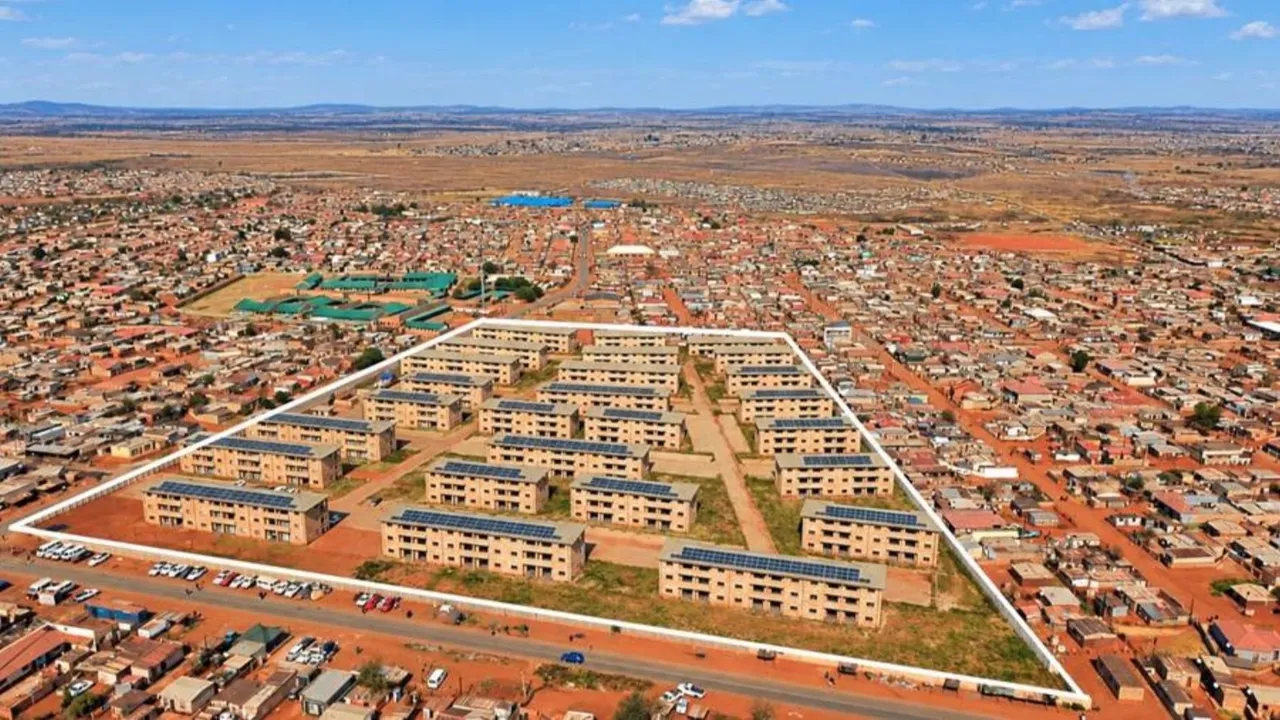
Once a rapidly expanding affordable housing group backed by institutional capital, Alleyroads is now restructuring parts of its portfolio, creating opportunities and risks for property investors.
- Alleyroads expanded into a reported R5 billion property portfolio before parts of the group entered business rescue or liquidation.
- Three residential development assets in Lebowakgomo, Katlehong and Vosloorus are heading to auction on 25 November 2026.
- Galetti Auction's Guy Dowding says unfinished developments could offer value, provided investors understand completion costs, rental demand and achievable returns.
From affordable housing success to financial restructuring
Just six years ago, Alleyroads was among South Africa's ambitious affordable housing developers, attracting institutional capital, expanding into residential and student accommodation, and pursuing large-scale property development across the country.
Today, parts of the group are undergoing business rescue or liquidation, with properties being brought to market as practitioners and liquidators work through the restructuring and disposal of assets. The contrast is striking.
A business that attracted hundreds of millions of rand in institutional funding, acquired a substantial residential portfolio and reported property assets valued at approximately R5 billion is now seeing some of its developments offered for sale.
But for property investors, the central question is not simply what happened to Alleyroads. It is whether distressed developments can be acquired, completed and repositioned profitably and what their sale reveals about the economics of affordable housing in South Africa.
Guy Dowding, Director at Galetti Auction, believes investors need to distinguish between the financial difficulties of the original developer and the underlying demand for housing.
“Well-located rental housing for teachers, nurses, police officers and young professionals remains an important part of South Africa's housing mix,” says Dowding.
“Nothing about these sales suggests that demand has gone away. What they do show is just how tight the numbers can be when you are trying to deliver affordable housing at scale.”
The rise of Alleyroads: From institutional funding to R5bn
Alleyroads' expansion reflected the significant institutional interest in South Africa's affordable rental housing market. The group's growth was supported by capital investment, portfolio acquisitions and a strategy focused on housing demand in established and emerging urban markets.
Major milestones included:
- 2020 - Vantage Capital
The mezzanine finance investor committed R82 million to the Kaya Lane development in Lebowakgomo, supporting a project that conventional lenders were reportedly reluctant to finance during its early construction phase. - 2022 - International Finance Corporation
The World Bank Group's private-sector investment arm announced a R325 million green loan to support the development of more than 1,000 rental apartments around Johannesburg. - 2023 - Pulse Property Group acquisition
Alleyroads acquired a portfolio for approximately R1.2 billion, adding around 3,300 student beds and rental apartments across 46 developments. - Retail diversification
The group expanded beyond residential accommodation through Riverstone Mall in Meyerton. - Green development
Investment in solar and battery systems was intended to reduce grid dependence across more than 1,000 apartments, alongside ambitions for green-certified affordable housing.
At its peak, Alleyroads' own website valued its portfolio at approximately R5 billion. That figure provides an indication of the group's reported scale, although it should not be confused with a current independent valuation of assets available for sale.
Three developments head to auction on 25 November
As parts of the Alleyroads group are restructured, three residential development assets are scheduled for auction through Galetti Auction on 25 November 2026. The assets include:
DEVELOPMENT | LOCATION | REPORTED DEVELOPMENT AREA |
Kaya Lane Estate | Lebowakgomo, Limpopo | 13,176 m² |
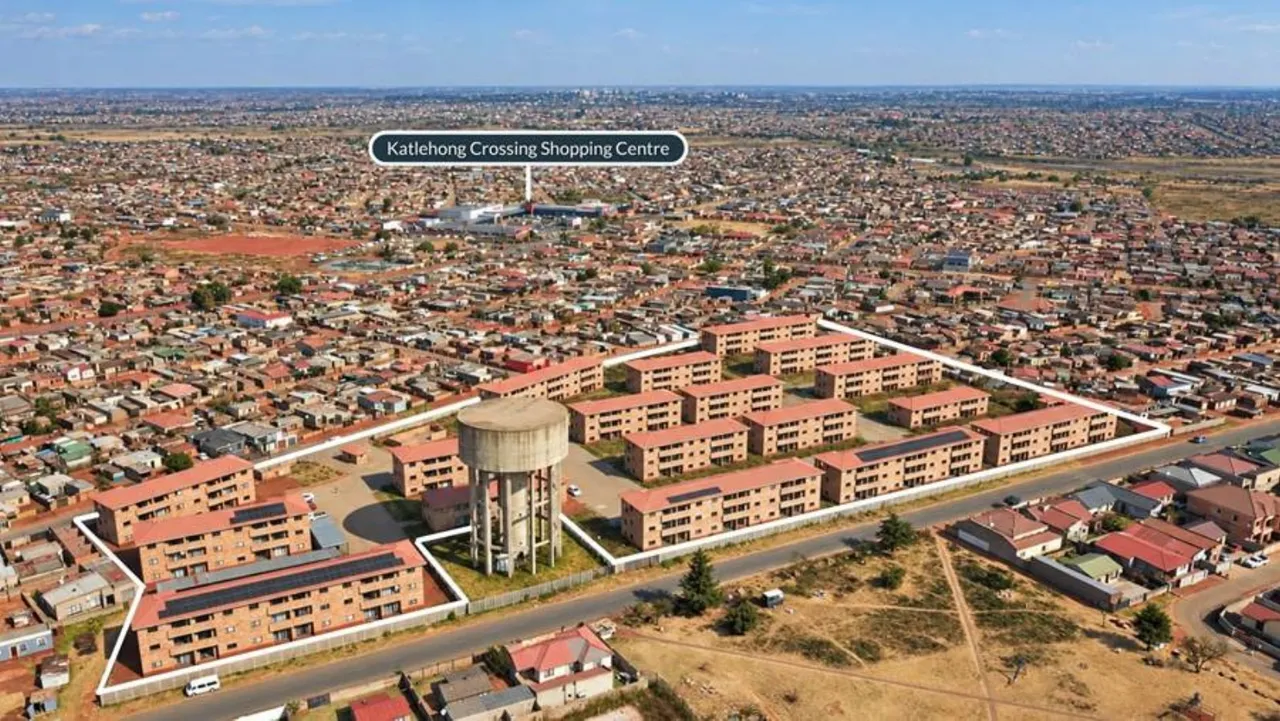
Katlehong South development | Katlehong, Gauteng | 18,192 m² |
Umthala Mews | Vosloorus, Gauteng | 12,288 m² |
Combined | 43,656 m² |
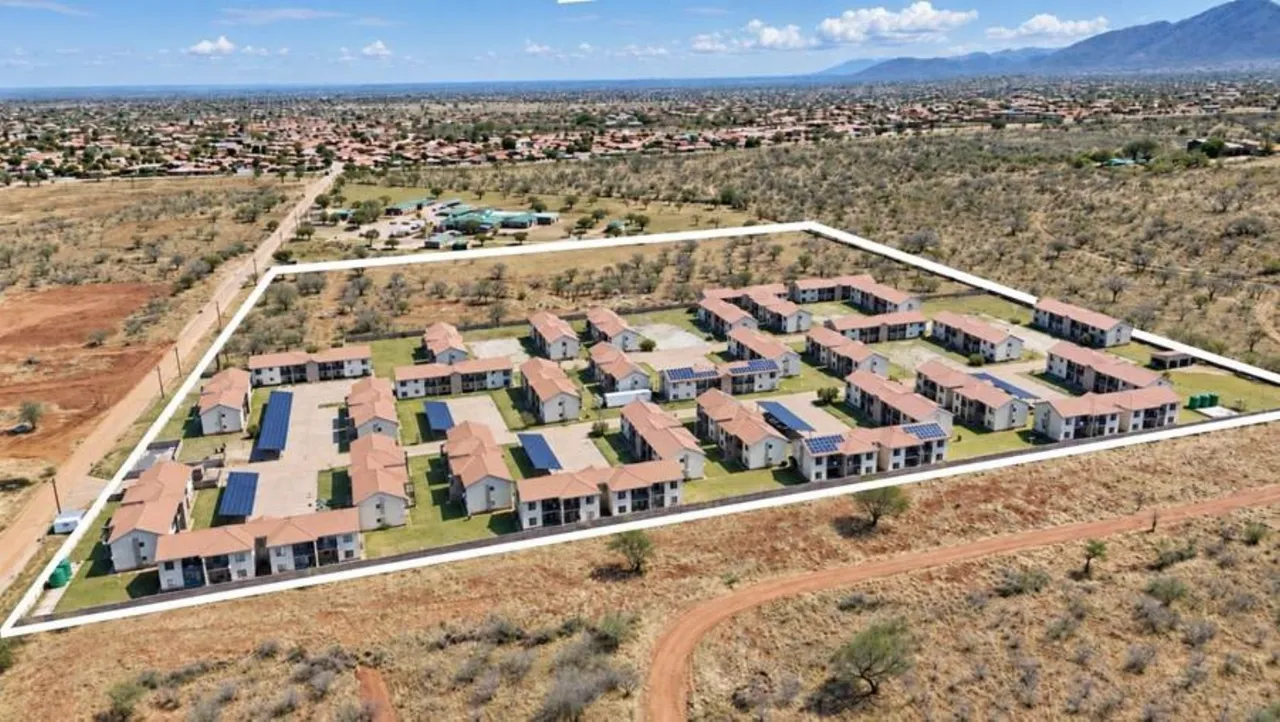
The developments offer investors exposure to established residential markets, although their commercial viability depends on the status of construction, approvals, infrastructure and achievable rental income. The reported areas should be confirmed against the auction documentation, including whether they represent land, gross building or development areas.
For investors with development and asset-management capabilities, these sales could present an opportunity to acquire partially completed projects at prices reflecting their current condition rather than historical development expenditure.
Distressed property: Opportunity or financial trap?
Dowding believes unfinished developments should not automatically be dismissed as failed investments. “An unfinished development doesn't mean you are starting from zero,” he says.
“Someone else has already paid for the land, the approvals, the bulk services and a good part of the construction. The opportunity is to understand what is already there, what is left to spend and whether the numbers work to finish it.”
The distinction between historical expenditure and current market value is particularly important. A developer may have spent substantial amounts acquiring land, securing approvals and constructing buildings. However, those costs do not necessarily determine what a new investor should pay.
For the buyer, the investment case depends on the acquisition price, remaining capital expenditure and the property's expected operating performance.
Dowding cautions: “A cheap price isn't necessarily a bargain if there is still a fortune to spend.” Equally, he argues that an unfinished development should not be written off where the acquisition and completion costs can support a sustainable return.
Six critical checks before buying unfinished housing
Investors considering distressed affordable housing developments need to undertake more than a conventional property inspection.
Dowding identifies six areas requiring particular attention:
- 1. Rental demand
Establish achievable rentals, vacancy levels, tenant affordability and the performance of competing developments. - 2. Location
Assess access to employment centres, public transport, schools, healthcare facilities and retail services. - 3. Condition and compliance
Verify construction quality, approved plans, zoning, building compliance and outstanding regulatory requirements. - 4. Operating costs
Calculate realistic expenditure on security, utilities, maintenance, insurance, property management and municipal charges. - 5. Completion costs
Obtain independent estimates for outstanding construction, infrastructure, professional fees and contingencies. - 6. Investment returns
Model the total acquisition and completion cost against stabilised rental income, operating expenses, financing costs and exit value.
The most important calculation is not simply what the investor pays at auction. It is the total capital required to acquire, complete, lease and operate the development.
An apparently attractive discount can disappear quickly if construction defects, municipal infrastructure or compliance issues require substantial additional investment.
Reviving developments could strengthen township economies
The potential benefits of completing stalled developments extend beyond individual property investors. According to figures cited by Dowding, Standard Bank's 2025 Township Informal Economy Report estimated the township economy's contribution at approximately R900 billion.
Other research presented at the South African Township Economy Conference estimated that between 500,000 and 700,000 township-based small businesses employ between 1.5 million and two million people.
For Dowding, this economic activity already exists. New property investment can strengthen it. “Sometimes people talk about the township economy as though it still needs to be created. It doesn't,” he says.
“People already live, work, spend money and run businesses in these communities. What new investment can do is add to that.” Completing stalled developments could generate economic activity through:
- Construction employment and contracts for local tradespeople.
- Demand for building materials, transport and specialist services.
- Ongoing security, cleaning, maintenance and property management jobs.
- Additional household spending at surrounding businesses.
- Greater utilisation of existing infrastructure and serviced land.
These benefits depend on developments being commercially viable and successfully completed.
Why the Alleyroads outcome matters for investors
The restructuring of parts of Alleyroads raises broader questions about affordable housing development and investment. South Africa faces substantial demand for well-located, reasonably priced rental accommodation. Yet demand alone does not guarantee development profitability.
Large-scale projects must balance construction costs, financing expenses, tenant affordability, operating expenditure and the time required to achieve sustainable occupancy.
The Alleyroads asset sales could therefore provide an important test of market appetite for partially completed affordable housing projects.
Dowding believes successful transactions could demonstrate that property value can survive the financial difficulties of an original developer.
“If these buildings sell at a sensible price, get finished and ultimately fill with tenants, it shows that the value in the housing can still be there even when the original developer is no longer the one taking it forward,” he says.
For funders, developers and investors, the auction outcomes could provide useful evidence of the prices the market is prepared to pay for assets carrying construction and completion risks.
The REI perspective: Demand is not the same as profitability
The Alleyroads story highlights one of the most important lessons in property development: a compelling housing need does not automatically translate into a sustainable investment model.
Affordable housing can attract institutional capital and offer long-term rental demand. But successful delivery requires disciplined funding structures, realistic construction budgets, careful phasing and sustainable rental economics.
For investors considering the three upcoming auctions, several principles stand out:
- Buy the asset, not the history
Historical development expenditure should not determine today's purchase price. - Model the full cost
Acquisition, completion, financing and operational stabilisation must all be included. - Verify the legal position
Business rescue or liquidation sales require careful examination of title, encumbrances, contracts and sale conditions. - Stress-test affordability
Rental projections must reflect what households can realistically pay. - Preserve capital flexibility
Unexpected delays and construction costs can undermine even promising projects.
The future of the Alleyroads developments will ultimately depend on whether new investors can complete them at costs that support sustainable rental income.
The opportunity is real, but so is the risk. The winners will not necessarily be those who acquire the properties at the lowest prices, but those who understand precisely what it will take to make them commercially successful.
As Dowding concludes: “The need for affordable housing hasn't gone away. There is already money, work and infrastructure tied up in these properties. The opportunity now is to find the right buyers who can make the numbers work, finish what has been started and get these developments working again.”