





Inner-City explosions expose Johannesburg infrastructure crisis
- Two transformer-related incidents in one week highlight rising public safety risks linked to deteriorating infrastructure across Johannesburg’s inner city.
- JPOMA warns that years of deferred maintenance and financial mismanagement have made infrastructure failures predictable, not accidental.
- Property owners call for urgent city-wide intervention to stabilise infrastructure and prevent further loss of life and business disruption.
Infrastructure failures now threaten lives in Johannesburg
Johannesburg’s long-standing infrastructure decline has reached a dangerous tipping point, with repeated failures now translating into serious public safety incidents in the inner city.
The Johannesburg Property Owners and Management Association (JPOMA), representing property owners and managers across the CBD, has issued an urgent call for decisive intervention after two major incidents this week exposed the fragility of critical infrastructure systems.
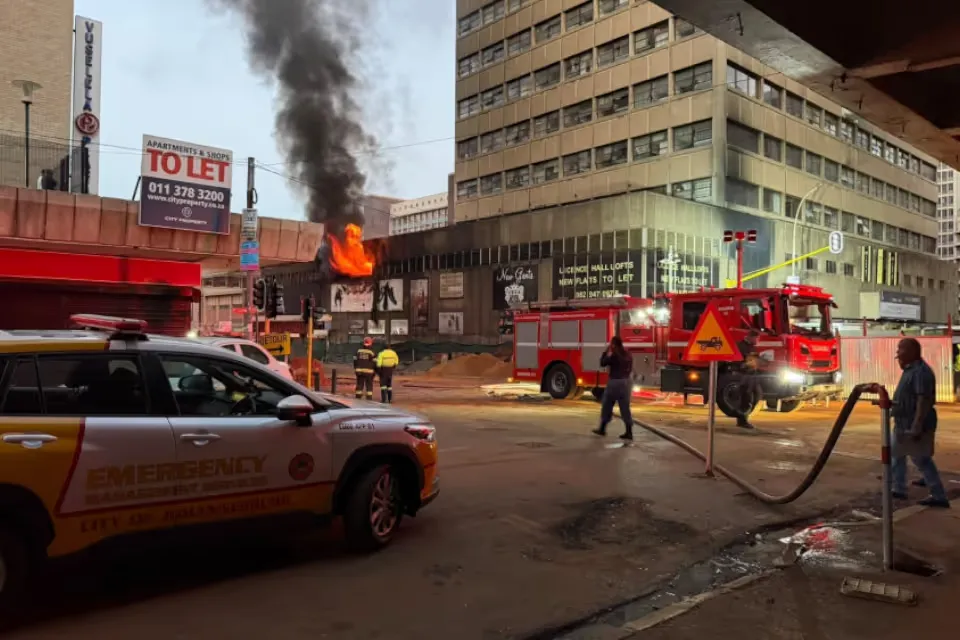
On Tuesday, 3 February, a severe electrical incident in New Doornfontein resulted in one fatality and two serious injuries. Days later, on Friday morning, another alleged transformer explosion led to a building fire at the corner of Bree and Harrison streets, compounding concerns about the safety of the city’s electrical network.
While the City of Johannesburg stated that no transformer explosion occurred in the first incident, JPOMA disputes this conclusion, citing physical evidence and independent technical assessments suggesting internal transformer failure and malfunctioning or absent protective systems.
For property owners and residents, the distinction is academic, the reality is that infrastructure failures are now creating life-threatening conditions.
Why this crisis is happening
According to JPOMA, the warning signs have been visible for years. Frequent power outages, leaking water infrastructure, unsafe street conditions and endless “temporary” repairs have become part of daily life in the inner city.
The organisation argues that deferred maintenance and financial mismanagement have created systemic vulnerability.
National Treasury data reinforces these concerns, showing billions of rand in unauthorised, irregular and wasteful municipal expenditure, alongside continued underfunding of maintenance and infrastructure renewal programmes.
JPOMA’s message is blunt: when maintenance is consistently delayed and financial discipline fails, infrastructure collapse becomes inevitable.
What must happen now
JPOMA is calling for the City of Johannesburg to shift urgently from crisis response to proactive intervention.
Key actions required include:
- Immediate implementation of funded and measurable infrastructure maintenance and renewal programmes
- Improved accountability and consequence management for operational and financial failures
- Transparent reporting on infrastructure risks and maintenance progress
- Collaboration between the City, property owners and stakeholders to stabilise the inner city
JPOMA notes that constructive engagement with parts of the City administration continues, and it remains committed to working alongside authorities to restore confidence and safety in the metro.
A crisis that can no longer be ignored
Johannesburg’s infrastructure challenges are no longer simply an inconvenience; they are becoming a public safety emergency.
For businesses, residents and investors, confidence depends on predictable and reliable city services. Without urgent intervention, further infrastructure failures and economic damage are increasingly likely.
JPOMA’s warning is clear: infrastructure collapse is not bad luck, it is the result of years of neglect. And unless decisive action is taken now, the risks facing Johannesburg’s inner city will continue to escalate.