





Hidden Risk: Mental health crisis on construction sites
- Mental health strain is emerging as a key driver of accidents and safety failures on construction sites.
- Long hours, pressure, and instability are pushing workers into burnout, anxiety and silence.
- Industry leaders are calling for mental well-being to be embedded into core safety systems.
A growing risk beneath the surface
Construction site accidents have long been viewed through the lens of physical safety, equipment failure, compliance gaps, or human error.
But a deeper, less visible risk is now demanding attention: mental well-being.
The Western Cape Property Development Forum (WCPDF), through its Workgroup on Construction and Related Professions, has raised serious concern that deteriorating mental health among workers is directly contributing to rising safety risks on site.
This is not a soft issue. It’s a hard operational risk and it’s getting worse.
The reality on the ground
According to Rudolf Murray: “A critical factor which could lead to more site accidents and injuries… is the increasing challenge of mental health as a result of immense pressure and unrealistic time constraints.”
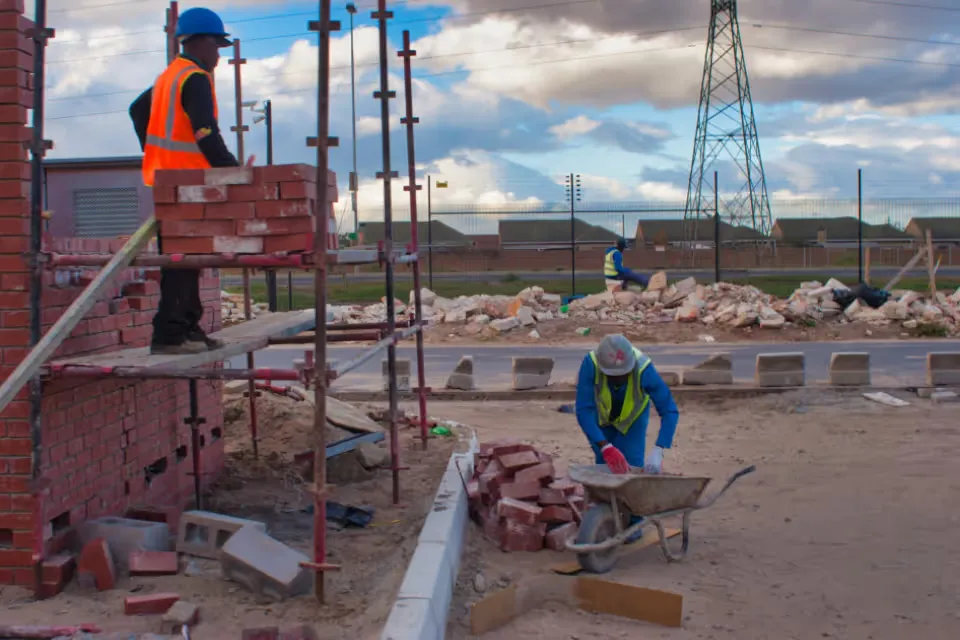
Construction workers today are operating under extreme conditions:
- Extended working hours, often seven days a week
- Tight deadlines with financial penalties
- Exposure to safety risks and, in some cases, intimidation or violence
- Separation from families and support systems
This creates a perfect storm of fatigue, stress and reduced focus with conditions where mistakes happen.
A culture of pressure and silence
Petra Devereux highlights the compounding effect of industry culture: “Workers face long hours in a high-risk environment with tight deadlines, job insecurity and a culture of stoicism.”
That culture matters. In construction, toughness is often expected. Admitting stress or mental strain is seen as weakness. The result? Workers suffer in silence, until it shows up in performance, behaviour, or accidents.
Global data reinforces this trend. Research referenced by the Chartered Institute of Building shows high levels of stress, anxiety and even suicidal thoughts among construction workers, with little improvement over time.
Locally, studies by the Construction Industry Development Board and the Department of Employment and Labour point to similar triggers:
- Economic pressure and job insecurity
- Substance abuse as a coping mechanism
- Lack of diversity and inclusion
- Environments that discourage openness
The pressure doesn’t stop at workers
The strain runs up the value chain. Supervisors and site managers are also under pressure - balancing compliance, administration and delivery expectations.
As Stefan van Huyssteen explains: “Anyone suffering from this level of mental anguish on a site will impact on their job… expectations are high, and the pressure is relentless.”
This isn’t isolated, it’s systemic.
Why this matters for safety and performance
Mental fatigue is not just a wellness issue, it’s a productivity and safety issue.
When workers are:
- Exhausted
- Distracted
- Anxious
- Emotionally strained
Their ability to make decisions, follow procedures and react to risk is compromised. In a high-risk environment like construction, that has direct consequences.
What needs to change: from awareness to action|
The message from industry leaders is blunt: awareness is not enough. Mental health must be treated like any other safety protocol.
Petra Devereux puts it clearly: “Mental health well-being must be embedded into all companies’ health and safety systems, just as PPE or fall protection.”
The Master Builders Association Western Cape recommends practical, implementable steps:
- Integrate mental health into site-specific safety policies
- Provide access to counselling or Employee Assistance Programmes
- Conduct regular mental health awareness sessions
- Train supervisors in mental health literacy
- Appoint on-site mental health champions
- Enable anonymous reporting channels
- Enforce realistic workloads and timelines
These are not “nice-to-haves.” They are risk management tools.
Way forward: leadership or liability
The construction sector is a critical economic driver, particularly in the Western Cape. But it cannot sustain growth on the back of an exhausted and mentally strained workforce.
The industry now faces a clear choice:
- Treat mental health as a compliance tick-box or
- Recognise it as a core pillar of safety, productivity and long-term sustainability
As Devereux concludes: “Health in occupational health and safety must not be overlooked, people are the backbone of this industry.”
Bottom line
The next wave of safety improvement in construction won’t come from better helmets or stricter checklists.
It will come from recognising that the state of mind of a worker is just as critical as the conditions on site. Ignore that and the risks will keep rising.