








Cape industrial boom fuels speculative development
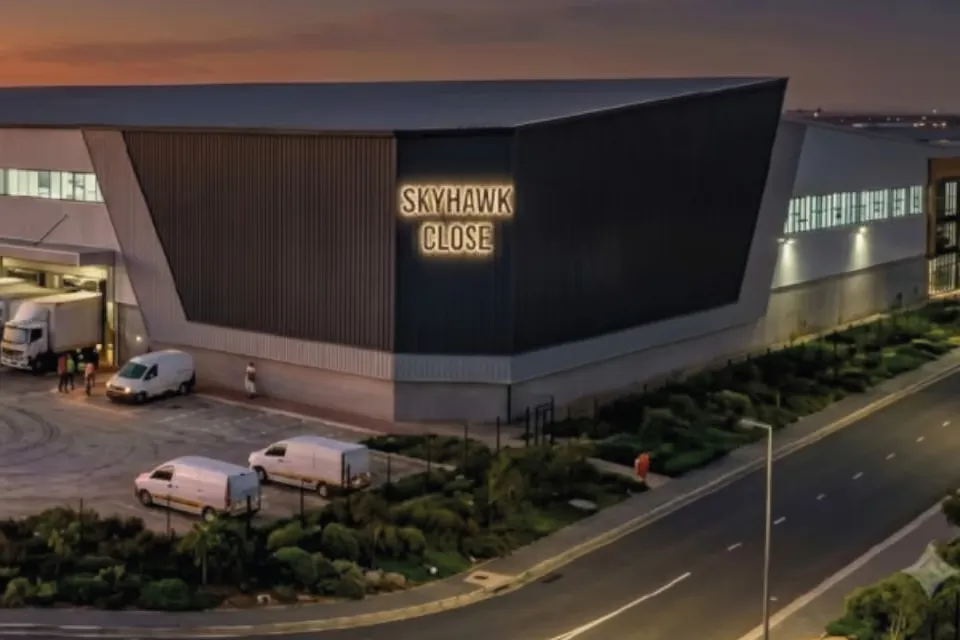
- Developers are increasingly building industrial space before securing tenants as confidence in the Cape market strengthens.
- Industrial rentals have surged by up to 58% since 2021, reshaping development economics across the Cape Metropole.
- Limited land supply and strong investor demand continue to drive one of South Africa's best-performing commercial property sectors.
The Cape Metropole's industrial property market has entered a new growth phase, with developers increasingly willing to construct warehouses and logistics facilities without pre-committed tenants.
According to Cushman & Wakefield | BROLL, this marks a significant shift for a market that has traditionally favoured build-to-suit developments, where projects only commenced once tenants were secured.
Today, sustained occupier demand, strong rental growth and a shortage of well-located industrial land are giving developers the confidence to invest ahead of confirmed demand.
"That risk appetite has shifted," says Shane Howe, Head of Industrial Broking, Western Cape at Cushman & Wakefield | BROLL.
"For many years industrial development in the Cape was largely driven by specific occupier requirements. Developers would typically secure a tenant before committing to construction. Today they are increasingly building on the expectation that the market will absorb the space."
He says this is more than simply an increase in construction activity.
"Developers are backing the underlying strength of the market. Sustained occupier demand, several years of rental growth and limited industrial land have fundamentally changed the development equation."
Rental growth changes the equation
Industrial property has been one of South Africa's strongest-performing commercial sectors over the past five years.
The expansion of logistics, warehousing and e-commerce, combined with changing supply chains following the Covid-19 pandemic, accelerated demand for modern industrial space.
Meanwhile, years of limited speculative development left many established industrial nodes with constrained supply. The impact has been substantial.
According to Cushman & Wakefield | BROLL, asking rentals at leading A-grade industrial parks across the Cape Metropole have increased by as much as 58% since the second quarter of 2021.
Facilities that rented for around R60/m² five years ago are now achieving R90 - R95/m², while premium logistics warehouses are commanding net rentals of between R105/m² and R115/m².
This sustained rental growth has significantly improved development feasibility and encouraged developers to bring projects to market earlier.
Building for a broader market
Unlike bespoke industrial facilities designed for individual occupiers, speculative developments are created to accommodate a broad range of warehouse and logistics users.
Projects typically range from 500m² mini-industrial units to 5,000m² logistics facilities, with many designed to allow adjoining units to be combined or reconfigured as tenant requirements evolve.
"Versatility is the key principle behind speculative development," says Howe.
"Developers are designing buildings that appeal to the widest possible range of occupiers while still allowing flexibility in office layouts, loading facilities and internal configurations."
Although highly specialised manufacturers will continue to require purpose-built premises, most warehousing and distribution users can be accommodated within these flexible modern developments.
A finite supply of development opportunities
Despite the increase in development activity, opportunities remain constrained by one critical factor: land.
New projects continue to cluster around established industrial precincts and key transport corridors where infrastructure, accessibility and logistics efficiency support long-term demand.
However, much of the Cape Metropole's prime industrial land has already been secured, leaving relatively few premium development opportunities.
Redeveloping older industrial properties has also proved challenging.
"Although rentals have grown strongly, acquisition and redevelopment costs continue to make large-scale brownfield redevelopment difficult to justify," says Howe.
The combination of strong occupier demand and limited developable land continues to support rental growth and new construction.
Capital markets remain buoyant
Strong occupier demand is also being reflected in the investment market. Premium industrial assets continue to attract significant investor interest, with high-quality warehouses achieving yields of between 8% and 9%, while some prime assets have traded below 8%.
Older but well-located industrial properties are generally trading at yields of 9% to 9.5%, supported by secure income streams, annual rental escalations and sustained tenant demand.
For well-capitalised developers and institutional investors, speculative development has become an increasingly attractive strategy to accelerate returns rather than waiting for lengthy tenant procurement processes.
Understanding the pipeline
For occupiers, the growth in speculative development creates greater access to modern industrial facilities without the lead times associated with purpose-built developments.
However, Howe says understanding the development pipeline is becoming increasingly important. Location, timing, building specification, expansion potential and flexibility all influence long-term operational efficiency and investment value.
"There is substantial activity across the Cape industrial market, but not every opportunity is the same," he says.
"Developers are responding to exceptionally strong market fundamentals, but suitable land remains constrained and demand continues to support rental growth. Understanding where the next opportunities are emerging is becoming increasingly important for occupiers, developers and investors alike."
A market built on confidence
The Cape industrial market has moved beyond recovery into a period of sustained expansion.
Strong occupier demand, rising rentals, limited land supply and resilient investor confidence are driving a new generation of speculative industrial development that would have been difficult to imagine just a few years ago.
For investors, developers and occupiers, the message is clear: the Cape Metropole remains one of South Africa's strongest industrial property markets, but opportunities are becoming increasingly scarce as demand continues to outpace supply.