








Budget relief won't fix SA's homeownership crisis
Listen · 1-minute summary
0:00 / 1:35
Read the summary
Budget relief won't fix SA's homeownership crisis. Lightstone Property says the October 2026 budget's temporary fuel levy relief may ease pressure on household budgets, but it won't solve the deeper problems keeping South Africans out of the property market. Affordable first-time buyer transactions fell from 32,000 in 2021 to 22,000 in 2025, and only 38 percent of those deals were bond-financed. Buyers under 35 made up just 31 percent of mortgage value in 2025, down from around 40 percent two decades earlier. Bonded property transfers did rise, from around 110,000 in 2024 to 118,000 in 2025, but that recovery hasn't reached younger or first-time buyers. The September 2026 repo rate hike to 7.25 percent added further pressure on borrowing costs. Esteani Marx, Head of Real Estate at Lightstone Property, says, "Improving access to homeownership requires a broad approach that considers interest rates, employment and income levels, credit access and the availability of suitable housing stock." Lightstone argues that real progress depends on stronger incomes, better access to finance, and more affordable housing supply, not just short-term relief. Read the full story by Neale Petersen on rei.co.za.

Lightstone Property warns that temporary fuel relief may ease household pressure, but declining first-time buyer activity, higher borrowing costs and persistent affordability barriers threaten South Africa's homeownership ambitions.
- Budget relief offers temporary breathing room, but interest rates, household incomes and access to mortgage finance remain major barriers to homeownership.
- Affordable first-time buyer transactions fell from 32,000 in 2021 to 22,000 in 2025, highlighting growing pressure on market entry.
- Buyers under 35 accounted for just 31% of mortgage value in 2025, down from approximately 40% two decades earlier.
Budget 2026: Relief for households, but what about property?
South Africa's latest Medium-Term Budget Policy Statement (MTBPS) has placed household affordability firmly back in the spotlight, but property market analysts warn that short-term financial relief will do little to resolve the deeper challenges preventing millions of South Africans from becoming homeowners.
Finance Minister Enoch Godongwana's October 2026 budget announcement included temporary fuel levy relief aimed at easing pressure on consumers already grappling with rising living costs, borrowing expenses and constrained disposable incomes.
While measures that reduce household expenditure are welcome, the question for the property sector is whether they can meaningfully improve housing affordability and stimulate demand.
According to Lightstone Property, the answer requires looking beyond temporary relief towards the structural obstacles affecting housing finance, employment, income growth and the supply of appropriately priced homes.
"Improving access to homeownership requires a broad approach that considers interest rates, employment and income levels, credit access and the availability of suitable housing stock," says Esteani Marx, Head of Real Estate at Lightstone Property.
The findings come as Lightstone's latest bond-financing research reveals a property market in which mortgage activity has shown signs of recovery, but younger and first-time buyers continue to face significant obstacles.
Mortgage activity improves, but long-term growth remains weak
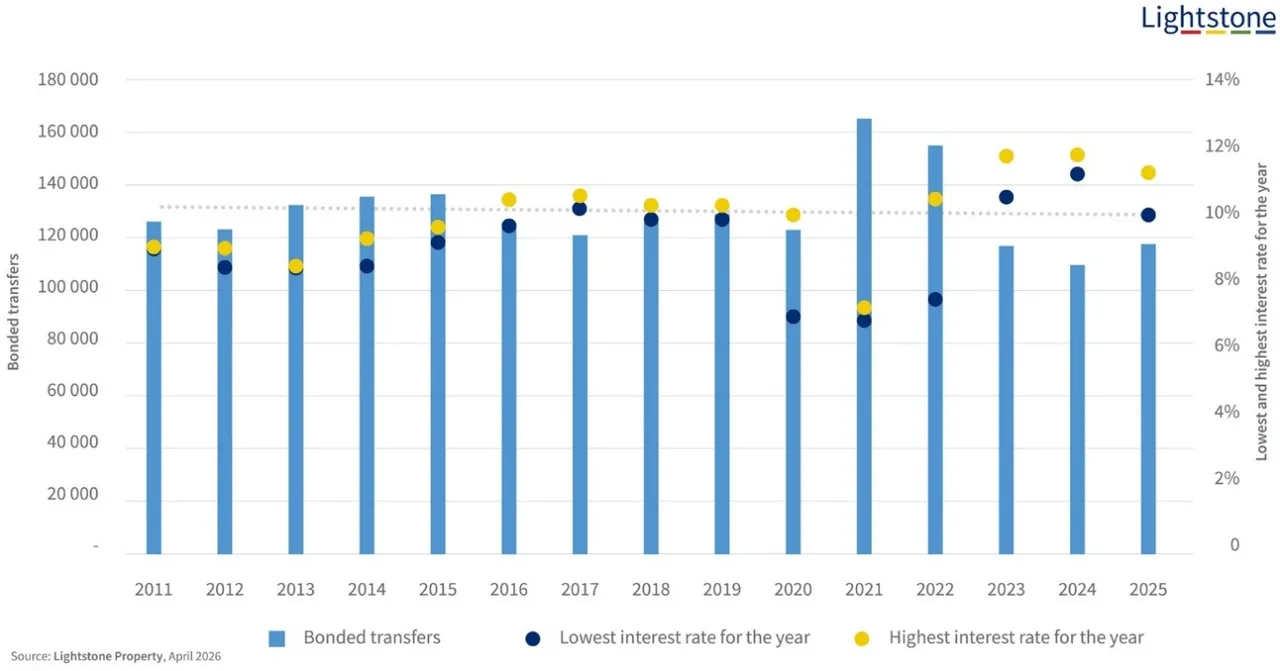
Lightstone's analysis of mortgage-financed property transactions between 2011 and 2025 demonstrates the relationship between interest rates and housing market activity.
Lower borrowing costs generally support mortgage demand, while higher rates reduce affordability and limit the purchasing power of prospective homeowners. Yet interest rates are only part of the equation.
Key findings from Lightstone's research:
- Bonded property transfers increased from approximately 110,000 in 2024 to 118,000 in 2025, representing growth of around 7.3%.
- Despite this improvement, mortgage-financed transaction volumes have remained relatively flat over the longer term.
- Household income constraints, lending requirements and the cost of purchasing property continue to restrict market participation.
"Interest rates are an important factor in determining what buyers can afford, but the bigger question is whether households have the financial capacity and access to funding needed to enter the property market in the first place," says Marx.
For investors and property developers, this distinction is important. A recovery in mortgage volumes does not necessarily signal a broad-based improvement in affordability or the emergence of a new generation of homeowners.
Younger South Africans are losing ground
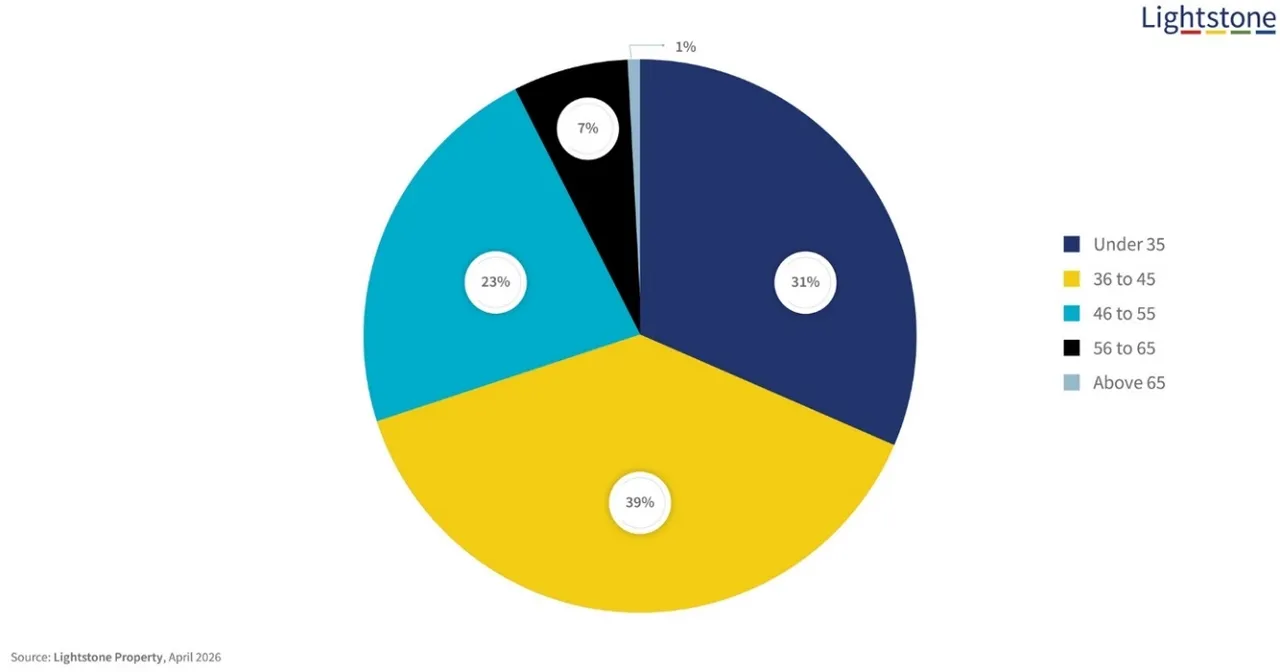
Perhaps the most concerning finding is the declining participation of younger buyers in South Africa's mortgage market. According to Lightstone, buyers under the age of 35 accounted for approximately 31% of the total value of bonds issued in 2025, compared with around 40% at their peak in 2005.
The figures suggest that younger households are finding it increasingly difficult to enter the property market, even when mortgage finance is available. Several factors contribute to this challenge:
- Affordability: Rising living expenses reduce the income available for monthly bond repayments.
- Employment and income: Job insecurity and limited salary growth affect borrowing capacity.
- Upfront costs: Deposits, transfer expenses and legal fees create additional financial barriers.
- Housing supply: Suitable properties within affordable price brackets remain limited in many desirable locations.
"This suggests that affordability pressures are not simply delaying individual purchasing decisions. They are also influencing when South Africans can enter the property market and begin building wealth through home ownership," Marx explains.
The longer entry into homeownership is delayed, the less time younger households have to build property equity and accumulate wealth through ownership.
First-time buyers face a shrinking market
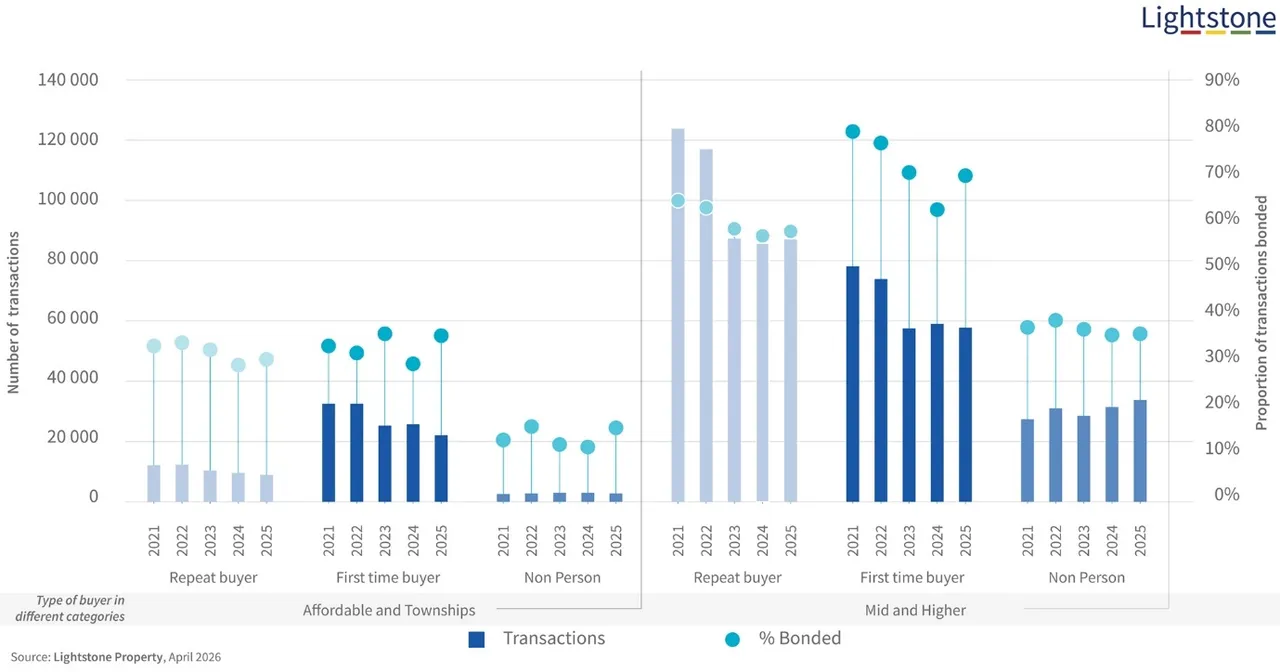
Lightstone's research also reveals a significant contraction in first-time buyer transactions across both affordable and middle-to-upper housing segments.
Affordable housing segment
- First-time buyer transactions declined from approximately 32,000 in 2021 to 22,000 in 2025.
- This represents a contraction of around 31% over four years.
- Only 38% of first-time buyer transactions in the affordable segment were bond-financed in 2025.
Middle-to-upper housing segment
- First-time buyer transactions declined from approximately 77,000 in 2021 to 57,000 in 2025.
- This represents a decline of approximately 26%.
Together, these figures highlight a market in which aspiring homeowners are increasingly struggling to translate demand for housing into completed purchases. The implications extend beyond individual households.
For developers, weaker first-time buyer activity can affect sales absorption, development feasibility and the pricing of new residential projects. For the broader property market, fewer new entrants can constrain transaction volumes and reduce activity across the housing value chain.
Why fuel relief alone cannot unlock homeownership
The temporary fuel relief announced in the MTBPS may provide some breathing room for households by reducing pressure on transport and living expenses.
However, the benefit is unlikely to fundamentally change mortgage affordability for households already struggling to qualify for finance. Lightstone notes that the September 2026 repo rate increase to 7.25% added to borrowing costs, further highlighting the sensitivity of homebuyers to interest rate movements.
The distinction is straightforward: lower household expenses may improve monthly cash flow, but they do not automatically translate into mortgage eligibility or sustainable homeownership.
A household may benefit from lower fuel costs yet still struggle with insufficient income, high existing debt commitments or the upfront costs of purchasing a home.
For South Africa to achieve meaningful progress, temporary consumer relief must be accompanied by longer-term improvements in household finances and housing delivery.
What needs to change to unlock the housing market?
Lightstone identifies several interconnected priorities that could help improve access to homeownership.
- Stronger household affordability
Sustainable employment creation and income growth are essential to expanding the pool of potential buyers. - Improved access to finance
Lending products and qualification processes must better reflect the needs and financial circumstances of different buyer segments, without compromising responsible lending. - More affordable housing supply
Developers need to deliver appropriately priced homes in locations supported by employment opportunities, transport and essential services. - Reduced barriers to entry
Deposits, transaction costs and other upfront expenses remain major obstacles for first-time purchasers. - Infrastructure investment
Reliable services and better-connected residential developments can improve long-term affordability and support sustainable property investment.
These priorities also create opportunities for developers, lenders, institutional investors and government to collaborate in expanding access to housing.
The investment outlook: Affordability must drive the next recovery
South Africa's property market continues to demonstrate resilience, but Lightstone's findings reinforce an important distinction between a recovery in transaction activity and genuine progress in homeownership.
The increase in bonded transfers during 2025 is encouraging. However, declining first-time buyer participation, particularly among younger households, suggests that the foundations of a broader housing market recovery remain under pressure.
For property investors and developers, the opportunity lies increasingly in understanding affordability, household formation, location and the changing financial circumstances of prospective buyers.
For policymakers, the challenge is ensuring that economic relief translates into improved access to housing rather than simply temporary reductions in household expenses.
"Greater alignment between household income levels, housing supply, lending practices and infrastructure development is essential to making homeownership more attainable," says Marx.
"Ultimately, progress should be measured not only by how many South Africans qualify for home loans, but by how many can realistically afford to purchase and sustainably maintain a home."
The bottom line
Temporary Budget relief may help households weather immediate financial pressures, but sustainable growth in South African homeownership will depend on stronger incomes, accessible finance and the delivery of homes that buyers can genuinely afford.
Source: Lightstone Property bond-financing research, 2011–2025. Read the full Lightstone insights.