









Why South Africa is the world’s best-value luxury market
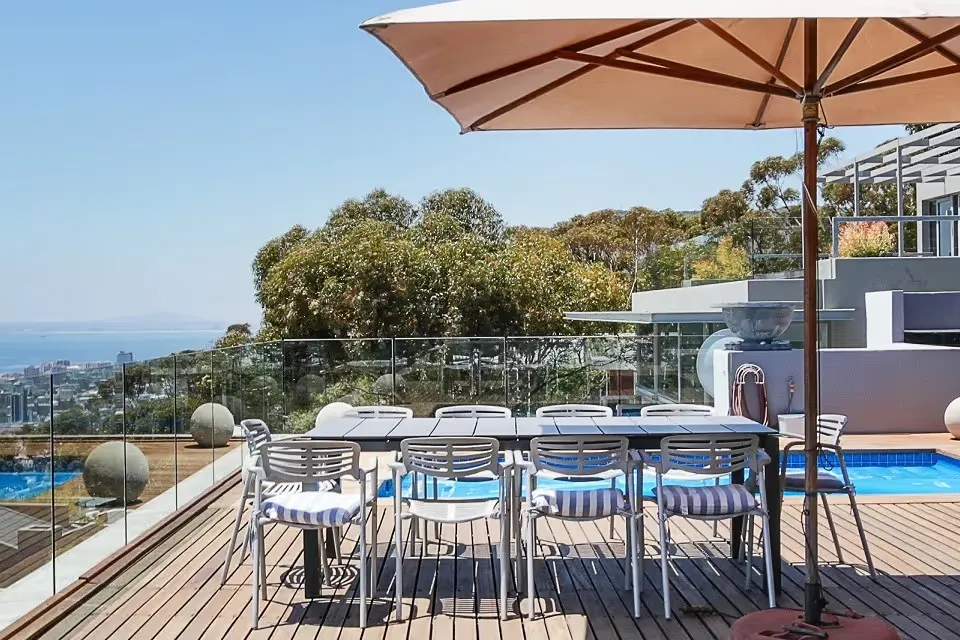
- Prime coastal homes cost up to 50% less than Europe or the US, yet offer superior space, lifestyle and rental yields.
- A stronger rand and lower interest rates are accelerating foreign demand in Cape Town and KwaZulu-Natal.
- Scarce supply, global-quality infrastructure and resilient design are driving long-term capital growth.
Why South Africa’s luxury market is outperforming
With interest rates easing, the rand strengthening and international travel rebounding, South Africa has entered a new phase of confidence-led growth. The prime lending rate has fallen to 10.25%, its lowest level in over a year, while the currency is trading near three-year highs, supported by robust commodity prices and improving economic sentiment.
This combination is proving irresistible to offshore buyers. While local prices have risen, they remain dramatically cheaper than comparable luxury markets in Europe, the Middle East and the United States, offering a rare mix of lifestyle, yield and long-term capital upside.
“Property prices have been rising, with a new record average purchase price of R1.63 million reached at the end of 2025, but this hasn’t diminished South Africa’s appeal as a luxury investment destination,” says Bradd Bendall, National Head of Sales at BetterBond. “Even at around R16.40 to the dollar, international buyers are still getting exceptional value for money when they invest in South African property.”
Global comparisons: where your money goes furthest
According to Knight Frank’s Prime International Residential Index:
- In Monaco, US$1 million buys roughly 16m² – the size of a parking bay.
- In London, the same amount secures a compact one-bedroom apartment.
- In Dubai, it stretches to a modern two-bedroom of about 95m².
- In Cape Town’s Atlantic Seaboard or Umhlanga, US$1 million can buy a 200m²+ luxury villa or penthouse.
Bendall notes that prime homes in Cape Town and KwaZulu-Natal remain at least 50% cheaper than comparable properties on the French Riviera or Mediterranean coastline, yet deliver similar lifestyle appeal and often superior rental returns.
The ‘Nettleton effect’: confidence at the top end
Record-breaking sales are reinforcing global confidence in South Africa’s prime suburbs. The R157 million sale of a Clifton home on Nettleton Road is emblematic of a market where scarcity, views and lifestyle command premiums.
Foreign buyers now account for more than 40% of sales above R10 million, and around 25% of transactions in the R5 million to R10 million bracket, according to BetterBond data.
The Western Cape alone represents about 40% of all luxury transactions, with hotspots including Clifton, Camps Bay, Bantry Bay, Constantia and the V&A Waterfront regularly achieving prices north of R20 million.
“Cape Town’s geography creates forced scarcity,” says Bendall. “There is simply very limited land between mountain and ocean, which means demand will almost always exceed supply. That underpins long-term capital growth, even during economic downturns.”
Five reasons global investors are choosing South Africa
- Unmatched value per square metre
Buyers get two to three times more space than in Europe or the US for the same capital outlay. - Lifestyle arbitrage
World-class beaches, wine farms, golf estates and urban amenities at a fraction of global luxury-city costs. - Attractive rental yields
Prime short-term rentals in Cape Town achieve 7% - 9% gross yields, versus 3% - 4% in cities like London or New York. - Resilient, future-proof homes
Properties with solar, battery storage and water security command 15%–20% premiums and offer lower long-term risk. - Tax efficiency and legal certainty
Strong double-tax treaties and a transparent property rights system make ownership straightforward for foreigners.
Tourism and the rental return story
International arrivals rose by around 20% in 2025, fuelling strong demand for high-end short-term accommodation.
Well-located apartments and villas on the Atlantic Seaboard and in Umhlanga are delivering returns that rival emerging global hotspots, while offering superior lifestyle utility for owners.
Sustainability as a luxury differentiator
“High-net-worth buyers are increasingly focused on resilience and long-term insurability,” says Bendall. “Homes with solar systems, battery backup, water security and climate-adaptive construction are not just lifestyle upgrades, they are financial risk mitigators.”
In contrast, parts of Southern Europe are facing rising insurance costs and coverage limitations due to climate-related risks, further enhancing South Africa’s relative appeal.
A rare window of opportunity
With a stronger rand, easing interest rates and international demand accelerating, South Africa is emerging as one of the world’s most compelling luxury property plays.
For global investors, the equation is simple: World-class lifestyle plus forced scarcity plus strong yields plus global pricing arbitrage = exceptional long-term value.
As Bendall concludes: “For now, foreign buyers can still acquire prime coastal property in South Africa at a fraction of the cost of Europe or the United States – without compromising on quality, security or return potential. That window won’t stay open forever.”