









Why Community Schemes end up in CSOS disputes
Listen · 1-minute summary
0:00 / 1:33
Read the summary
Why Community Schemes end up in CSOS disputes. Speaking at the NAMA National Conference in Pretoria on 15 October 2026, CSOS Regional Ombud Mervin Dorosamy explained that most disputes start small, over parking, penalties, pets or people, but the real issue is usually broken trust, poor communication or weak governance. He warned that withholding information, including misusing POPIA to refuse requests, turns uncertainty into suspicion. Unresolved legacy problems, what he called books, buildings and billing, often linger on agendas for years. Confusion between trustees and managing agents about who holds authority also fuels conflict, and persistent complainants should not be dismissed as troublemakers. Dorosamy said, "separate the person from the problem," urging schemes to assess complaints on their merits. He proposed a simple three-step process: receive the complaint, meet and engage, then decide or record a deadlock, before escalating to CSOS. With around 70,000 community schemes in the sector, he stressed that registration, annual returns and levy payments remain essential as CSOS marks ten years. Good governance, he concluded, protects long-term property value. Read the full story by Neale Petersen on rei.co.za.
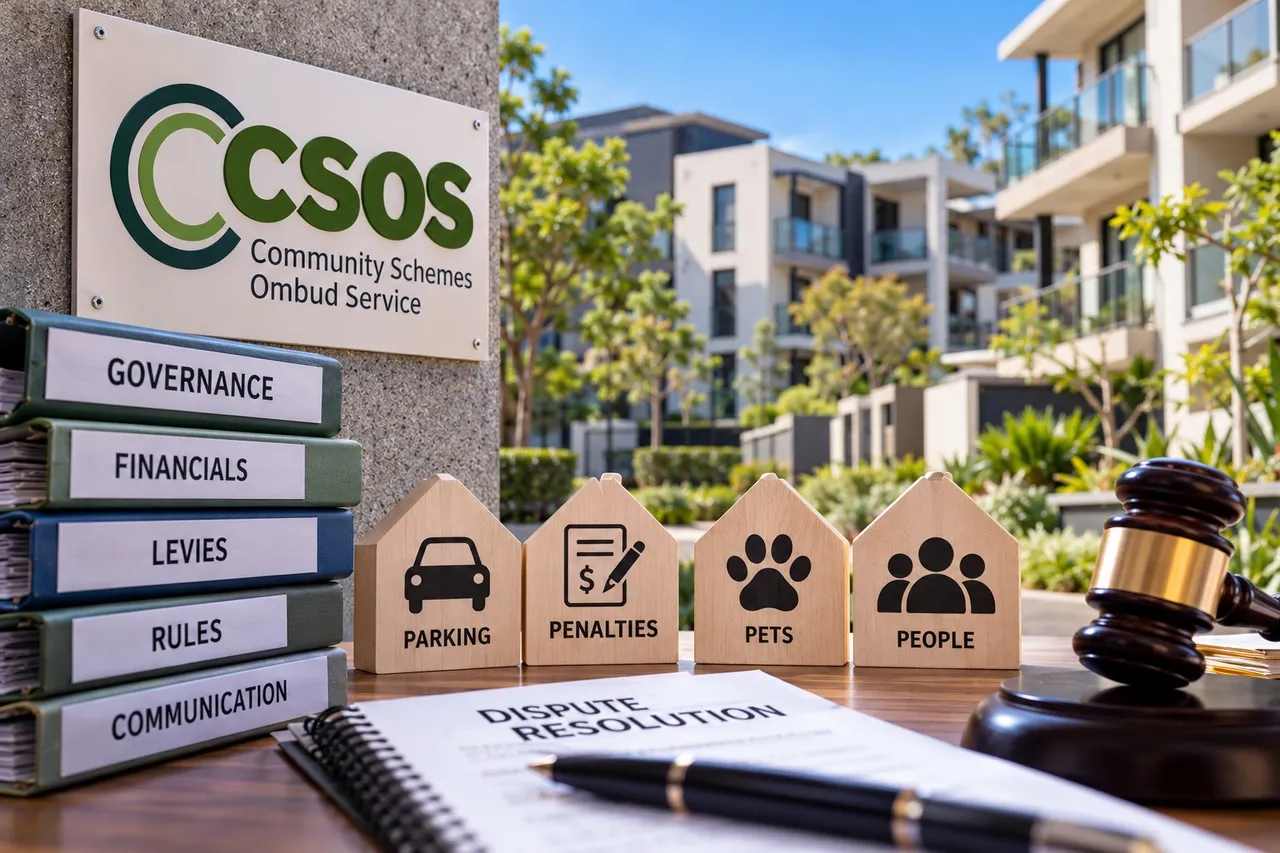
From unpaid levies and parking disagreements to poor governance and withheld information, CSOS Regional Ombud Mervin Dorosamy reveals the recurring mistakes behind community scheme disputes and how trustees, managing agents and property owners can prevent them.
- Poor communication, withheld information and unresolved financial issues are among the biggest triggers of disputes in community schemes.
- Trustees must remain accountable for governance decisions, while managing agents need clearly defined responsibilities and authority.
- CSOS urges schemes to introduce simple internal dispute-resolution procedures before disagreements escalate into formal proceedings.
When small disagreements become major disputes
A disagreement over parking, an unexplained levy increase or a request for financial records might appear relatively minor. Yet across South Africa's sectional-title complexes, residential estates and other community schemes, these everyday issues can escalate into costly and prolonged disputes.
Often, the real problem is not the parking bay, the levy or even the rule being challenged. It is a breakdown in trust, transparency, communication or governance.
That was the central message from Mervin Dorosamy, Regional Ombud at the Community Schemes Ombud Service (CSOS), speaking at the National Association of Managing Agents (NAMA) National Conference in Pretoria on 15 October 2026.
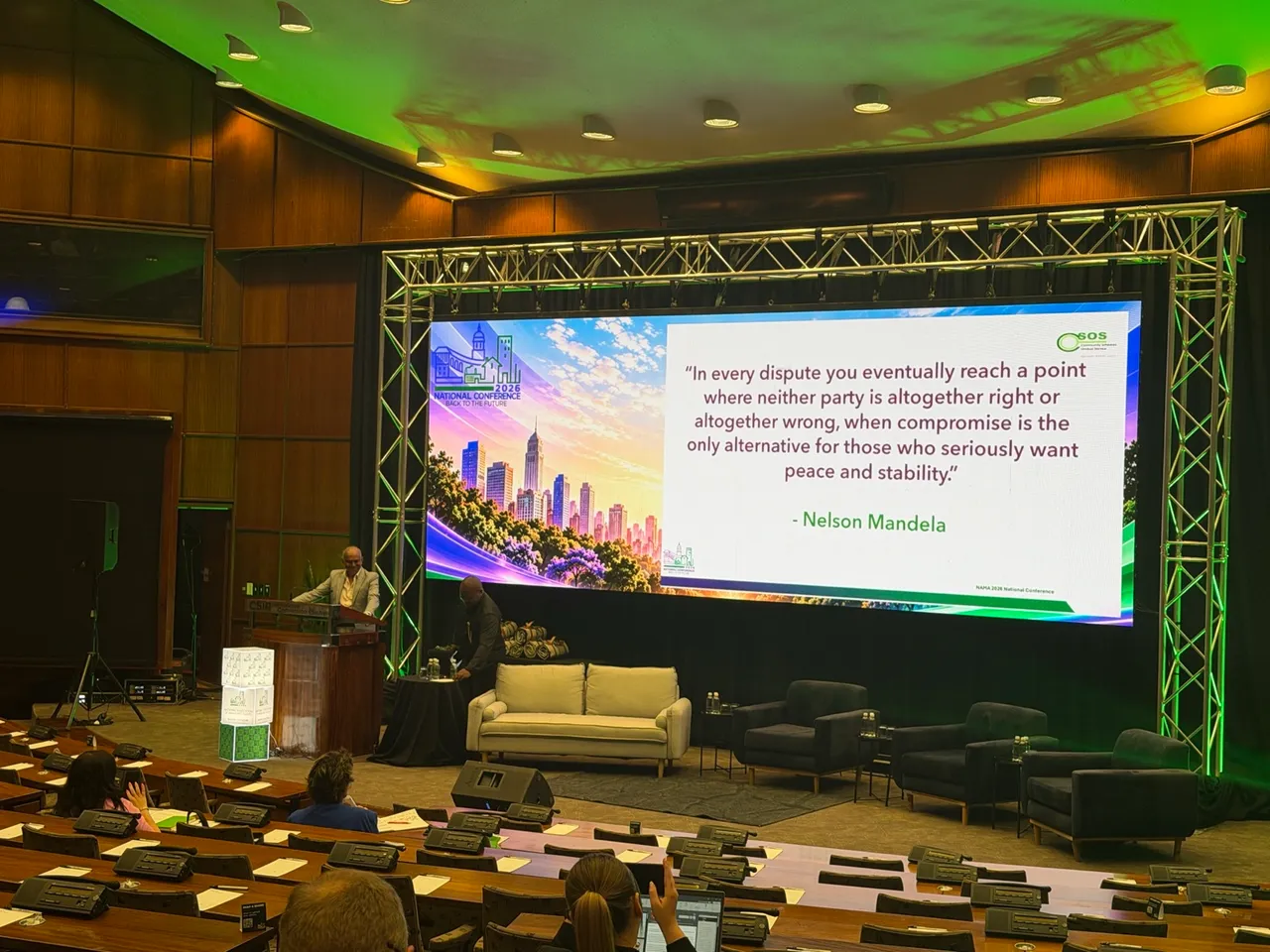
In a presentation titled Understanding and Resolving CSOS Disputes in Community Schemes: Triggers, Challenges and Insights, Dorosamy unpacked the recurring mistakes that turn manageable disagreements into formal disputes.
His message to trustees, managing agents, portfolio managers and property owners was clear: most disputes should be addressed long before they reach CSOS.
The presentation coincided with CSOS marking its 10th anniversary in October 2026, a milestone Dorosamy used to reflect on the organisation's role in strengthening governance across the sector.
1. The four Ps: Parking, penalties, pets and people
Dorosamy identified four familiar sources of conflict in community schemes: parking, penalties, pets and people. However, he cautioned against treating these as the complete explanation for disputes.
Behind individual complaints are often more fundamental issues involving fairness, rights, respect and inconsistent decision-making.
Common underlying triggers include:
- Parking: Disagreements over allocation, access and the respectful use of shared facilities.
- Penalties: Questions about whether fines and interest charges are supported by valid resolutions.
- Pets: Disputes involving conduct rules and their application.
- People: Personality clashes, poor relationships and communication breakdowns.
Dorosamy explained that a levy dispute is frequently about trust, a parking dispute about respect and a records dispute about transparency. Understanding the underlying cause is therefore essential to finding a lasting solution.
2. Withholding information creates unnecessary conflict
One of the strongest themes in Dorosamy's presentation was the importance of transparency. Property owners become frustrated when they cannot access information about their scheme's finances, decisions, administration or governance.
When information is withheld, uncertainty can quickly develop into suspicion.
Typical warning signs include:
- Owners cannot obtain information they are entitled to receive.
- Financial decisions are poorly explained.
- Trustees fail to communicate important resolutions.
- Residents are excluded from relevant correspondence.
- Privacy legislation is invoked without properly considering disclosure obligations.
Dorosamy warned that some schemes and managing agents use the Protection of Personal Information Act (POPIA) as a blanket reason to refuse requests. His broader point was that privacy requirements should not become an excuse for unnecessary secrecy.
For investors and owners, transparent financial reporting and accessible governance records are essential to protecting property interests.
3. Legacy problems: Books, buildings and billing
Unresolved issues inherited from previous trustees or managing agents are another major source of disputes.
Dorosamy described these recurring problems as “books, buildings and billing”; matters that can remain on meeting agendas for years without meaningful resolution. They may involve missing financial records, outstanding maintenance, disputed accounts or historical administrative failures.
Managing agents should assess:
- Whether the scheme's financial and administrative records are complete.
- Which maintenance and governance issues remain unresolved.
- Whether previous decisions were properly documented.
- Whether material compliance problems exist before accepting a new management mandate.
Dorosamy encouraged managing agents to assess a scheme's governance, compliance and administration before taking it on as a client. The lesson is particularly relevant to property investors: unresolved governance problems can become financial liabilities and undermine confidence in an otherwise attractive investment.
4. Trustees and managing agents: Who is accountable?
Confusion over responsibilities frequently creates unnecessary conflict. Dorosamy highlighted situations where trustees become inactive and managing agents effectively assume control of a scheme.
The opposite can also occur, with trustees exercising their authority without adequate oversight or regard for proper procedures. Managing agents administer schemes under the authority provided through trustees' resolutions and their contractual mandates.
The key governance principles are:
- Trustees must exercise their responsibilities and remain accountable for governance decisions.
- Managing agents must understand the limits of their administrative authority.
- Decisions should be supported by appropriate resolutions and records.
- Managing agents should identify and raise governance failures rather than silently accept them.
- Training and education should strengthen trustees' understanding of their duties.
Dorosamy also cautioned against routinely naming managing agents as parties in disputes that properly concern the community scheme itself. Clear accountability, he argued, helps ensure complaints reach the people empowered to resolve them.
5. The danger of ignoring persistent complainants
Almost every community scheme has a resident or owner who repeatedly questions decisions, requests records or challenges management.
Such individuals are sometimes dismissed as troublemakers. Dorosamy challenged that approach. He warned that persistent complainants may be identifying genuine problems affecting the wider community.
A more constructive response is to:
- Assess the substance of the complaint rather than the personality of the complainant.
- Determine whether the concern affects the wider scheme.
- Identify the responsible decision-maker.
- Provide a clear response through an established complaints process.
His advice was to separate the person from the problem. For trustees and managing agents, this means avoiding personal disputes and concentrating on the underlying governance issue.
6. Poor communication and lack of induction
Many disputes begin because owners do not understand what they are paying for, which rules apply or whom they should contact.
Dorosamy questioned why levies, penalties and other obligations are sometimes poorly explained to incoming owners. He also noted that absentee owners who do not participate in meetings or scheme affairs may become disconnected from important decisions.
Preventative measures include:
- Providing new owners and occupiers with clear information about rules, levies and obligations.
- Explaining the respective roles of trustees and managing agents.
- Establishing reliable communication channels.
- Encouraging owners to participate in scheme governance.
- Training trustees, directors and estate managers.
Better communication, Dorosamy suggested, can prevent disagreements from developing into formal disputes.
7. The three-step approach to resolving disputes
One of Dorosamy's most practical recommendations was for schemes to establish straightforward internal dispute-resolution procedures.
He cautioned against unnecessarily complicated processes that require expensive external mediation before parties have attempted to resolve relatively simple disagreements. Instead, he proposed a practical approach.
- Step 1 - Receive the complaint. Record the issue and establish what the complainant wants resolved.
- Step 2 - Meet and engage. Bring the relevant parties together to discuss the problem and possible solutions.
- Step 3 - Decide or record a deadlock. Communicate the outcome clearly, or confirm that the parties have been unable to reach agreement.
Where internal resolution fails, the appropriate next step may be a CSOS dispute-resolution process. Dorosamy emphasised that settlements must remain consistent with applicable legislation.
The objective is not to avoid accountability, but to resolve disputes fairly, efficiently and at the earliest practical stage.
8. Ten years of CSOS: Compliance remains essential
As CSOS marked a decade of operation, Dorosamy reminded community schemes of their ongoing regulatory responsibilities. These include registration with CSOS, submitting annual returns and paying applicable CSOS levies.
He also highlighted the need to examine gaps in the existing legislative framework and encouraged industry associations to contribute proposals for improvement. With approximately 70,000 community schemes referenced during the conference discussion, effective oversight remains a significant challenge.
Dorosamy indicated that CSOS is interested not only in the number of registered schemes but also in their governance standards, management capabilities and compliance maturity.
That places increasing importance on proactive administration rather than reactive dispute management.
The bottom line: Good governance protects property value
For property investors, trustees and managing agents, Dorosamy's presentation reinforced an important principle: community scheme governance is an asset-management issue, not simply an administrative responsibility.
Poorly managed disputes can damage relationships, distract trustees, increase administrative costs and weaken confidence in a scheme. Conversely, transparent financial management, accountable leadership, effective communication and clear dispute-resolution procedures help create stable, well-functioning communities.
The practical priorities are straightforward: maintain proper records, explain decisions, address historical problems, train trustees and resolve complaints before they escalate. Ultimately, the most effective community schemes are not necessarily those without disagreements.
They are those with the governance structures, leadership and willingness to resolve them constructively.
For investors, good governance is not an optional extra; it is part of protecting the long-term value of the asset.
This article is based on a presentation by Mervin Dorosamy, CSOS Regional Ombud, at the NAMA National Conference in Pretoria on 15 October 2026.