






Two years after George building collapse: Lessons still unfolding
- George collapse exposed major failures in construction oversight, engineering compliance and site safety accountability.
- Developers, contractors and professionals face overlapping legal, regulatory and criminal investigations after a collapse.
- Experts warn evidence preservation and rapid legal response are critical after any construction disaster.
A tragedy that still haunts South Africa
Two years after the devastating building collapse in George, the disaster continues to cast a long shadow over South Africa’s construction and property sectors.
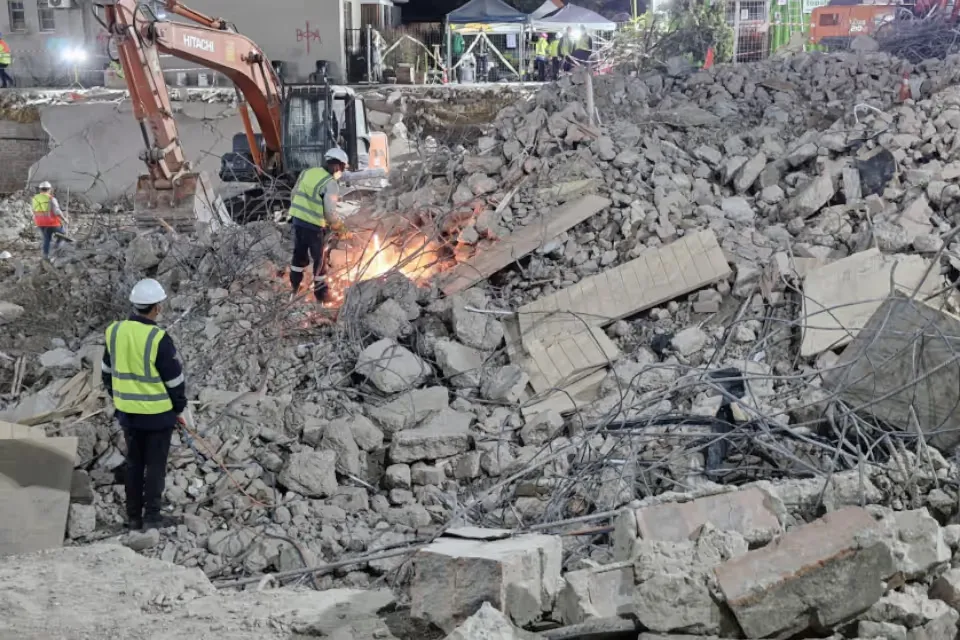
The collapse of a five-storey apartment building under construction on Victoria Street claimed the lives of 34 people and left dozens injured in one of the country’s deadliest construction disasters in recent memory. Of the 62 workers on-site at the time, only 28 were rescued alive.
The tragedy affected workers from multiple countries, including South Africa, Mozambique, Zimbabwe, Malawi and Lesotho, highlighting both the human cost and broader systemic vulnerabilities within the construction industry.
As investigations continue and the more recent Ormonde collapse remains under scrutiny, the George disaster is again raising urgent questions around accountability, compliance, engineering standards and legal liability in South Africa’s built environment.
Early investigations into the George collapse pointed to serious structural concerns, including alleged failures relating to engineering drawings, registration procedures and construction compliance. Reports have also referenced possible shoddy workmanship and substandard building materials, while criminal investigations involving contractors have reportedly been referred to the SAPS.
The aftermath: A legal and regulatory minefield
While rescue and recovery operations dominate the immediate aftermath of a collapse, the legal and regulatory consequences begin almost instantly behind the scenes.
According to Cox Yeats, the aftermath of a construction collapse quickly evolves into a highly technical and complex legal process involving multiple authorities, investigators, insurers and professional bodies.
The South African Police Service typically assumes initial control of the site, while the Department of Employment and Labour launches a formal Section 31 investigation under the Occupational Health and Safety Act.
Simultaneously, developers, contractors and property owners come under immediate scrutiny regarding site safety compliance, construction procedures, professional appointments and operational oversight.
Who is liable?
Determining liability following a construction collapse is rarely straightforward.
Primary responsibility often falls on property owners, developers and principal contractors, particularly where health and safety obligations, supervision failures or regulatory non-compliance may be involved.
However, engineers, architects, project managers, quantity surveyors and subcontractors may also face investigation depending on the cause of the collapse and their role within the project.
David Vlcek, Partner at Cox Yeats, says the legal exposure following a collapse can escalate rapidly across multiple fronts. “Construction collapse investigations are multi-layered, highly technical, and emotionally charged,” says Vlcek.
“The priority is always the health and safety of those on site, but it’s equally vital to preserve evidence and protect legal rights from the outset.”
He adds that owners, developers and contractors must often navigate overlapping investigations, media scrutiny, insurance disputes and possible litigation simultaneously.
Regulatory scrutiny intensifies
Following a collapse, strict reporting and compliance obligations immediately come into effect.
Incidents must typically be reported to the Provincial Director of Labour within seven days, while investigators demand extensive site documentation, construction records, engineering drawings, contracts, statements and material evidence.
Professional regulatory bodies may also launch parallel investigations.
This can include oversight from organisations such as the Engineering Council of South Africa and the Council for the Built Environment, particularly where professional negligence, ethical breaches or registration failures are suspected.
In many cases, insurance investigators, forensic engineers and independent experts are also brought in to analyse the technical causes of the collapse and determine whether legal claims may follow.
Preserving evidence becomes critical
Legal experts stress that one of the most important early steps following any collapse is the preservation of evidence.
Site records, engineering drawings, inspection reports, contractor communications and material samples can all become central to future litigation, regulatory proceedings or criminal investigations.
Failure to secure evidence properly can significantly weaken legal defences and complicate efforts to establish accountability.
Vlcek says early involvement from independent experts and legal advisors is essential to ensure proper compliance and procedural management from the outset.
Why this matters for South Africa’s property sector
The George collapse became more than a construction disaster. It exposed deeper concerns around project oversight, contractor competency, regulatory enforcement and quality control within parts of South Africa’s construction ecosystem.
At a time when the country urgently needs infrastructure delivery, affordable housing development and investment confidence, the industry faces increasing pressure to strengthen compliance, improve accountability and enforce professional standards more aggressively.
For investors, developers and built environment professionals, the message is becoming increasingly clear: risk management, governance and construction oversight are no longer secondary considerations, they are central to project viability and long-term credibility.
The way forward
Two years later, the George tragedy remains a painful reminder of what can happen when systems fail across multiple levels of the construction chain.
As investigations continue and legal processes unfold, the collapse continues to reshape conversations around accountability, compliance and safety in South Africa’s property and construction sectors.
The broader lesson extends far beyond one site in George. It is a warning to the entire industry that shortcuts, weak oversight and compliance failures carry devastating human, legal and financial consequences.