





Solar Surge: Take control as power costs climb
- Eskom tariff hikes are compounding, pushing electricity costs sharply higher and squeezing both households and business margins.
- Solar is shifting from “green choice” to financial necessity, delivering cost control, energy security, and long-term savings.
- Flexible funding models and scalable systems are making solar more accessible than ever across income levels and business sizes.
Power Pressure: Why solar matters more than ever
South Africans are heading into a period of sustained electricity inflation and it’s not marginal. Cumulative Eskom tariff increases are stacking up at a pace that could push costs close to 20% higher within the next two years.
An 8.76% increase is already in play for Eskom direct customers, following a pattern of steep hikes: 9.6% in 2022, 18.7% in 2023, and 12.7% in 2025. Another increase is scheduled for April 2027, while municipal customers are likely to face further upward adjustments from July 2026.
This isn’t a once-off spike, it’s a structural trend. For households, it means shrinking disposable income. For businesses, it erodes margins and complicates forecasting. Energy is no longer a stable line item, it’s a growing risk.
That’s the backdrop driving a surge in solar adoption across South Africa.
Why solar and why now
The shift to solar is no longer driven purely by sustainability or load shedding concerns. It’s increasingly a hard-nosed financial decision.
Michael Jones, sales engineer at InPower Energy, puts it bluntly: “Electricity tariffs are climbing at a rate that puts increasing pressure on household budgets and business overheads. Solar offers a way to take control.”
The timing matters. Every tariff increase compounds the cost of staying on grid-only power. Delaying a solar investment effectively locks consumers into rising Eskom costs with no hedge. Solar flips that equation:
- It converts a variable, rising expense into a more predictable cost structure
- It reduces exposure to future tariff hikes
- It creates an asset that generates ongoing savings
In simple terms: the longer you wait, the more you overpay for energy.
The Value Proposition: Benefits that go beyond savings
1. Cost reduction and predictability
Solar significantly cuts monthly electricity bills, particularly for high-consumption households and energy-intensive businesses. Over time, it offers a lower cost per kilowatt-hour compared to Eskom tariffs.
2. Energy independence
Solar reduces reliance on Eskom and shields users from both tariff hikes and grid instability. Hybrid systems with battery storage take this further, enabling partial or full off-grid capability.
3. Strong return on investment
With rising tariffs, the payback period on solar systems continues to shorten. What was once a long-term play is now a medium-term financial win.
4. Scalable and flexible solutions
Modern systems can be tailored:
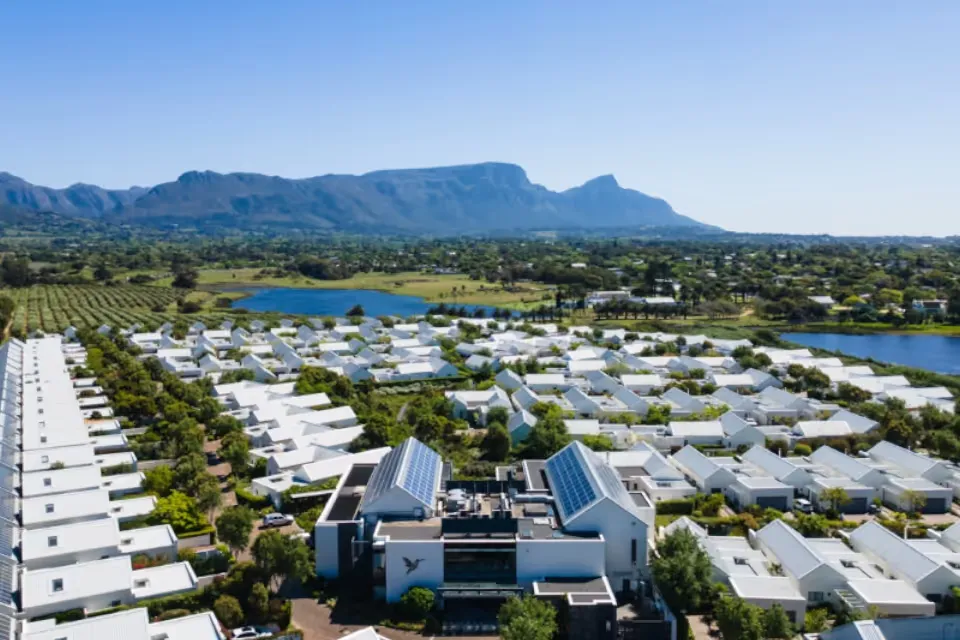
- Rooftop solar for residential users
- Commercial-scale installations for businesses
- Hybrid systems with battery storage
This flexibility allows installations to match budget, consumption patterns, and long-term strategy.
5. Improved property and business value
Solar installations enhance property appeal and can increase asset value. For businesses, it signals sustainability and cost efficiency both increasingly important to investors and clients.
6. Innovative financing models
Affordability barriers are dropping. Entry-level residential systems are now available from around R1 080 per month, while businesses can access shared savings models where no upfront capital is required.
The Trade-offs: What investors must consider
Solar isn’t without its challenges and ignoring these is a mistake.
1. Upfront capital (in some cases)
While financing options exist, outright purchases still require capital. The decision needs to be weighed against expected savings and ROI.
2. System design complexity
Poor system sizing or installation can undermine performance. Choosing the right provider and system configuration is critical.
3. Maintenance and lifecycle costs
Panels are low-maintenance, but inverters and batteries have finite lifespans and replacement costs that must be factored in.
4. Regulatory and grid considerations
Feed-in tariffs, municipal rules, and grid integration policies vary and can impact returns.
5. Not a full replacement - yet
Unless fully off-grid, most systems still rely partially on Eskom, particularly during peak demand or low solar generation periods.
From expense to asset
The real shift is psychological as much as financial. Electricity is no longer just a monthly bill, it’s becoming an investable asset class.
As Jones notes: “The sooner consumers see their electricity spend as a payment into a solar asset, the sooner they start protecting themselves from rising costs.”
That’s the pivot. South Africans are moving from being price-takers at the mercy of Eskom to active energy managers with control over their costs, resilience, and long-term financial outcomes.
Summation
Eskom tariff hikes are not cyclical, they’re structural. Waiting for relief is a losing strategy.
Solar is no longer a niche or lifestyle choice. It’s a hedge against rising costs, a tool for energy security, and increasingly one of the smartest capital allocation decisions available to households and businesses.
The equation is simple: Pay Eskom more every year or start owning your energy. The market has already started choosing.