









SA housing construction: The provinces investors are missing
Listen · 1-minute summary
0:00 / 1:24
Read the summary
SA housing construction: The provinces investors are missing. South Africa's residential building sector completed R16.2 billion worth of homes between January and July 2026, but the Western Cape, Gauteng and KwaZulu-Natal accounted for about 88 percent of that activity. The Western Cape led with R6.2 billion, Gauteng followed with R6 billion, and KwaZulu-Natal recorded just over R2 billion. Outside those three, Mpumalanga stood out with R438 million in completions and the only positive growth outside Gauteng, while the Eastern Cape managed just R53 million despite improving home loan approvals. Limpopo recorded R359 million, and the Free State and Northern Cape combined for R124 million. Nationally, building-plan approvals rose 8.4 percent, with sectional title plans up 21 percent, though completions against approved plans in metros fell 12 percent. Stephan Potgieter, CEO of BetterHome Group Mortgage Origination and BetterBond, says, "the critical question is not simply where construction is taking place, but where housing demand is growing faster than new supply." Read the full story by Neale Petersen on rei.co.za.
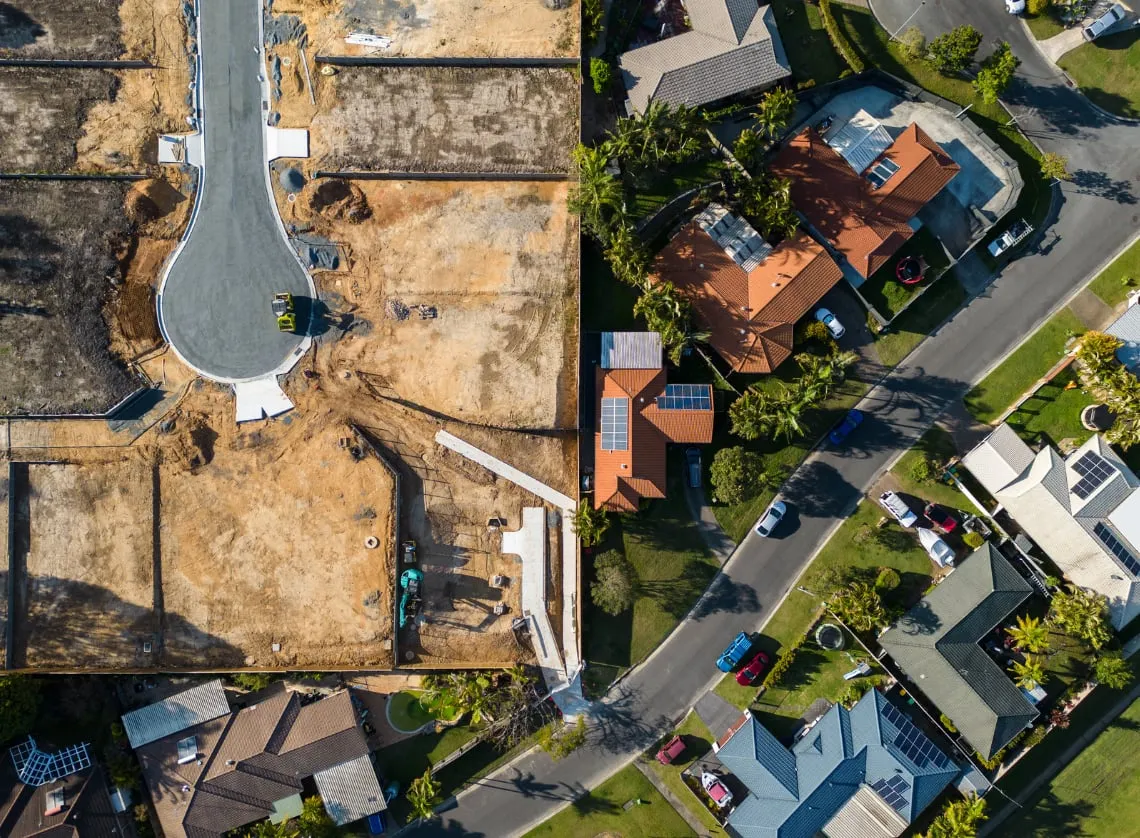
BetterBond's October Property Brief reveals a R16.2 billion residential construction market dominated by three provinces, while rising building-plan approvals point to opportunities elsewhere.
- Western Cape, Gauteng and KwaZulu-Natal accounted for 88% of residential building completions worth R16.2 billion in January - July 2026.
- Building-plan approvals rose 8.4% nationally, with sectional title plans surging 21%, signalling potential growth in apartments and townhouses.
- Construction delivery remains uneven, creating opportunities and supply risks as developers struggle to convert approved plans into completed homes.
A R16.2 billion market dominated by three provinces
South Africa's residential construction market is showing encouraging signs of recovery, but the latest figures reveal a widening divide between the country's established property hotspots and provinces where new housing development remains limited.
According to BetterBond's October 2026 Property Brief, residential buildings completed during the first seven months of the year were valued at R16.2 billion.
The Western Cape, Gauteng and KwaZulu-Natal accounted for approximately 88% of this activity, reinforcing their dominance in residential development.
However, beyond these traditional markets, improving home loan approvals, infrastructure prospects and growing demand for affordable and rental accommodation are creating a more complex investment landscape.
Stephan Potgieter, CEO of BetterHome Group Mortgage Origination and BetterBond, says the figures reflect the strength of established property markets but also reveal opportunities emerging elsewhere.

For investors and developers, the critical question is not simply where construction is taking place, but where housing demand is growing faster than new supply.
1. Western Cape, Gauteng and KZN dominate construction
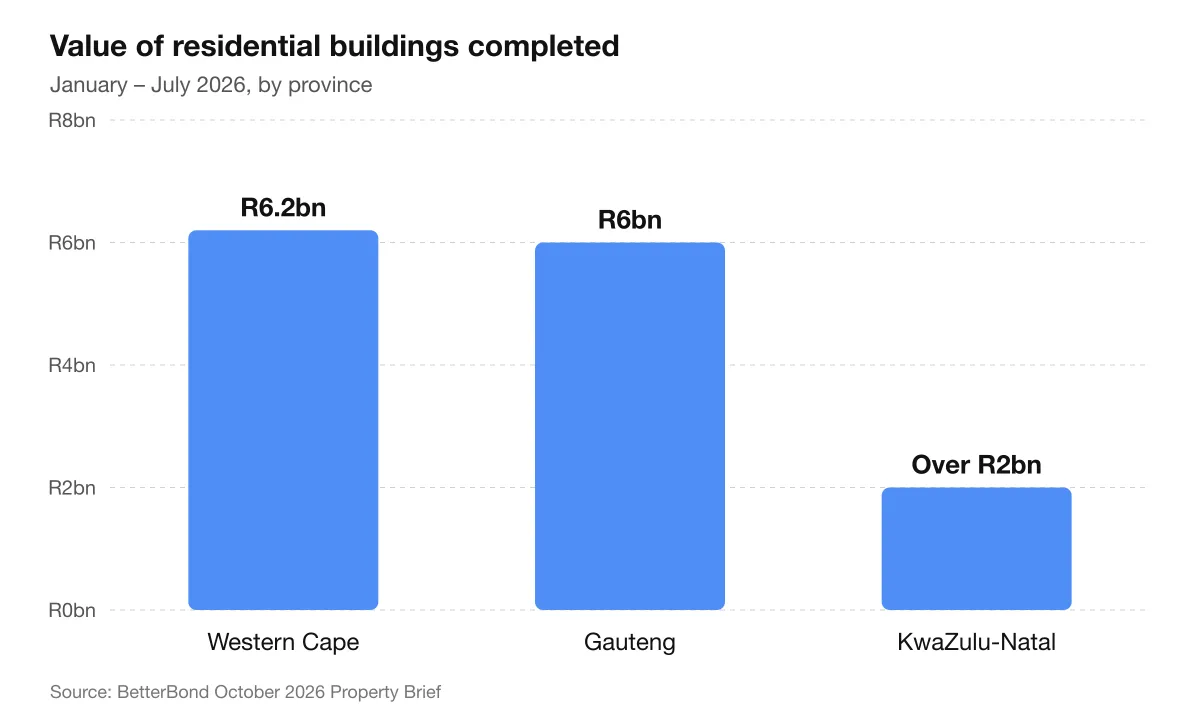
The Western Cape led the country with R6.2 billion in completed residential buildings, closely followed by Gauteng at R6 billion. KwaZulu-Natal ranked third, with completions exceeding R2 billion.
Key market drivers:
- Western Cape: Semigration, lifestyle demand and comparatively efficient municipal services continue to support residential development.
- Gauteng: Employment opportunities, urbanisation and demand for sectional title homes underpin construction activity.
- KwaZulu-Natal: Coastal lifestyle demand, particularly along the North Coast, supports residential investment.
- Gauteng growth: The province recorded a 3.2% year-on-year increase in the value of houses and flats completed.
Potgieter attributes the Western Cape's appeal partly to semigration and its established residential market, while Gauteng continues to attract younger professionals and buyers seeking access to economic opportunities.
2. Beyond the big three: Uneven growth, emerging potential
Outside the leading provinces, residential construction remains considerably smaller, but the figures reveal important differences.
Mpumalanga - positive construction momentum
- Recorded R438 million in completed houses and flats.
- Was the only province outside Gauteng to record positive year-on-year growth in this measure.
- Offers a market worth monitoring for developers assessing demand beyond the major metropolitan areas.
Eastern Cape - improving finance, limited construction
- Recorded only R53 million in completed residential buildings.
- Home loan approval ratios improved despite subdued construction.
- The divergence suggests financing conditions for existing-home purchases may be improving faster than new supply.
As Potgieter explains, buyers may be accessing finance to purchase existing properties while the pipeline of new developments remains comparatively weak.
North West - financing and development pressures
- Recorded R534 million in residential completions.
- Was the only province to experience a decline in the proportion of home loan applications approved.
- Weak construction growth may reflect slower project delivery, weaker demand or changes in the type of housing being built.
Limpopo - longer-term opportunities
- Recorded R359 million in completed residential buildings.
- Housing demand remains concentrated in selected locations, including Hoedspruit.
- Mining, agriculture and potential infrastructure investment could support future rental and residential demand.
Potgieter highlights Limpopo's untapped potential, including the possible benefits of the proposed Limpopo–Gauteng high-speed rail project. However, the project's future impact depends on implementation and should not be treated as guaranteed.
Free State and Northern Cape - finance improving faster than supply
- Combined residential completions reached R124 million.
- BetterBond reports a 6.8% improvement in the home loan approval ratio over 12 months.
- Limited construction activity could create localised supply pressures where demand strengthens.
The investment opportunity in these provinces will depend on identifying specific towns and economic nodes with sustainable demand, rather than assuming province-wide growth.
3. Building-plan approvals rise, but delivery falls behind
While provincial construction performance remains uneven, national building-plan approvals point to improving development intentions. The value of residential building plans passed increased by 8.4% year-on-year during January - July 2026.
The sectional title market was particularly strong, with approved plans increasing by 21%. Key construction indicators:
- +8.4%: Annual increase in the value of residential building plans approved.
- +21%: Growth in sectional title building plans.
- −12%: Year-on-year change in the ratio of completed residential buildings to approved plans in metros and larger municipalities.
- R16.2 billion: Total value of residential buildings completed nationally.
The figures reveal an important challenge: developers may be planning more homes, but those plans are not translating into completed housing at the same pace.
Potgieter warns that slower construction in high-demand areas could restrict housing supply and place upward pressure on prices, even while higher borrowing costs constrain buyers.
For investors, the distinction between approved developments and completed homes is particularly important when assessing future supply and rental competition.
4. Sectional title and affordable housing offer opportunities
The 21% increase in sectional title plans highlights the continued appeal of apartments, townhouses and other relatively affordable residential formats.
These properties can offer buyers lower entry prices, security and convenient locations, while providing investors with potential rental opportunities. Areas worth monitoring include:
- Urban sectional title: Apartments and townhouses near employment centres and transport routes.
- Affordable housing: Developments serving households priced out of conventional suburban markets.
- Regional rental markets: Properties near mining, agricultural and industrial employment nodes.
- Emerging growth corridors: Areas where infrastructure investment could support future demand.
However, investors should assess affordability, local employment conditions, development costs and realistic rental yields before committing capital.
5. Construction recovery provides cautious optimism
BetterBond's October Property Brief also highlights improving conditions across the broader construction sector.
The Afrimat Construction Index increased by 5% quarter-on-quarter in real terms during Q2 2026, while construction employment rose by 95,000 year-on-year.
Other indicators suggest that residential financing activity is strengthening. BetterBond's wider market findings include:
- Home loan applications increased 2.4% quarter-on-quarter in Q3 2026.
- The average home purchase price reached approximately R1.7 million.
- Real house price growth reached 1.8% year-on-year.
- The average monthly income of homebuyers increased to approximately R74,000.
- Greater Pretoria recorded a 75% home loan approval ratio, followed by the Western Cape and KwaZulu-Natal at 72%.
These indicators point to improving underlying activity, although stronger financing and construction-sector performance do not automatically guarantee more housing completions.
6. What should property investors and developers watch?
The provincial figures offer several lessons for investors looking beyond South Africa's established residential markets.
Five investment considerations:
- Follow economic activity: Prioritise locations with sustainable employment, population growth and tenant demand.
- Identify supply gaps: Look for areas where improving finance and housing demand are not matched by new development.
- Assess affordability: Focus on property formats that align with local household incomes.
- Verify infrastructure: Distinguish funded, approved projects from proposed developments.
- Stress-test feasibility: Account for financing costs, construction delays, municipal capacity and achievable selling prices or rentals.
Importantly, low construction activity does not necessarily indicate an attractive investment opportunity. It may also reflect weak demand, infrastructure constraints or limited development feasibility.
The bottom line: South Africa needs more homes, not just more plans
South Africa's residential construction market remains overwhelmingly concentrated in the Western Cape, Gauteng and KwaZulu-Natal. However, the performance of Mpumalanga, the Eastern Cape, Limpopo and other provinces suggests that the next phase of housing investment may be more geographically diverse.
Improving home loan approvals, growing interest in sectional title housing and signs of recovery in the construction sector are encouraging.
Yet the decisive measure will be how effectively developers convert approved building plans into completed, affordable homes. For investors, the opportunity lies in identifying sustainable demand before it is fully reflected in new housing supply.
South Africa's residential property market does not simply need more investment. It needs the right developments, in the right locations, at prices buyers and tenants can afford.
Get the full October 2026 Property Brief, including provincial residential construction figures, home loan approval trends, house prices, buyer affordability and construction-sector performance.
DOWNLOAD: BetterBond Property Brief - October 2026
Source: BetterBond October 2026 Property Brief and commentary supplied by Stephan Potgieter, CEO of BetterHome Group Mortgage Origination and BetterBond. Reporting by Real Estate Investor (REI).