Rental management holds the key to agency growth
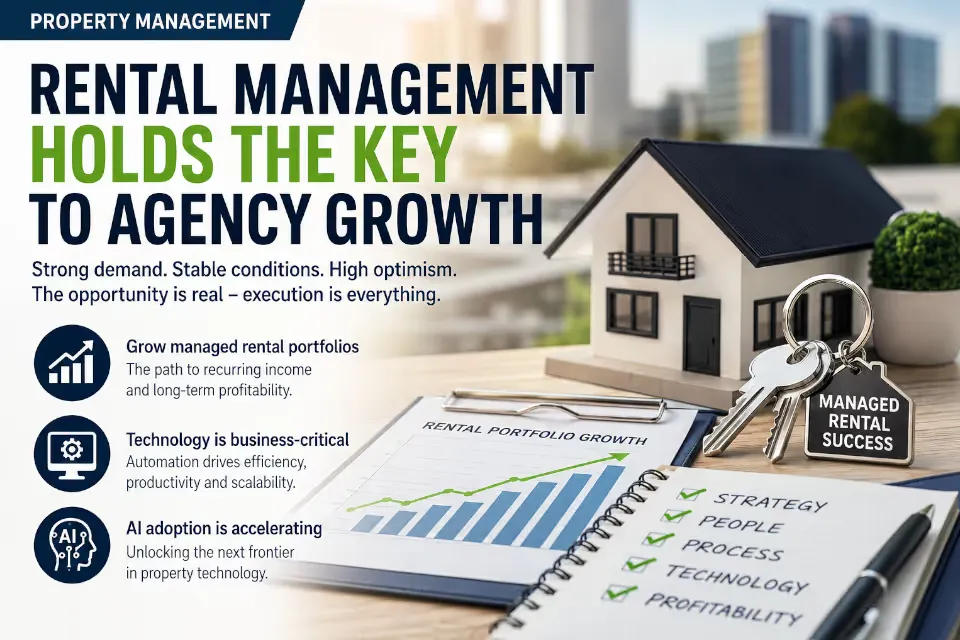
- Rental demand remains strong, vacancies are low and nearly 88% of agents remain optimistic about the sector.
- Growing managed rental portfolios is the preferred path to higher profitability and recurring income.
- AI adoption is accelerating, but concerns around trust and data security continue to slow implementation.
Agencies seek growth beyond market conditions
Even as rental growth stabilises, South African property professionals are increasingly being urged to focus less on market cycles and more on building sustainable recurring income through managed rental portfolios.
According to PayProp's latest State of the Rental Industry survey, confidence among property professionals remains exceptionally high, with 87.7% of respondents expressing optimism about the future of the sector.
However, the next phase of growth will depend less on favourable conditions and more on how effectively agencies execute their business strategies.
Strong demand, stable conditions, high optimism
Following a brief slowdown in rental growth during the fourth quarter, the market regained momentum in the first quarter of 2026, according to the PayProp Rental Index. The result is a healthier equilibrium between landlord expectations and tenant affordability.
Demand remains robust, with 43.1% of agents reporting lower-than-normal vacancy rates and most properties being rented within two to four weeks. Tenant retention also remains high, providing stable income streams for landlords and improving portfolio performance for agencies.
"Optimism is justified, there's no shortage of opportunity currently," says Michelle Dickens, General Manager at PayProp.
"However, growth is no longer driven solely by market conditions. Strained tenant affordability is acting as a brake on growth, so agencies will need to be far more deliberate in how they structure, price and scale their businesses to remain sustainable."
Dickens adds that strong market fundamentals often raise landlord expectations. "Agents will need a robust managed rental strategy to continue delivering low arrears, short vacancy periods and market-related rental growth regardless of market conditions."
Growth strategy is clear, execution remains mixed
The survey shows agencies understand where future profitability lies. Nearly 68% of respondents identified expanding managed rental portfolios as a key profit driver, while 58.9% said attracting more landlords remains their preferred growth strategy.
Yet many agencies are failing to back these ambitions with action. Only 28.5% have allocated dedicated budgets to grow their managed rental books, while more than half of respondents (50.5%) admitted to reducing their commission structures to retain landlords.
"There is a clear gap between strategy and execution," says Dickens.
"Agencies know that managed rentals are the key to long-term profitability, but many are still under-pricing their services or under-investing in growth. That makes it harder to build resilient, scalable businesses."
Technology moves from nice-to-have to business critical
Technology is becoming increasingly central to agency operations.
More than 92% of respondents view PropTech as a worthwhile investment, while 74.1% have increased automation over the past year. Property professionals increasingly see technology as a more efficient and cost-effective solution than simply adding staff.
At the same time, agencies are demanding measurable returns from technology investments. Nearly three-quarters of respondents said they would only pay more for technology if it clearly supported business growth.
"Agencies want solutions that directly improve efficiency, reduce administration and help them scale their portfolios without adding complexity," says Dickens.
AI adoption accelerates, but trust remains a barrier
Artificial intelligence is emerging as the next major frontier in property technology.
Almost 40% of agencies are already using AI within their businesses, while a further 53.1% expect to invest in AI over the next year. Current applications are largely concentrated in marketing and communications, including writing listings and creating content.
However, trust remains a significant obstacle. Only 19% of respondents said they would trust AI with sensitive business data, limiting its use in core operational functions.
"AI adoption is gaining momentum, but we're still in the early stages," says Dickens.
"As the technology matures and trust builds, we expect broader adoption across tenant vetting, inspections, maintenance workflows and financial processes."
Recurring income will separate tomorrow's winners
The outlook for South Africa's rental sector remains positive, supported by strong demand, healthy occupancy levels and resilient tenant behaviour. But market conditions alone are unlikely to drive future growth.
The agencies that thrive over the next decade will be those that build recurring revenue through managed rental portfolios, invest in scalable technology and embrace automation without compromising trust and service.
For property professionals seeking sustainable growth, the message is increasingly clear: the future lies not simply in selling more homes, but in managing more of them.