




.avif)
.avif)

Office conversions are reshaping South Africa's cities
- Developers are converting ageing B- and C-grade office buildings into affordable housing as vacancies and holding costs continue to rise.
- The trend is helping address South Africa's housing shortage while revitalising underperforming commercial precincts.
- Adaptive reuse delivers faster, more affordable and environmentally sustainable housing in established urban centres.
A new life for ageing office buildings
South Africa's struggling office market is giving rise to one of the country's fastest-growing urban property trends.
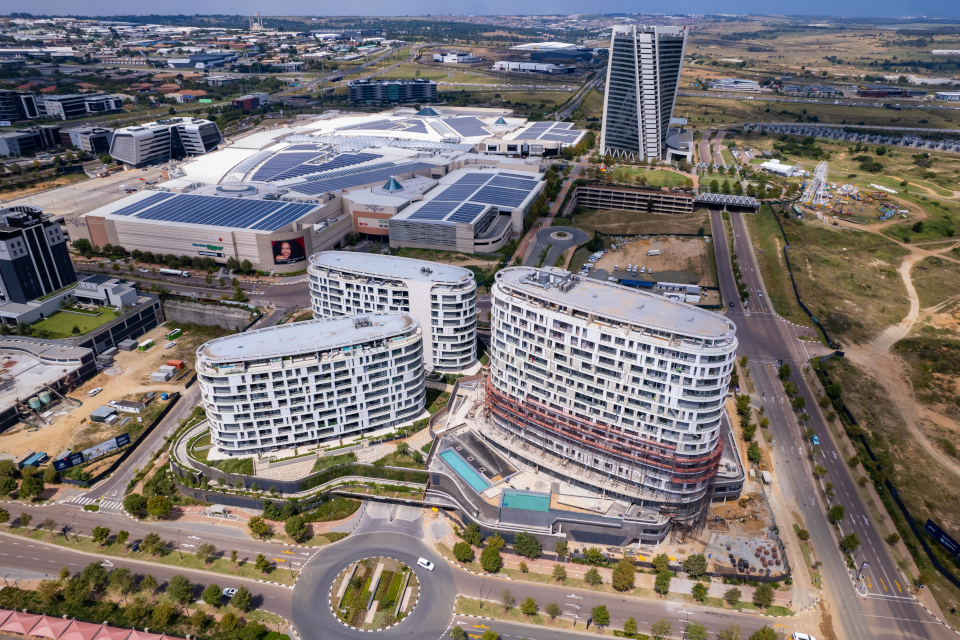
Older B- and C-grade office buildings, once plagued by high vacancy rates, rising municipal costs and declining corporate demand, are increasingly being transformed into apartments, mixed-use developments and affordable rental housing.
What began as isolated redevelopment projects has evolved into a nationwide movement as developers acquire underperforming commercial properties and convert them into residential assets that better reflect changing market demand.
According to Paul Stevens, CEO of Just Property, the trend is now evident across secondary commercial nodes including Randburg, Bellville, the KwaZulu-Natal North Coast, Gqeberha, Bloemfontein and Nelspruit.
Developers transform ageing office blocks into thousands of much-needed homes
"Office conversions are no longer a niche opportunity, they've become one of the most practical solutions to South Africa's urban housing shortage while breathing new life into declining commercial precincts," says Stevens.
Vacant offices create opportunity
The shift is being driven by a structural imbalance between commercial office supply and residential housing demand.
According to the FNB Commercial Property Broker Survey, 19.3% of office building buyers now intend converting properties into residential or mixed-use developments.
In Johannesburg, that figure rises to an impressive 38.1%, making Gauteng the country's conversion hotspot, followed by Tshwane at 14.9%.
Meanwhile, SAPOA data shows that while prime office vacancies have improved to around 6.8%, B-grade office vacancies remain stubbornly high at 16.8%, leaving landlords burdened with municipal rates, security, insurance, maintenance and utility costs on buildings that no longer attract corporate tenants.
Golden Acre shows the future
One of South Africa's flagship adaptive reuse projects is unfolding in the heart of Cape Town. The iconic Golden Acre development is converting an underutilised office tower into:
- 301 long-term rental apartments
- 115 hybrid living units
- Modernised retail space
- Co-working facilities
Stevens believes projects like Golden Acre are providing a blueprint for how cities can reinvent themselves. "This development mirrors the growing trend that's redefining city centres across South Africa."
Meeting the needs of the 'Missing Middle'
At the same time that office demand has weakened, demand for affordable, well-located housing has surged.
Stevens says the country's fastest-growing rental market is being driven by the so-called "missing middle", young professionals, key workers and first-time buyers who earn too much to qualify for subsidised housing but cannot afford traditional property ownership.
Lightstone Property research shows:
- 3.3 households compete for every available property in middle-to-lower income markets.
- In the lowest entry-level brackets, seven households compete for every available property.
The shortage is being compounded by a decline in new residential construction. According to Stats SA, approvals for new townhouse and apartment developments have fallen 25.2% year-on-year, reflecting higher construction costs, expensive finance and developer caution. Adaptive reuse is increasingly filling that gap.
"Working within existing buildings allows developers to avoid lengthy rezoning processes, shorten construction timelines and deliver affordable housing much faster," says Stevens.
Why the economics make sense
The financial case for office conversions continues to strengthen. For developers, adaptive reuse often delivers:
- Faster municipal approvals
- Lower development costs
- Reduced construction periods
- Better returns on existing infrastructure
Stevens points to Africrest Properties, which completed more than 1,200 apartments across four developments in just 12 months, with thousands more planned in Randburg, Sunninghill and other suburban business nodes.
The benefits extend well beyond developers. Residents gain access to secure, affordable homes close to employment centres, reducing transport costs and lengthy daily commutes.
"By repurposing well-located commercial buildings, developers are creating 15 minute neighbourhoods that improve quality of life while making city living accessible to far more South Africans." Municipalities also benefit.
Vacant office buildings generate declining rates revenue and consume valuable urban infrastructure inefficiently. Once converted into occupied residential developments, they restore municipal income streams without requiring new roads, substations or major public investment.
A greener way to build
Adaptive reuse also delivers significant environmental benefits.
Demolishing existing buildings and constructing new ones generates substantial carbon emissions through the production, transport and disposal of steel, concrete and other construction materials.
By retaining existing structures, developers preserve what engineers refer to as embodied carbon, dramatically reducing the environmental footprint of new housing.
For an increasingly ESG-conscious property sector, adaptive reuse is becoming one of the most sustainable forms of urban development.
What developers look for
Not every office building is suitable for conversion. According to Stevens, developers typically prioritise properties offering:
- Shallow floor plates that maximise natural light and ventilation.
- Generous floor-to-ceiling heights for modern residential services.
- Regular structural grids that simplify apartment layouts.
- Existing lifts and adequate parking, reducing capital costs.
- Excellent transport links, walkability and supportive municipal zoning.
These factors significantly improve project viability while reducing redevelopment risk.
Summation
South Africa's office conversion boom represents far more than a response to vacant commercial buildings. It reflects a structural shift in how cities are evolving to meet changing economic realities, housing demand and sustainability objectives.
As office vacancies remain elevated and the need for affordable urban housing continues to grow, adaptive reuse is emerging as one of the country's most effective property investment strategies.
By transforming obsolete commercial assets into vibrant residential communities, developers are not only revitalising neglected business districts but also helping address one of South Africa's most pressing urban challenges, providing well-located, affordable housing where people want and need to live.





.svg)

.avif)












.avif)