








Is reverse semigration real? The market reality
- Reverse semigration is talked about, but not yet visible in hard market data
- Cape Town remains dominant, but affordability is pushing some buyers toward Joburg
- Young professionals want lifestyle, convenience and value, not just location
Cape Town vs Joburg: Are people really moving back?
The narrative is gaining traction: young professionals are leaving Cape Town and heading back to Johannesburg in search of opportunity, affordability and career growth.
There is some evidence supporting this shift. Migration data suggests that a portion of those who initially semigrated to the Western Cape are reconsidering their position, driven largely by rising costs and limited entry-level ownership opportunities.
But here’s the reality: the data on the ground does not yet confirm a meaningful reversal. According to John Loos, the Western Cape continues to dominate house price growth and demand, with no clear indication that a large-scale reverse semigration trend has taken hold.
The Western Cape’s performance remains structurally stronger, supported by lifestyle appeal, governance perception and sustained inbound demand.
The Affordability Pressure Is Real
That said, the pressure in Cape Town is undeniable. What was once a lifestyle premium has evolved into a full-blown affordability barrier, particularly for young professionals trying to enter the property market.
Limited stock, semigration demand post-COVID, and foreign buyers with stronger currencies have pushed pricing to levels that are forcing many to reconsider. This is where Johannesburg re-enters the conversation.
Joburg’s value proposition is pulling interest
Mark Stevens highlights a growing economic reality: “Young South African tech professionals in Johannesburg earn roughly 6% more than their counterparts in Cape Town.”
That income differential, combined with significantly lower property prices, is creating a compelling value equation.
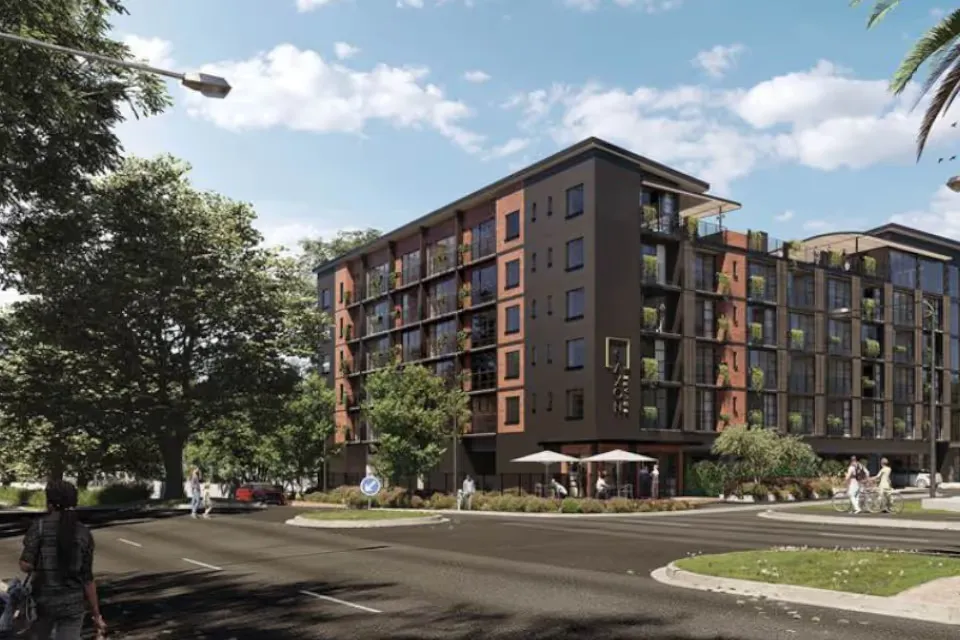
Developments like Saxon Square in Rosebank are positioning themselves directly into this gap, offering urban lifestyle living at a price point far below Cape Town equivalents.
Rosebank, in particular, is emerging as a key node: a mix of walkability, corporate proximity, and lifestyle infrastructure that mirrors parts of the Atlantic Seaboard, without the same price tag.
Cape Town vs Joburg Pricing: The real gap
The numbers tell the story clearly. In Cape Town’s Atlantic Seaboard, studio apartments in new developments can reach around R73,000 per square metre.
In contrast, Johannesburg developments like Saxon Square are coming in at roughly half that level, with entry prices from around R1.04 million for a studio unit.
That’s not a small difference, it’s a structural affordability divide. For many young professionals, the choice is simple: rent indefinitely in Cape Town, or own in Johannesburg.
What today’s young buyers actually want
This shift is not just about price, it’s about lifestyle design. According to Stevens, successful developments are those that combine:
- Walkable, mixed-use environments
- Proximity to work and transport nodes
- Strong security and smart access control
- Co-working and remote work infrastructure
- Lifestyle amenities (cafés, gyms, wellness spaces)
- A sense of community
In short, today’s buyer wants convenience, flexibility and experience, wrapped into a single, well-located asset. And importantly, they want it at a price that still allows for financial growth.
Talk vs Reality
The idea of reverse semigration makes for a compelling headline, but it’s not yet a dominant market force.
Cape Town remains firmly in control in terms of demand and price growth. However, the cracks are forming:
- Affordability constraints are intensifying
- Younger buyers are being priced out
- Johannesburg is repositioning itself as a value play
The result is not a reversal, but a recalibration.
A Shift, not a surge
Reverse semigration isn’t happening at scale, yet. But the conditions for it are building.
If Cape Town continues to price out younger buyers, and Johannesburg continues to offer income opportunity plus relative affordability, the balance could shift over time.
For now, the smart money isn’t chasing headlines, it’s watching the numbers. Because in property, sentiment starts the conversation. But affordability decides the outcome.