







Housing market poised for breakout growth in 2026

- Improved affordability and lending conditions are driving stronger buyer demand and pushing housing activity upward across most regions.
- Rising incomes, falling deposit requirements and stronger bond approvals are helping more South Africans enter the housing market.
- Rate-cut expectations and economic recovery signals position property as a key investment and wealth-building sector in 2026.
2026 outlook: Why momentum is building
South Africa’s residential property market enters 2026 with renewed momentum, supported by easing inflation, improved lending conditions and growing consumer confidence.
According to Stephan Potgieter, CEO of BetterBond, favourable macro-economic conditions are aligning to support further housing market growth.
“With inflation holding steady, the rand performing exceptionally well and lending rates improving household purchasing power, we could see the housing sector reaching new heights in 2026,” says Potgieter.
BetterBond’s latest Property Brief points to conditions supportive of another interest rate cut, which would further boost affordability and buyer activity.
At the same time, FNB’s Property Barometer reports a gradual shift from price resilience driven by limited supply toward broad-based demand recovery, a key signal that market participation is widening again.
Indicators driving market confidence
Several economic and property indicators point toward strengthening housing demand:
- Stronger trade and currency performance
South Africa recorded a cumulative trade surplus of R200 billion, helping stabilise the rand and ease inflation pressures, supporting lower interest rates. - Retail and manufacturing recovery
Retail sales have reached record levels while the Absa Purchasing Managers’ Index has shown recovery, suggesting improving business and consumer activity. - Bond applications rising again
BetterBond reports bond application volumes up 10.4% over two years, while January application volumes are already higher than last year despite seasonal slowdowns. - House prices turning upward
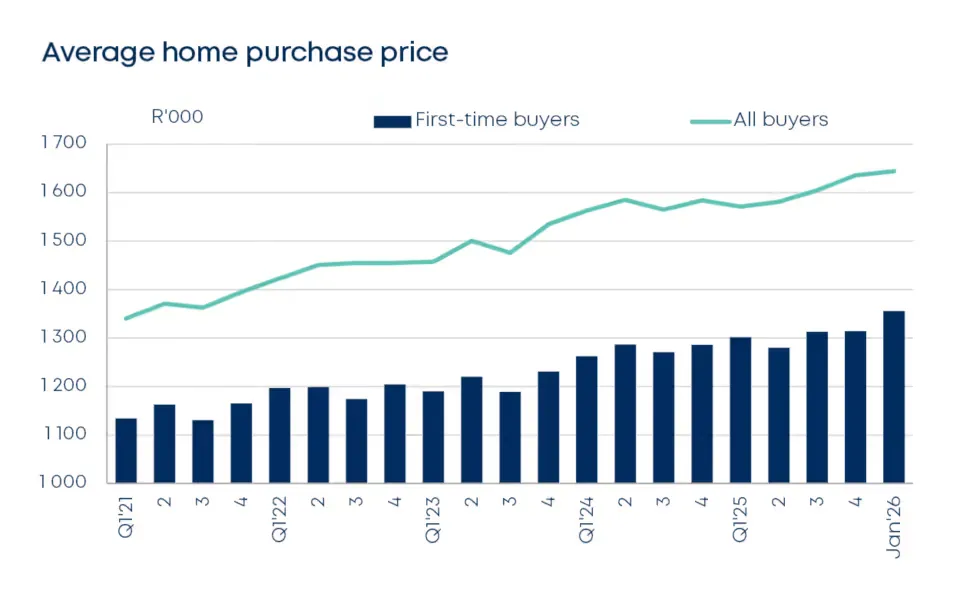
Average house prices increased 4.1% year-on-year, with prices up over 8% across two years.
Economist Dr Roelof Botha notes: “If house price growth continues to outpace inflation, residential property may begin attracting speculative investment buyers, which could accelerate price increases further.”
- Regional performance shifts
While the Western Cape remains strong, Mpumalanga has emerged as a surprise outperformer, both recording price growth of 7.2%, while KwaZulu-Natal also showed solid gains. - Lending conditions improving access
Access to finance is also improving:
- National home loan approval rates have climbed to 63.5%.
- Western Cape and Pretoria show approval ratios above 70%.
- Deposit requirements have fallen around 9–10% over two years.
- Homebuyer incomes have grown faster than inflation, improving affordability.
According to Potgieter: “With improved affordability and stronger payment behaviour, banks are more willing to extend home loans, helping demand recover.”
Property regains its growth role
Taken together, falling rates, rising incomes, stronger lending conditions and improving economic signals suggest South Africa’s housing market is regaining momentum after several challenging years.
If anticipated rate cuts materialise and economic reforms gain traction, property could once again become one of the country’s strongest-performing asset classes in 2026.
For both homeowners and investors, the message is increasingly clear: market conditions are turning supportive again, and momentum is building across the residential sector.
DOWNLOAD FEBRUARY PROPERTY BRIEF