










Growthpoint’s R263m bet on Paarl’s retail boom
Listen · 1-minute summary
0:00 / 1:25
Read the summary
Growthpoint's R263 million redevelopment lifts Paarl Mall to 44,449 square metres. Growthpoint Properties has completed the expansion of the Western Cape centre, which adds 3,037 square metres of retail space. The project brings 18 brands that were previously unavailable at the mall, including H&M, Country Road and Ocean Basket. Of 42 new, resized and relocated stores, 37 are already trading, and five are scheduled for the first half of 2027. Household growth in the catchment accelerated to 3.4 percent a year between 2021 and 2025, and households are projected to increase by a further 10 percent by the end of 2027. Mark Langley, Head of Retail Development at Growthpoint, said: "Over a nine-month period, we constructed two new entrances, expanded the centre by more than 3,000sqm and shifted a substantial section of the internal mall by eight metres." Growthpoint has not yet released figures on footfall, tenant turnover or rental income, so investors will be watching those closely. The mall also received a R50 million hybrid electricity solution in 2024. Read the full story by Neale Petersen on rei.co.za.
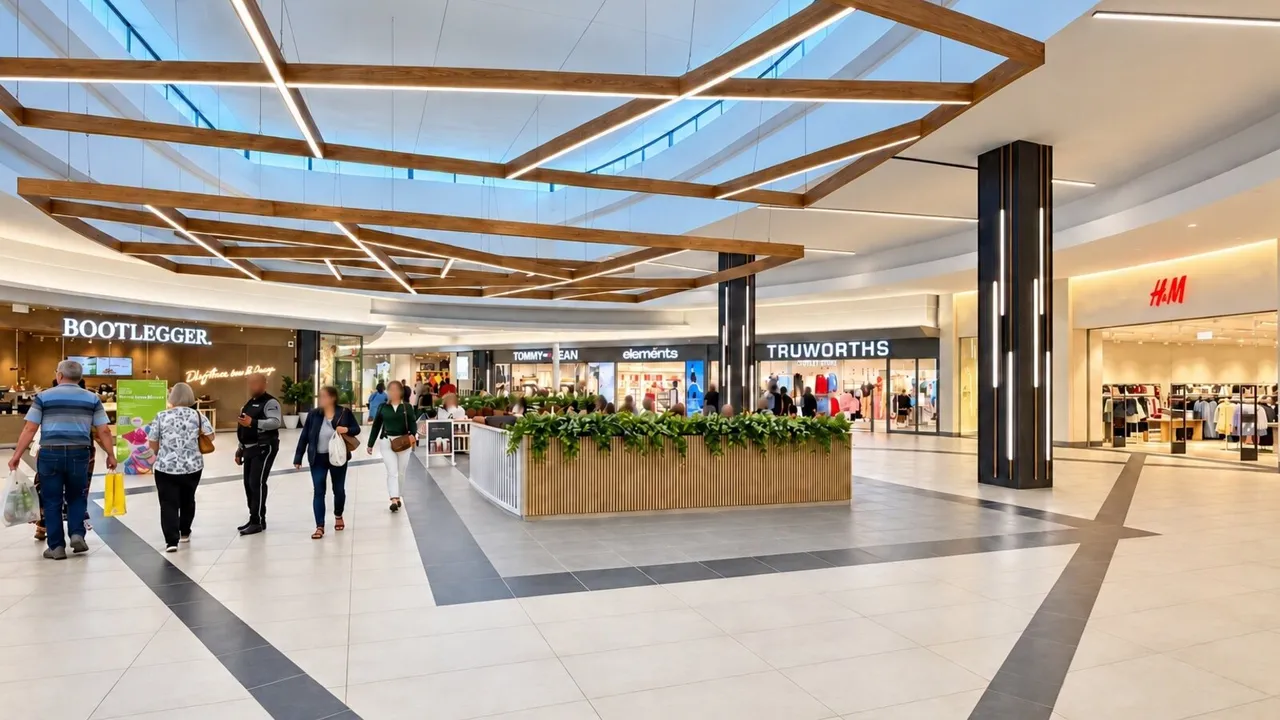
Growthpoint’s R263 million redevelopment of Paarl Mall adds 3,037m² of retail space, attracts 18 new brands and positions the centre to benefit from the region’s accelerating residential growth.
- Growthpoint has invested R263 million to expand Paarl Mall to 44,449m², reinforcing its position in the Western Cape retail market.
- Household growth in the mall’s catchment accelerated to 3.4% annually, with a further 10% increase projected by end-2027.
- The redevelopment introduces 18 previously unavailable brands, while 37 of 42 new, resized and relocated stores are already trading.
R263 million investment signals confidence in Paarl
South Africa’s retail property market is increasingly becoming a story of location, demographics and disciplined capital investment. Rather than simply building more shopping centres, major property owners are reinvesting in established assets positioned to benefit from population growth and changing consumer spending patterns.
Growthpoint Properties (JSE: GRT) has completed a R263 million redevelopment and expansion of Paarl Mall in the Western Cape, strengthening one of its established retail assets and positioning it for the next phase of growth in the Paarl and Drakenstein region.
The redevelopment comes as residential development, household formation and demand for more sophisticated shopping experiences reshape the area’s retail landscape.
The investment has delivered:
- R263 million in redevelopment capital expenditure.
- 3,037m² of additional retail space.
- 44,449m² in total shopping centre floor area.
- 42 stores newly introduced, resized or relocated.
- 37 stores already open, with five scheduled for the first half of 2027.
- 18 new brands previously unavailable at the centre.
For Growthpoint, the project reflects a broader investment philosophy: strengthen successful retail properties before changing market dynamics create opportunities for competitors.

Gavin Jones, Head of Asset Management: Retail at Growthpoint Properties, explains: “Paarl Mall already has a strong performance track record, supported by high trading densities, consistently low vacancies and strong retailer demand.”
He says the investment was designed to anticipate the needs of an expanding customer base while reinforcing the centre’s long-term competitive position.
1. Why Paarl’s residential growth matters
One of the strongest investment arguments behind the redevelopment is the changing demographic profile of Paarl and the wider Drakenstein region.
Situated alongside the N1 highway, Paarl Mall has served its surrounding communities since 2005. Its latest expansion coincides with its 21st anniversary and a period of sustained residential growth.
Research commissioned by Growthpoint in 2025 identified a significant acceleration in household formation within the mall’s catchment area.
The demographic fundamentals include:
- 2017 - 2021 Average annual household growth of 2.3%.
- 2021 - 2025 Annual household growth accelerated to 3.4%.
- By end 2027 Household numbers are projected to increase by a further 10%.
- Consumer profile Approximately half of catchment households fall within the middle-to-upper living standards measure categories.
These trends point to an expanding customer base with growing expectations for retail variety, dining options and lifestyle amenities.
Importantly, the redevelopment is not based solely on anticipated population growth. Growthpoint also undertook customer research identifying demand for more fashion, dining and lifestyle choices.
Jones explains: “Residential growth creates opportunities for retail assets, but realising that potential depends on understanding the changing needs and expectations of the people who live in the communities that our malls serve.”
He adds that encouraging residents to spend more locally is central to the centre’s long-term sustainability.
2. Eighteen new brands strengthen the retail offering
The redevelopment has significantly broadened Paarl Mall’s tenant mix, introducing national and international brands that previously had no presence at the centre. The strategy is designed to attract new shoppers while increasing the frequency and duration of visits by existing customers.
Key additions include:
- Fashion H&M, Country Road, Uniq and Saint & Summer.
- Homeware and lifestyle Cielo and Typo.
- Books and accessories Wordsworth and Cellini.
- Health and beauty Faithful to Nature and Edgars Beauty.
- Restaurants and cafés Bootlegger, Ocean Basket and RocoMamas.
A further international brand is expected to be announced. The expanded tenant offering is intended to strengthen Paarl Mall’s appeal across different income groups and age categories, particularly younger consumers and more affluent households.
For retail property investors, the importance of tenant mix extends beyond consumer choice. A well-balanced selection of retailers can support:
- Stronger footfall and repeat visits.
- Improved tenant retention and demand for space.
- Greater trading opportunities for complementary retailers.
- Increased competitiveness against neighbouring retail destinations.
- More resilient long-term rental income.
However, the ultimate investment outcome will depend on sustained tenant sales, occupancy and rental performance rather than the number of brands introduced alone.
3. Redeveloping a trading mall without closing its doors
One of the project’s more significant achievements was completing a complex redevelopment while keeping Paarl Mall operational.

Mark Langley, Head of Retail Development at Growthpoint Properties, says the nine-month construction programme required careful coordination between contractors, retailers and centre management. The redevelopment involved substantial structural and operational changes.
Major construction milestones included:
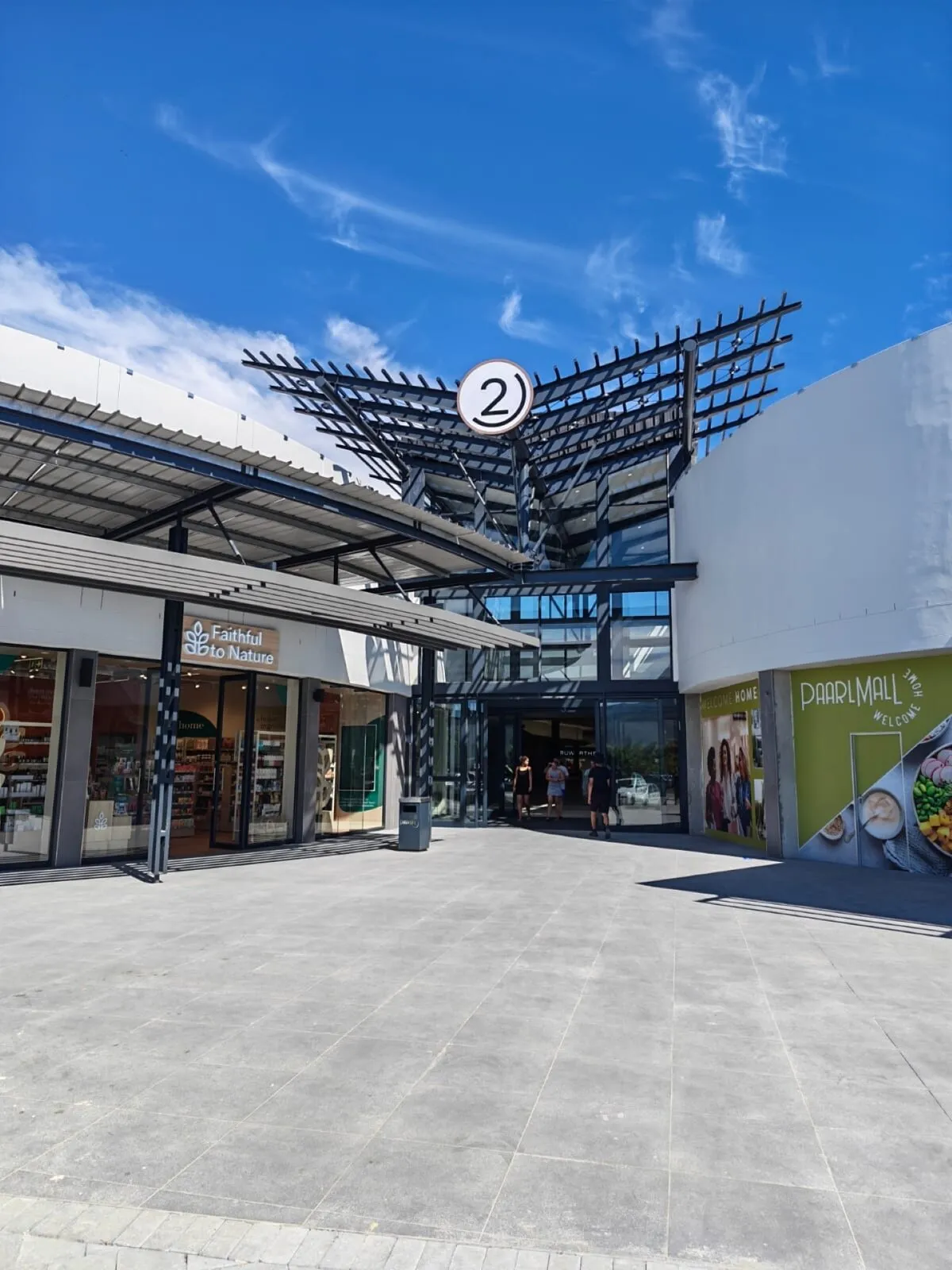
- Building two new shopping centre entrances.
- Adding more than 3,000m² of retail space.
- Shifting a substantial section of the internal mall by eight metres.
- Relocating and resizing numerous existing stores.
- Upgrading two sets of bathrooms.
- Installing new tiling, ceilings and lighting.
- Improving circulation, access and customer amenities.
Langley says: “Over a nine-month period, we constructed two new entrances, expanded the centre by more than 3,000sqm and shifted a substantial section of the internal mall by eight metres.”
He describes managing these activities within an operating shopping centre while minimising disruption as a considerable undertaking. The phased development programme allowed retailers to continue trading while the centre’s layout and infrastructure were modernised.
This approach is particularly important for established retail properties, where prolonged trading interruptions can undermine tenant relationships and rental performance.
4. Early trading signals point to stronger demand
With most new and relocated stores opening during October and November 2026, Growthpoint reports encouraging initial feedback from retailers and customers.
Several established tenants that expanded or upgraded their premises have reported strong trading, while the centre has observed increased visitation from younger shoppers and more affluent households.
Early indicators highlighted by Growthpoint include:
- Positive trading feedback from expanded and upgraded stores.
- Broader customer demographics.
- Greater interest in fashion and lifestyle offerings.
- Positive responses to the improved shopping environment.
- Increased local choice, potentially reducing shopping trips to Cape Town.
These observations are encouraging, although the company has not provided quantified post-redevelopment changes in footfall, tenant turnover or rental income in the information released. For investors, these will be important measures to monitor as the redeveloped centre establishes a longer trading record.
5. R50 million energy investment adds resilience
The R263 million redevelopment follows an earlier investment in the centre’s energy infrastructure. In 2024, Growthpoint commissioned a R50 million hybrid electricity solution at Paarl Mall, integrating solar generation, battery storage, generators and grid electricity.
The project was designed to improve operational resilience and support the company’s decarbonisation objectives. The combined investment programme addresses two priorities:
- Commercial performance More retail space, stronger tenant variety and improved customer experience.
- Operational resilience Greater energy security and reduced exposure to electricity supply disruptions.
Together, the two projects represent approximately R313 million in reported capital investment at Paarl Mall.
This demonstrates how modern retail asset management increasingly combines physical redevelopment with infrastructure investment.
For REITs, energy reliability and operating efficiency can be important factors in protecting tenant trading conditions, controlling costs and supporting long-term asset value.
6. Growthpoint’s strategy: Invest in proven retail assets
Growthpoint’s approach at Paarl Mall reflects a wider trend in commercial property investment: selective reinvestment in established centres with demonstrated demand and favourable catchment fundamentals.
Rather than pursuing expansion for its own sake, the company is concentrating on properties where additional capital can potentially unlock further income and strengthen market positioning.
The strategy rests on four fundamentals:
- Location Established centres serving growing residential communities.
- Tenant demand Retailers seeking exposure to attractive consumer catchments.
- Asset enhancement Modern layouts, amenities and a stronger retail mix.
- Long-term resilience Investment in infrastructure, sustainability and operational efficiency.
Jones says: “Selective reinvestment in our core retail assets is an important component of Growthpoint’s strategy to deliver sustainable long-term returns.”
He adds that the company has invested from a position of strength, aligning the property’s development with the changing needs of its market.
REI perspective: Follow the rooftops, but measure the returns
The Paarl Mall redevelopment illustrates an important principle for commercial property investors: residential growth can create retail investment opportunities, but population growth alone does not guarantee stronger returns.
What matters is whether additional households translate into sustained consumer spending, improved tenant turnover, rental growth and higher net operating income.
Growthpoint has identified favourable demographics, committed substantial capital and secured a stronger retail offering. These are positive indicators. The next test will be financial performance.
Investors should monitor:
- Trading densities and tenant turnover following the redevelopment.
- Occupancy levels and rental reversions.
- Incremental net operating income generated by the expansion.
- Capital expenditure returns and the impact on property valuation.
The redevelopment reinforces the investment case for well-located retail assets in growing regional markets, particularly where owners can improve existing properties rather than undertake higher-risk greenfield developments.
Conclusion: Paarl’s retail market enters a new phase
Growthpoint’s R263 million redevelopment of Paarl Mall represents more than a shopping centre upgrade. It is a calculated investment in a growing regional economy, supported by demographic research, established retailer demand and a strategy to retain consumer spending within the Paarl and Drakenstein area.
With 37 stores already trading, additional openings scheduled for 2027 and significant improvements to the centre’s infrastructure and retail offering, Paarl Mall is positioned to compete for a larger share of local spending.
For commercial property investors, the message is clear: the strongest retail opportunities are not always found in new developments, but in established assets capable of evolving alongside their communities.
__________________________________________________
Source and attribution: Growthpoint Properties (JSE: GRT), redevelopment announcement and management commentary supplied for publication. Statements attributed to Gavin Jones, Head of Asset Management: Retail, and Mark Langley, Head of Retail Development, are drawn from Growthpoint’s announcement.
Company: Growthpoint Properties