









Growthpoint lifts dividend 7.4% as Sasse bows out
- DIPS increased 4.3% to 152.6c, while the full-year dividend rose 7.4% to 133.5c per share.
- Growthpoint sold R4.9bn of non-core assets as SA loan-to-value improved sharply from 34.5% to 30.2%.
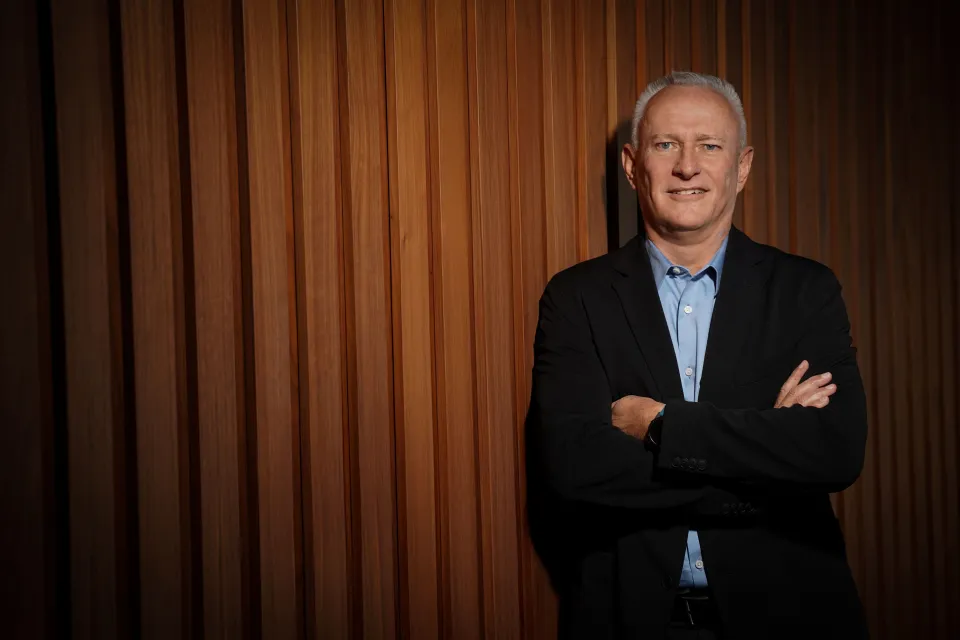
- Norbert Sasse leaves Growthpoint after his final results as Group CEO, with Estienne de Klerk taking the helm.
Growthpoint Properties has delivered growth at the top end of guidance for the year to June 2026, giving outgoing Group CEO Norbert Sasse a solid final set of results before the leadership of one of South Africa’s largest listed property groups passes to Estienne de Klerk.
The results reflect a business increasingly focused on capital discipline, higher-quality assets, lower leverage and targeted development, rather than simply increasing the size of its portfolio.
Distributable income per share (DIPS) increased 4.3% to 152.6 cents, while the total dividend increased 7.4% to 133.5 cents per share. Net asset value (NAV) increased 3.8% to 2,131 cents per share and the payout ratio increased to 87.5%.
Growthpoint’s total property assets increased 2.8% to R160.1 billion, supported by a 1.6% increase in property valuations.
“Through effective strategic execution and disciplined capital management, Growthpoint has done well to deliver solid earnings growth. With nearly R20bn of assets actively recycled over the past decade, Growthpoint has strengthened its portfolio,” says Sasse.
He says Growthpoint now has a robust balance sheet, low gearing, strong liquidity and significant available funding, positioning the group for its next phase of growth.
Financial performance: lower debt creates room to grow
One of the most important features of the results for investors is the strengthening balance sheet.
Group loan-to-value (LTV) improved from 40.1% to 38.7%, while the South African business’s SA REIT LTV fell more substantially from 34.5% to 30.2%.
Interest cover improved to 2.6 times for the group and 3.1 times for the South African business. Growthpoint ended the period with R323.6 million in cash and R5.7 billion in unutilised committed debt facilities in South Africa.
South African nominal debt declined from R39.1 billion to R33.4 billion, while the weighted average cost of debt eased to 8.6%. Growthpoint also raised R1.8 billion through a public bond issue at its lowest-ever bond auction margins, followed after year-end by another R3.1 billion in private placements.
Group CFO José Snyders says this is deliberate. “Growthpoint manages liquidity and leverage pragmatically and conservatively, refinancing debt where opportunities arise to reduce funding costs and retain flexibility.”
Snyders says proceeds from South African disposals have partly been directed towards reducing debt, while simultaneously creating capacity for development and strategic investment.
Strategic capital allocation: fewer properties, better assets
Growthpoint’s strategy is increasingly about quality rather than quantity. Over the past decade, the number of properties in its directly held South African portfolio has fallen from 471 to 302, while gross lettable area has declined 26%.
The group is concentrating investment into stronger precincts, modern logistics assets and more sustainable, energy-secure buildings.
During FY26 alone, Growthpoint disposed of 29 non-core properties worth R4.9 billion, comfortably exceeding its R3.5 billion target, while investing R1.3 billion in development and value-enhancing capital expenditure.
The portfolio mix is also changing. Logistics and industrial exposure has increased from 15% to 20% of South African portfolio value over the past decade, while office exposure has fallen from 46% to 39%. Retail remains around 40%.
“We are assessing all sectors through a precinct-led lens,” says Sasse, with scale and focused asset management being used to mitigate municipal governance and infrastructure constraints.
South African portfolio: operating metrics strengthen
Growthpoint’s R65.6 billion South African portfolio contributed 55.7% of group DIPS. Overall vacancies improved from 8.2% to 7.2%, like-for-like net property income increased 4.4%, and lease renewal success strengthened substantially from 68.2% to 80.7%.
Industrial and logistics remains a standout. Vacancies fell to 2.9%, their lowest level in a decade, with the Western Cape portfolio fully let and Durban vacancy at just 0.1%. Portfolio value increased 6.5%.
Retail vacancies declined from 5.3% to 3.5%, their lowest since 2015, while like-for-like NPI grew 5.3% and lease renewal success reached 90%.
Office remains more challenging. Vacancies improved marginally to 14.1%, but rental reversions remained negative at -6.3%. Encouragingly, renewal success jumped from 57.5% to 78.3%, while the average lease term increased from three years to 3.8 years.
Sustainability becomes an investment strategy
Growthpoint is increasingly positioning sustainability as a commercial and operational strategy rather than simply an ESG commitment.
In May 2026 it pioneered pooled renewable electricity wheeling with Etana Energy in Cape Town. Green electricity is now being wheeled to 25 Growthpoint properties. The group has invested more than R1 billion in solar, with 98 installations providing 69.31MWp of capacity.
“Our renewable energy penetration nearly tripled this year, increasing from 7.9% at FY25 to 19.0%,” says Sasse.
Growthpoint also secured 13 net-zero carbon certifications during the year, taking its green-building certifications to 120.
V&A Waterfront delivers another standout year
Growthpoint’s 50% interest in Cape Town’s V&A Waterfront remains one of the jewels in its portfolio. The Waterfront represents around 12.1% of Growthpoint’s total asset book but contributes approximately 18.6% of DIPS.
Total V&A NPI increased 21.6%, supported by residential development profits. Excluding residential sales, like-for-like NPI grew 6.9%. Vacancy across the precinct was just 0.9%, visitor numbers increased 7% to 27 million and retail sales rose 6.2% to R11.3 billion.
The growth runway is substantial. Cape Town has approved an application to increase the Waterfront’s development rights by 440,000m², incorporating significant future residential, hotel, office and retail development.
“This future development in the V&A is extremely exciting for the precinct, the city and South Africa,” says Sasse.
Growthpoint Investment Partners reaches R13.5bn
Growthpoint’s alternative real-estate co-investment platform, Growthpoint Investment Partners (GIP), ended FY26 with R13.5 billion in assets under management.
This comprises R8.5 billion in healthcare assets and R5 billion in purpose-built student accommodation.
Growthpoint Healthcare Property Holdings expanded into later living through its acquisition of Auria Senior Living, while Thrive Student Living’s Hluma Studios development near UKZN is progressing towards completion for the 2027 academic year.
Offshore portfolio remains a significant contributor
International assets represent 35.6% of Growthpoint’s property assets, generating 22.1% of DIPS.
Growthpoint Properties Australia (GOZ) remains a core investment, with occupancy at 97% and a weighted average lease term of 6.1 years. However, Sasse notes that Australia’s highest interest-rate environment in around 15 years is making growth more difficult.
Growthpoint is also evaluating how best to unlock value from its 29.6% stake in Globalworth, while retaining an 18.9% interest in African-focused Lango Real Estate.
Looking ahead: R2bn - R3bn annual development pipeline
Growthpoint is targeting R2 billion to R3 billion of annual South African asset disposals, using the capital to reduce debt and fund higher-growth investments.
At the same time, its South African development pipeline is expected to run at approximately R2 billion to R3 billion annually for the next five years. For FY27, that includes approximately R1.4 billion in logistics and industrial developments, R500 million in retail and R300 million in offices.
Projects include Indlovu Logistics Park in Cape Town, Noka Park in Gauteng, Tecoma Park in KZN, the expansion of Paarl Mall and the 528-apartment Olympus Sandton development with Tricolt.
Under incoming Group CEO Estienne de Klerk, Growthpoint is guiding for 1% to 3% growth in both DIPS and DPS in FY27, with an 87.5% payout ratio. For Sasse, those numbers provide the foundation for his handover after his final results as Group CEO.
“Growthpoint is in great shape with a stronger diversified portfolio, resilient income streams, a robust balance sheet and sustainability firmly embedded in the business.”
After a decade in which nearly R20 billion of assets have been recycled, Growthpoint enters its next leadership chapter smaller in property count, stronger in balance-sheet capacity and increasingly concentrated on assets and precincts where management believes it can generate sustainable long-term returns.