









Grit sells US$328m in assets as PIC steps in
Listen · 1-minute summary
0:00 / 1:32
Read the summary
Grit sells stakes to the GEPF and Herring-linked buyers in a restructuring worth about US$328.3 million, with ordinary shareholders facing limited recovery. In the first deal, the Government Employees Pension Fund, represented by the Public Investment Corporation, will buy Grit's 48.08 percent stake in Gateway Real Estate Africa and its 78.95 percent stake in Africa Property Development Managers Limited. The price is up to US$149.1 million in cash, subject to adjustments. In the second deal, entities controlled by Steven Herring, founder of Heriot REIT, will acquire 12 income-producing properties across five African markets. That transaction is worth approximately US$179.23 million and is structured mainly through assuming debt. It includes US$143.93 million of property-level debt and a US$35.30 million revolving credit facility. Grit's board says recovery prospects for ordinary shareholders are extremely limited. Cash from the first sale is expected to go largely to secured creditors. Both deals still need regulatory and lender approvals. Failure to complete them on time could exhaust liquidity and trigger creditor enforcement action. Read the full story by Neale Petersen on rei.co.za.
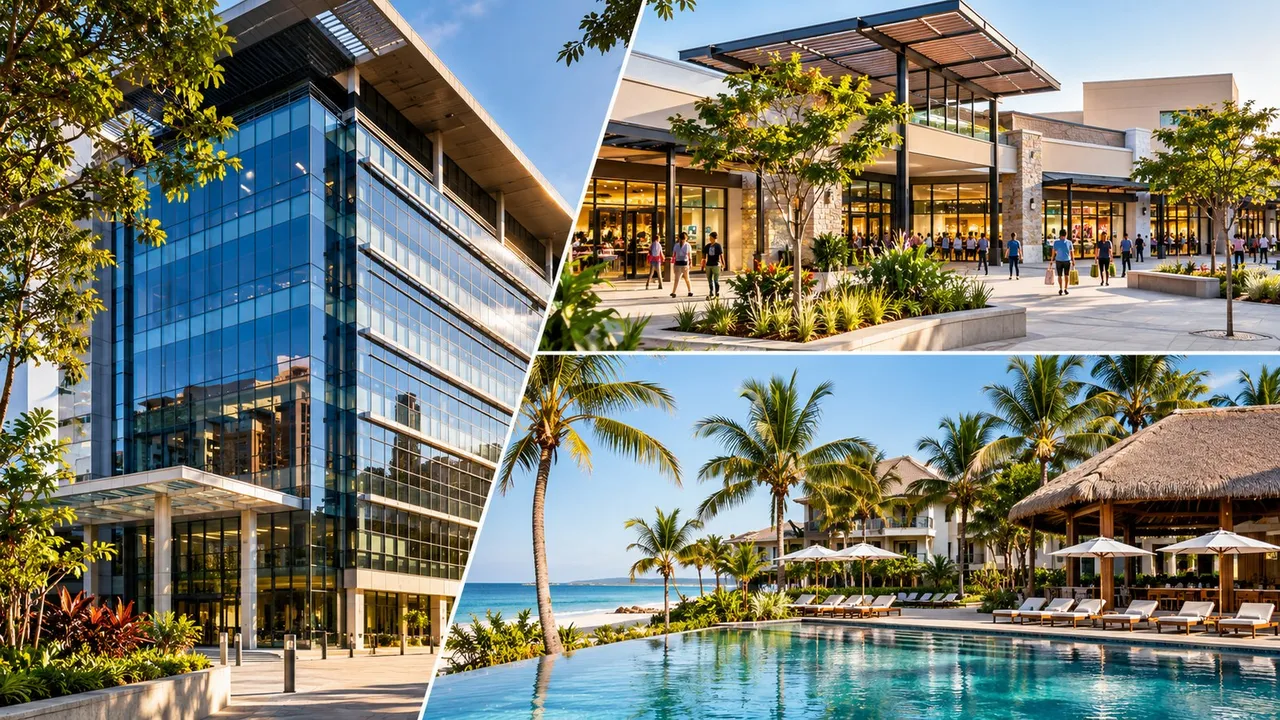
Grit’s sweeping African property restructuring sees the GEPF acquire development platform stakes and Herring-linked buyers assume debt, leaving ordinary shareholders facing limited recovery prospects.
- Grit has agreed to sell its stakes in GREA and APDM to the Government Employees Pension Fund for up to US$149.1 million.
- Entities controlled by Heriot REIT founder Steven Herring will acquire 12 African properties through a US$179.2 million debt-assumption transaction.
- Grit’s board warns that ordinary shareholder recovery prospects are extremely limited, with secured creditors taking priority as liquidity pressures intensify.
A major shake-up in African real estate
Grit Real Estate Income Group has announced a sweeping restructuring of its African property interests through two major disposal agreements representing a combined potential transaction value of approximately US$328.3 million.
The transactions, announced on 26 November 2026, mark a significant turning point for the Guernsey-registered property investment group, listed on the London Stock Exchange and the Stock Exchange of Mauritius.
The restructuring will see South Africa’s Government Employees Pension Fund (GEPF), represented by the Public Investment Corporation (PIC), acquire Grit’s interests in its African development and management platforms, while entities controlled by property entrepreneur Steven Herring acquire much of its remaining income-producing portfolio.
However, behind the scale of the transactions lies a sobering reality. Grit’s board has warned that recovery prospects for ordinary shareholders are extremely limited. The restructuring is increasingly about financial survival rather than unlocking shareholder value.
From South African roots to a pan-African property heavyweight
Grit Real Estate Income Group has deep roots in South Africa’s listed property sector. Co-founded in 2014 by South African-born chartered accountant Bronwyn Corbett, the business emerged as Delta International Property Holdings, an African-focused offshoot of Delta Property Fund.
Corbett previously held senior executive positions at Motseng Investment Holdings and Delta Property Fund, helping establish and grow its property portfolio to R12 billion. Originally investing in Morocco and Mozambique, the company subsequently became Mara Delta Property Holdings before rebranding as Grit Real Estate Income Group in July 2017.

Initially listed on the JSE and the Stock Exchange of Mauritius, Grit expanded internationally through its London Stock Exchange listing in July 2018, before delisting from the JSE in July 2020. Its investment strategy focused on high-quality African real estate, predominantly supported by multinational tenants, long-term leases and US dollar and euro-denominated rental income.
The group’s expansion was remarkable:
- 2014 Established its African property investment platform with two assets valued at US$140 million.
- 2017 Rebranded from Mara Delta to Grit Real Estate Income Group.
- 2018 Listed on the London Stock Exchange to access international capital.
- 2020 Delisted from the Johannesburg Stock Exchange.
- 2021 Progressed to a premium listing on the London Stock Exchange.
- 2024 Reported approximately US$970 million in assets under management, spanning 34 assets.
Ironically, just 12 years after its emergence from South Africa’s listed property sector, South African institutional capital through the GEPF and PIC, alongside entities controlled by South African property entrepreneur Steven Herring, is playing a central role in the restructuring of the pan-African property group.
PIC strengthens its African property exposure
The first transaction involves the disposal of Grit’s interests in two specialist African property development and management businesses to the GEPF, represented by the PIC.
The transaction comprises:
- Gateway Real Estate Africa (GREA) Grit’s direct 48.08% shareholding in the specialist African property development platform.
- Africa Property Development Managers Limited (APDM) Grit’s 78.95% shareholding in the property development management business.
- Purchase consideration Up to US$149.1 million in cash, subject to adjustments.
- Expected effective date 31 January 2027.
- Conditions deadline 28 February 2027.
GREA provides exposure to property development opportunities across Kenya, Mauritius, Ghana, Uganda, Mozambique, Nigeria and Ethiopia.
The PIC already holds 22.44% of Grit’s issued ordinary share capital, making the acquisition a related-party transaction under UK listing rules.
According to Grit’s announcement, transaction sponsor Cavendish Capital Markets Limited considers the transaction fair and reasonable for security holders.
Importantly, the acquisition should not automatically be interpreted as a vote of confidence in Grit’s ordinary shares. It represents an acquisition of specific development and management interests rather than a recapitalisation of the listed group.
Steven Herring acquires 12 African properties
The second transaction involves entities controlled by Steven Herring, founder and non-executive chairman of Heriot REIT, acquiring 12 income-producing property interests across five African markets.

The portfolio spans Mozambique, Zambia, Ghana, Senegal and South Africa, with exposure to commercial, retail and hospitality assets. Notable properties include:
- Commodity House Commercial office accommodation.
- Mukuba Mall Retail property in Zambia.
- Club Med Cap Skirring Hospitality property in Senegal.
- Parc Nicol Commercial property in South Africa.
The approximately US$179.23 million transaction is structured predominantly through the assumption of existing debt:
- US$143.93 million Property-level debt.
- US$35.30 million Revolving credit facility at Grit Services Limited.
Unlike the GREA transaction, the property disposal is not structured to generate substantial cash proceeds for Grit. The businesses being disposed of reported a combined loss before tax of US$13.1 million for the 18 months ended 31 December 2025, highlighting the financial pressures surrounding the portfolio.
How Grit’s growth strategy unravelled
Grit’s financial challenges demonstrate how an ambitious property investment strategy can become increasingly vulnerable when elevated financing costs, liquidity constraints and delayed asset disposals converge.
The group has undertaken several significant capital restructuring initiatives in recent years:
- December 2021 Raised approximately US$76 million in equity.
- October 2022 Refinanced seven lending arrangements through a facility of up to US$306 million.
- December 2023 Completed approximately US$160 million in asset disposals.
- November 2026 Announced its latest restructuring transactions worth up to approximately US$328.3 million.
Despite these interventions, persistently higher financing costs and delays in completing planned disposals continued to weaken the group’s liquidity position. Grit became increasingly dependent on lenders granting covenant waivers and deferring scheduled debt repayments.
The board has warned that failure to complete the latest transactions timeously could result in the exhaustion of available liquidity and potential creditor enforcement action.
Creditors take priority over shareholders
While the combined transaction value is substantial, investors should distinguish between the value of assets being transferred and the actual cash available for distribution.
The restructuring is primarily designed to address outstanding financial obligations rather than generate shareholder returns.
The implications include:
- Cash proceeds Funds from the GREA and APDM disposal are expected to be directed substantially towards settling secured creditor claims.
- Debt reduction The Herring-linked acquisition transfers significant existing debt obligations alongside the property assets.
- Shareholder distributions No distribution to ordinary shareholders has been outlined in the announcement.
- Capital recovery The board considers recovery prospects for ordinary shareholders extremely limited.
The announcement illustrates a fundamental principle of property investment: substantial underlying property assets do not necessarily translate into recoverable shareholder equity when debt and liquidity pressures become unsustainable.
Significant execution risks remain
Although definitive agreements have been signed, the restructuring remains subject to several important conditions. Grit identifies three principal transaction risks:
- Non-completion Failure to conclude the transactions could trigger further liquidity deterioration and creditor enforcement.
- Regulatory and lender approvals Both transactions remain dependent on obtaining the necessary consents.
- Purchase price adjustments The US$149.1 million GREA and APDM consideration represents a maximum amount, with adjustments potentially reducing available cash proceeds.
The coming months will therefore be critical in determining whether the restructuring successfully addresses Grit’s immediate financial obligations.
Five lessons for property investors
Grit’s restructuring provides important lessons for listed property investors, private landlords, developers and institutional fund managers alike.
- Manage leverage Excessive debt can undermine even substantial property portfolios when financing conditions deteriorate.
- Protect liquidity Property wealth on paper means little when investors cannot meet immediate financial obligations.
- Prioritise sustainable cash flow Rental income must adequately support financing costs, operating expenses and capital expenditure.
- Maintain realistic exit strategies Delayed asset disposals can place considerable pressure on investment strategies dependent on capital recycling.
- Understand capital structures Secured lenders generally enjoy priority over ordinary shareholders when businesses encounter financial distress.
REI Perspective: When debt overtakes growth
Grit’s restructuring represents a significant redistribution of African real estate interests, with the GEPF securing development platform exposure and Herring-linked entities acquiring a substantial income-producing property portfolio.
For the African property sector, the transactions demonstrate that institutional appetite for selected real estate assets and development opportunities remains present, even where existing ownership structures face financial distress.
For Grit’s ordinary shareholders, however, the outlook remains considerably less encouraging. The fundamental lesson is that portfolio size, geographic diversification and ambitious growth strategies cannot compensate for an unsustainable capital structure.
Successful property investment ultimately depends on the relationship between asset quality, sustainable income, manageable debt and access to liquidity.
Property assets can survive financial distress. Shareholder capital does not always enjoy the same protection.
Sources: Grit Real Estate Income Group restructuring and disposal announcement, 26 November 2026; Grit board statements; transaction disclosures concerning the GEPF, PIC, GREA, APDM and HRT Purchasers; Cavendish Capital Markets Limited sponsor assessment, as referenced in the supplied announcement summary. Grit Real Estate Income Group, Grit Integrated Annual Report 2024, Grit corporate history and company presentations.