









From city stress to Karoo calm: Buyers rewrite the rules
- Buyers are prioritising lifestyle, space and community over proximity to city centres.
- Karoo towns offer significantly greater value than major metropolitan markets.
- Demand for character homes and lifestyle properties continues to outpace supply.
A quiet property shift is taking shape
South Africa's residential property market is witnessing a subtle but significant shift as an increasing number of buyers reassess where - and how - they want to live.
While the country's major metros remain important economic hubs, a growing cohort of homebuyers is looking beyond city boundaries in search of a different kind of wealth: space, time, community and quality of life.
This is not a mass migration away from urban centres, but rather a measured rebalancing of priorities. Buyers are increasingly questioning whether proximity to office parks, shopping centres and congested highways still represents the best value proposition.
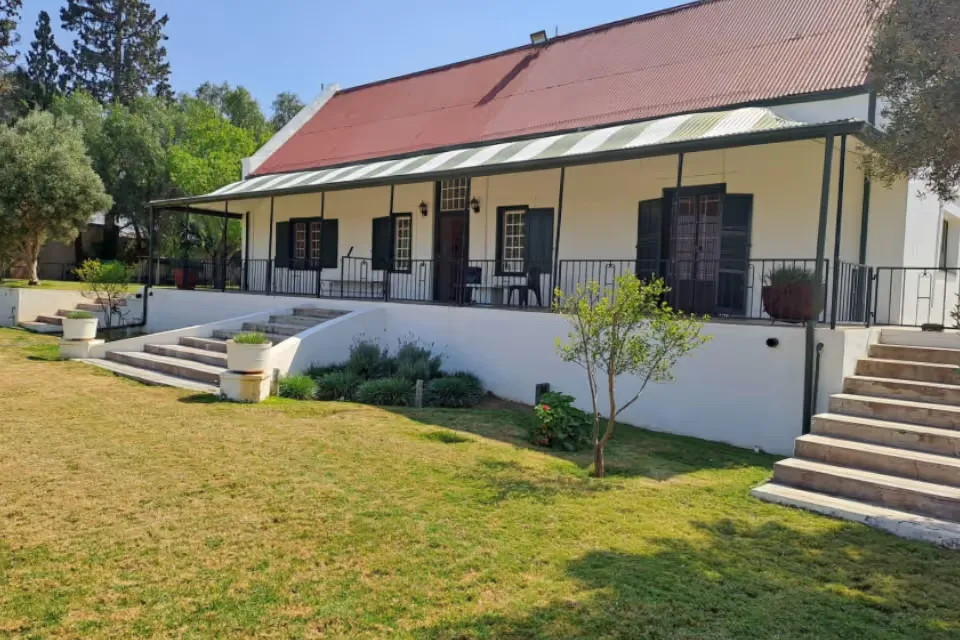
For many, the answer lies in the wide-open spaces and slower pace of South Africa's Karoo. And perhaps no symbol captures this lifestyle shift better than the humble stoep.
More than a porch, a new way of living
According to Wayne Rubidge, area principal in the Karoo for Pam Golding Properties, today's lifestyle-driven buyers are seeking something deeper than bricks and mortar.
"A stoep is far more than a porch. It's a place meant for lingering, where value is placed on stillness, where you can watch the world go by, greet neighbours, listen to birdlife, or simply pause, relax and decompress," says Rubidge.
"The appeal of the stoep is not about architecture. It's about reclaiming time, perspective and calm. This is not a mass exodus from cities, but a thoughtful rebalancing as buyers reassess what value truly means."
Across many Karoo towns, buyers can still acquire a freestanding home for less than R2 million - a budget that would often secure only a modest apartment in many metropolitan areas.
Why buyers are looking beyond the city
The trend is being driven by several converging factors. Improved connectivity and flexible working arrangements have enabled more professionals to maintain business interests in major centres while living elsewhere.
At the same time, rising urban costs, traffic congestion, security concerns and increasingly compact living environments are encouraging buyers to consider alternatives.
According to agents operating in towns such as Graaff-Reinet (Robert Sobukwe Town), Prince Albert and Vanderkloof, today's buyers are making highly considered lifestyle decisions rather than emotional relocations.
Many are seeking communities where neighbours know one another, children enjoy greater freedom and daily life unfolds at a more manageable pace.
What buyers want
According to Karoo property specialists, buyer motivations are remarkably consistent.
- Space beyond four walls
Buyers are attracted to expansive landscapes, quieter streets and significantly lower population density. - Community-led security
Rather than relying solely on high walls and electrified fences, many are seeking the reassurance that comes from connected communities and greater visibility.
- A better family environment
Good schools, safer outdoor lifestyles and less stressful daily routines are key attractions for families.
- Character and flexibility
Historic homes, heritage properties and houses with room to expand, renovate or adapt are particularly sought after.
Rubidge notes that the market attracts a diverse range of purchasers, including young families, professionals, retirees and second-home owners.
"No single buyer profile dominates. What we are seeing is a stable, lifestyle-driven market where most buyers remain economically active while fundamentally reshaping how they live."
The value equation has changed
One of the strongest drivers behind the trend is value for money. In major cities, buyers often commit substantial capital to compact, highly managed living environments.
In contrast, Karoo towns offer:
- Freestanding homes on large plots.
- Heritage and character properties.
- Additional buildings suitable for guest accommodation.
- Home offices and flexible workspaces.
- Opportunities for future expansion.
Well-priced homes in sought-after Karoo towns are increasingly selling within weeks, particularly in the R1 million to R3 million price bracket. Stock shortages are becoming evident, especially for well-maintained heritage homes and move-in-ready properties.
"Buyers are often surprised by what their budget unlocks here," says Rubidge. "It's not only about value for money - it's about possibility."
Alongside residential demand, there is also growing interest in lifestyle farms and smaller agricultural holdings, driven by buyers looking to diversify into tourism, farming or long-term land ownership.
The rise of the 'Second Chapter' buyer
One of the most notable trends emerging across the Karoo is the growth of what Rubidge describes as the "second chapter" buyer.
These are not necessarily retirees. Instead, they are individuals and couples entering a new phase of life and looking for a meaningful reset.
This group includes:
- Farmers transitioning into town living.
- Professionals seeking a slower pace without leaving the workforce.
- Couples downsizing from large suburban homes.
- Empty nesters pursuing lifestyle rather than status.
"The common thread is not retirement, it's reinvention," says Rubidge. Towns such as Vanderkloof, with its dam lifestyle, outdoor activities and lock-up-and-go options, are proving particularly attractive to this market segment.
A sustainable lifestyle movement
While the Karoo's property market remains relatively small compared with South Africa's major metros, activity levels continue to increase steadily. Importantly, the trend appears sustainable rather than speculative.
Limited stock, genuine lifestyle demand and improving digital connectivity are supporting long-term market stability.
Looking ahead
The Karoo's appeal has always been rooted in its landscapes, heritage, authenticity and slower pace of life. What is changing now is that more South Africans are viewing these qualities not as retirement aspirations, but as viable lifestyle choices today.
As remote work, lifestyle flexibility and value-conscious buying continue to reshape the housing market, smaller towns are increasingly earning their place alongside the country's major metropolitan centres.
"The Karoo has always drawn people in," concludes Rubidge. "What's emerging now is that more people are choosing to stay."