





Economists debate SA’s economic future at SAPOA
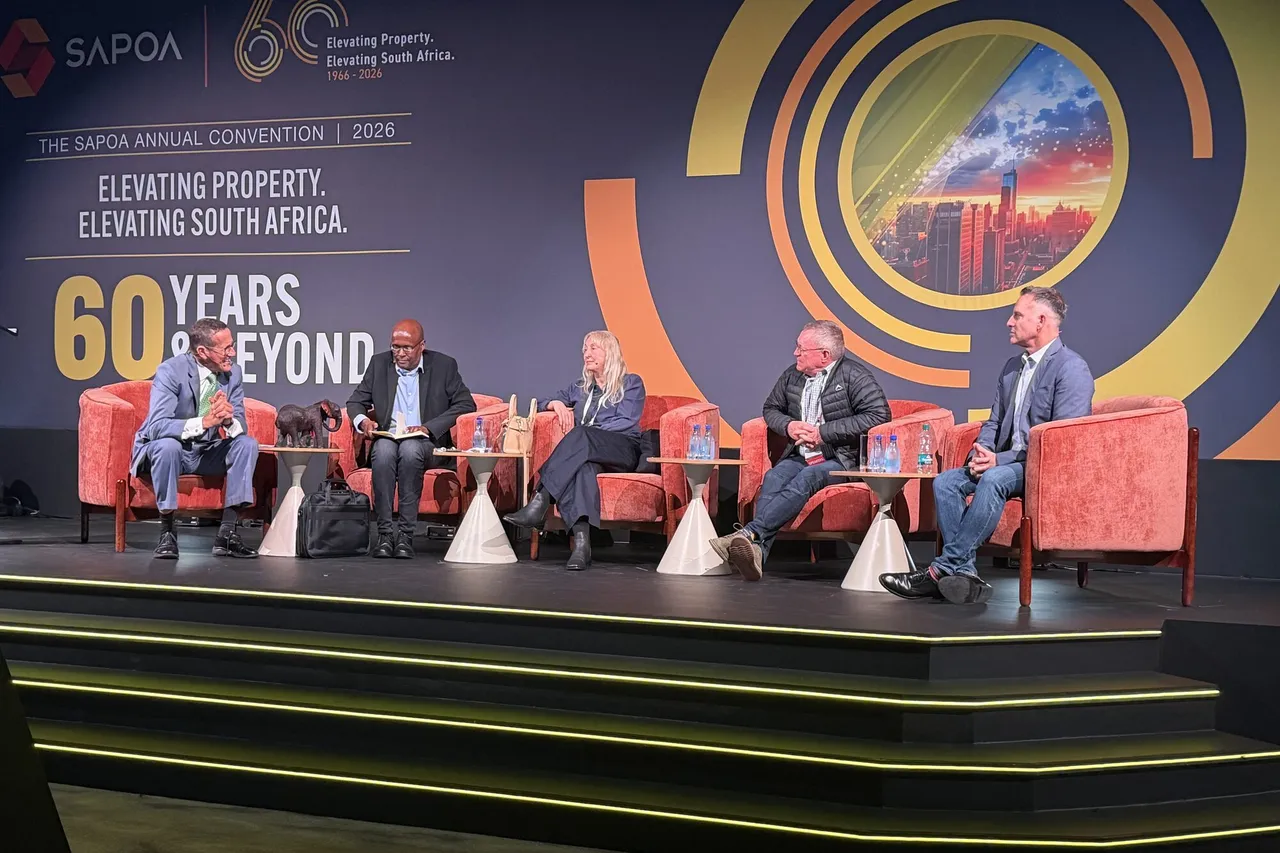
At SAPOA’s landmark 60th Annual Convention at Sun City, four leading economists tackled South Africa’s growth prospects, infrastructure crisis, jobs, investment and what comes next for property.
- Lower borrowing costs, rand resilience and an improving sovereign outlook are creating a more supportive environment for property investment.
- Infrastructure emerged as the critical economic multiplier needed to unlock investment, development, sustainable jobs and stronger economic growth.
- The recovery remains fragile: unemployment, municipal weakness, infrastructure underinvestment and execution will determine whether improving sentiment translates into real growth.
60 years of property leadership and a debate about what comes next
As the South African Property Owners Association (SAPOA) celebrates its 60th Annual Convention, the property industry has gathered at Sun City under an appropriate theme: “Elevating Property. Elevating South Africa. 60 Years & Beyond.”
SAPOA was established in 1966 as a unified voice for South Africa’s property sector. Six decades later, its 2026 Convention is looking not only at that legacy, but at the economic and investment conditions that will shape the industry’s next chapter. Against that backdrop, few discussions could be more relevant than “SA Economics – The Past, The Present & Beyond.”
The high-level panel brought together Annabel Bishop, Chief Economist at Investec; Dawie Roodt, Founder, Director and Chief Economist of the Efficient Group; Duma Gqubule, Research Associate at Social Policy Initiative; and Prof. Adrian Saville, economist, finance and strategy specialist at GIBS.
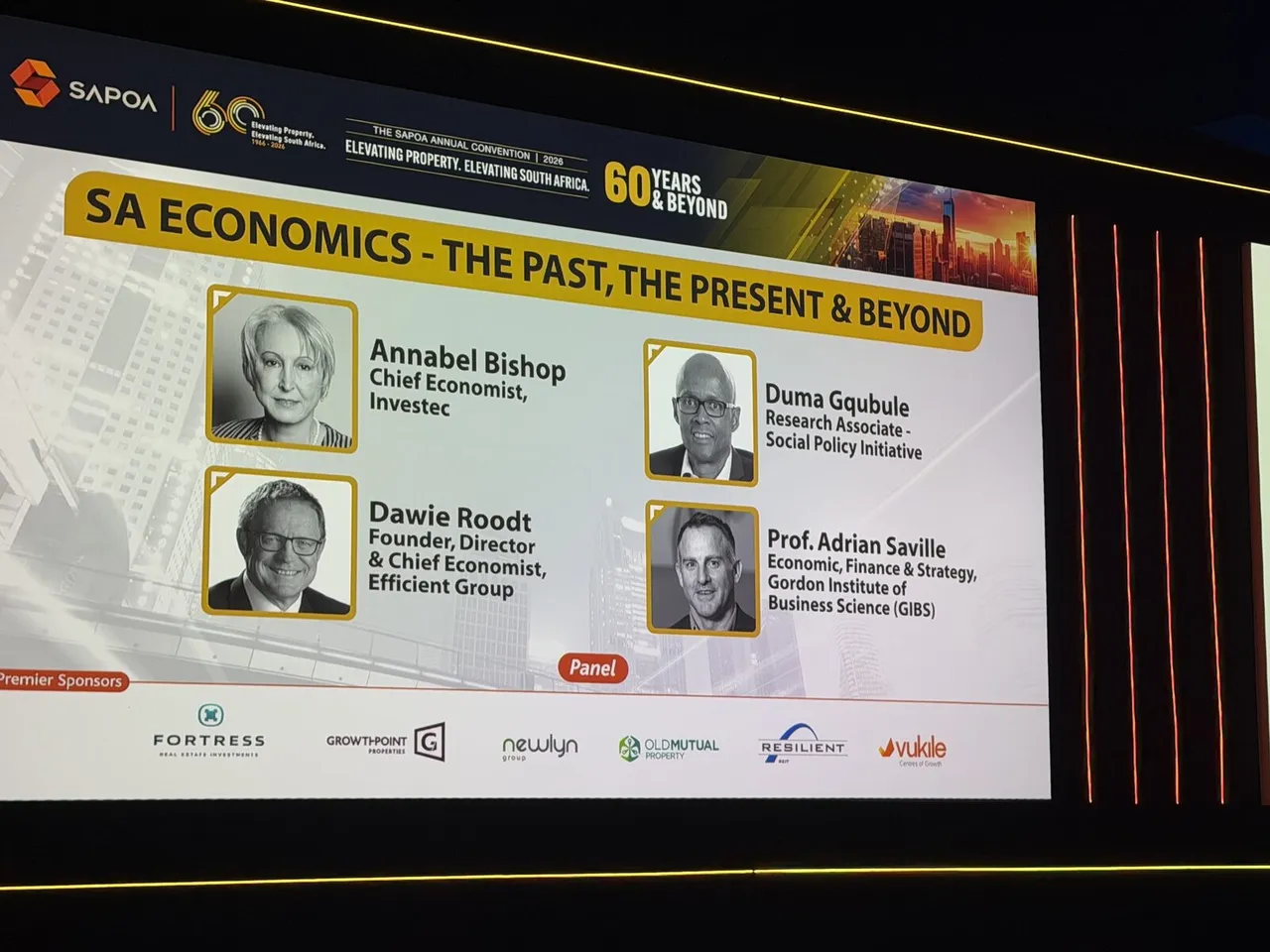
Internationally acclaimed journalist and CNN International anchor and business editor Richard Quest moderated the discussion in the Kings Ballroom at Sun City.
What followed was not a comfortable consensus. It was a robust debate about whether South Africa is genuinely turning an economic corner and whether improvements in financial markets can be converted into investment, infrastructure, jobs and sustainable economic growth.
For the property industry, that distinction is crucial.
South Africa is showing signs of improvement
The positive case starts with the financial environment.
At a time when concerns around debt sustainability and government borrowing are intensifying in major global markets, the panel highlighted incremental improvements in South Africa’s fiscal and economic position and an improving sovereign credit outlook.
That does not mean the country is out of trouble. But it does mean the direction of travel in some important indicators has changed.
One of the most important developments for property is the cost of long-term capital. South African government bond yields were discussed at around 9%, compared with previous levels of approximately 12% to 13% during periods of significantly higher domestic risk.
The panel specifically identified the decline in borrowing costs as important for the property sector. Why? Because commercial property is a capital-intensive, long-duration investment.
Changes in the cost of capital flow through to:
- property valuations and yields;
- development feasibility;
- debt servicing and refinancing;
- institutional investment decisions;
- listed property valuations; and
- the ability to fund new projects.
Lower capital costs alone will not produce a property boom, but they create a considerably more supportive foundation for investment.
A surprisingly resilient rand
Another important shift is occurring in the currency. For decades, international investors considering South Africa have demanded a substantial risk premium because attractive local returns could quickly be erased by rand depreciation.
Yet the panel noted that the rand has demonstrated unusual resilience through periods of heightened international uncertainty.
Rather than experiencing the severe currency sell-offs historically associated with global risk-off events, the rand has shown considerably greater stability.
That matters for foreign investment. A more stable currency reduces one of the significant risks international capital associates with South African bonds, equities and property.
The discussion linked part of this performance to external factors, including global risk appetite and commodity prices, but also to the South African Reserve Bank’s monetary policy discipline and lower inflation expectations.
For investors, however, the message should remain measured. Greater rand stability is encouraging. It is not a guarantee of permanent currency strength.
The elephant in the room: infrastructure
If there was one subject that repeatedly cut through the economic debate, it was infrastructure. South Africa cannot build a high-growth property market on deteriorating roads, failing water systems, unreliable municipal services and inadequate logistics infrastructure.
The panel looked back at the period from 2003 to 2008, when economic growth averaged around 4.5% annually, approximately 3.1 million jobs were created and public investment was expanding rapidly.
The contrast with the subsequent period was stark. The discussion cited a 43% collapse in real per-capita public investment over the past 17 years, with an even larger decline cited for Johannesburg. That has direct consequences for property. A commercial building does not exist independently of the city around it.
Its performance ultimately depends on:
- reliable electricity;
- water and sanitation;
- roads and public transport;
- logistics networks;
- municipal service delivery;
- safety and security; and
- efficient planning and development approvals.
Infrastructure therefore isn’t merely a government issue. It is a property investment fundamental.
From public infrastructure to private capital
The opportunity is that South Africa increasingly recognises that government cannot solve the infrastructure challenge alone.
The panel highlighted the growing importance of public-private partnerships and private-sector participation, including opportunities around rail and transport infrastructure.
The electricity market has already provided a glimpse of what can happen when private investment is allowed to respond to infrastructure shortages.
The same principle could increasingly apply across logistics, transport, energy and other critical infrastructure. For property, the implications are potentially significant. Better infrastructure can improve the performance and value of existing assets.
But infrastructure investment can also create entirely new property markets. New transport links, logistics corridors, power capacity and urban infrastructure can unlock land, attract businesses and make previously marginal developments viable. That makes infrastructure investment one of the most important themes property investors should be tracking over the next decade.
But financial markets are not the real economy
This is where the panel’s economic debate became particularly important. Not all the speakers accepted stronger financial-market indicators as sufficient evidence of economic recovery.
Gqubule drew attention to the distinction between financial markets and the real economy of jobs, physical investment and household livelihoods.
The exchange was forceful, but the underlying issue is difficult to dispute: South Africa’s unemployment challenge remains enormous. For property, employment is fundamental.
- Residential property needs households capable of paying bonds or rent.
- Retail property needs consumers with disposable income.
- Office property needs businesses that are expanding and employing people.
- Industrial and logistics property needs growing production, trade and economic activity.
- New development needs investors confident enough to commit capital over long investment horizons.
The debate therefore moved to an important distinction. South Africa cannot simply announce that it wants jobs. It needs to create the productive investment that generates sustainable employment.
South Africa has done it before
There was also a powerful historical reminder. South Africa has previously emerged from a period characterised by high unemployment, weak growth, elevated debt and poor economic confidence.
During the stronger-growth years of the 2000s, unemployment fell from above 30% to around 21%, according to figures discussed by the panel.
The argument was that had the country sustained economic growth of around 6%, rather than entering the subsequent state-capture period, unemployment could potentially have fallen much further.
Whatever one’s view of the counterfactual numbers, the broader lesson is important: Growth matters.
And the panel connected that stronger historical growth to infrastructure investment, improving public finances and increased economic confidence.
The challenge now is to recreate the conditions for sustained investment-led growth. That means accelerating infrastructure programmes, expanding initiatives such as Operation Vulindlela, attracting private capital and improving the environment in which businesses invest.
Property ultimately happens at city level
One of the most relevant observations for the property industry was that economic success ultimately becomes tangible at city and municipal level.
National policy may set the direction, but property is inherently local. An investor experiences government through municipal rates, electricity, water, roads, planning departments, waste collection, security and the quality of the infrastructure surrounding an asset.
The panel emphasised that job-creating growth ultimately has to take place at city level, highlighting the economic significance of Johannesburg and Gauteng in particular.
This should increasingly influence property investment strategy. The old investment equation of location, tenant, lease and yield is no longer sufficient on its own.
Investors increasingly need to add another question: Can the municipality supporting this asset function effectively over the next five, 10 or 20 years?
What property investors should be watching
The message from SAPOA’s 60th Annual Convention is not that South Africa has suddenly solved its economic problems. It hasn’t. Nor is the story simply one of continued decline. There are meaningful signs that parts of the investment environment are improving.
For property owners, developers and investors, five indicators now deserve particular attention:
1. Cost of capital
Lower long-term borrowing costs can improve valuations, refinancing economics and development feasibility.
2. Infrastructure investment
Energy, water, transport and logistics will increasingly determine where capital can be deployed successfully.
3. Private-sector investment
Investment creates productive capacity — and productive capacity creates sustainable jobs.
4. Municipal performance
The divergence between well-run and poorly managed municipalities could increasingly translate into divergent property returns.
5. Employment and economic growth
Ultimately, property demand cannot sustainably outperform the economy that supports it.
The bottom line: confidence now needs execution
South Africa’s economic story entering the next phase is unusually complex. There are reasons for greater confidence: a more resilient rand, lower borrowing costs than previous extremes, improvements in the sovereign risk outlook and potentially greater private-sector participation in infrastructure.
But none of those indicators alone will fix the economy. The real test is whether improving financial conditions can be converted into productive investment, functioning infrastructure, economic growth and jobs. That is particularly important for property. Property is where many of the country’s economic successes and failures ultimately become visible.
Businesses expanding, people finding employment, infrastructure improving and cities growing translate into demand for offices, industrial facilities, logistics space, retail centres and homes. The opposite is equally true.
Perhaps that was the most important message to emerge from this wide-ranging debate at SAPOA’s milestone Convention. After 60 years of helping shape South Africa’s commercial property industry, the challenge facing SAPOA’s members is no longer simply how to navigate the economy as it exists.
It is how property capital, infrastructure investment, public-private collaboration and better cities can help shape the economy that comes next.
The opportunity is there. The indicators are beginning to move. But South Africa’s next economic chapter will ultimately be determined by execution.
Real Estate Investor is reporting from the SAPOA 60th Annual Convention at Sun City, taking place from 29 September to 1 October 2026 under the theme “Elevating Property. Elevating South Africa. 60 Years & Beyond.”