





Boland’s golden triangle draws buyers to the Winelands
- Paarl, Stellenbosch and Franschhoek are attracting families, investors, returning expats and retirees seeking security, lifestyle and long-term property value.
- Demand is particularly strong between R4 million and R8 million, although stock at these price points is tightening in prime locations.
- Lifestyle estates, top schools, security, sustainability and proximity to Cape Town are reinforcing the Boland’s appeal to buyers and investors.
Three towns, one increasingly powerful property market
The Cape Winelands has long been associated with vineyards, mountain landscapes and some of South Africa’s most desirable residential addresses. But the property story unfolding across Paarl, Stellenbosch and Franschhoek is becoming increasingly compelling for investors as well as lifestyle buyers.
Together, the three towns form what is increasingly being described as the Boland’s “Golden Triangle”, three distinctive residential markets benefiting from strong lifestyle demand, established infrastructure, highly regarded schools, security estates and continued residential development. Each offers something different.
Paarl provides perhaps the broadest range of estate living and price points. Stellenbosch combines its university and education ecosystem with premium residential development and an increasing focus on sustainability. Franschhoek offers scarcity, exclusivity and a strong lifestyle and tourism proposition. Yet the common thread is demand.
According to Annien Borg, who heads Pam Golding Properties in the Boland and Overberg regions, buyers are increasingly willing to pay a premium for the combination of location, security, amenities and quality of life.
“These three towns offer a lifestyle in spectacular surrounds that are hard to beat. Buyers are increasingly prepared to pay a premium for the lifestyle offered by established estates in these areas.”
That demand is also driving new supply.
“To keep up with demand, developers are constantly planning new lifestyle developments that meet the expected standard,” Borg says.
Why buyers are moving into the Boland
The attraction is no longer confined to affluent buyers looking for a weekend home in the Winelands. The buyer pool extends from young professionals and families with school-going children to returning expatriates, foreign purchasers, investors and retirees.
Education is an important part of that equation. The Boland has a concentration of highly regarded schools, allowing families to combine residential lifestyle with relatively short school commutes and easy access to sporting and extracurricular facilities.
Borg says this has made estate homes particularly attractive to returning South African expatriates.
“The Boland is known for its many outstanding schools, which means travelling time is negligible and sporting and extramural facilities are readily accessible.”
Foreign purchasers, particularly buyers from the United States, also feature in the market, although Borg says the majority of purchasers are still Western Cape residents relocating within the province.
These include families seeking more space and retirees downsizing without necessarily sacrificing amenities or quality of life.
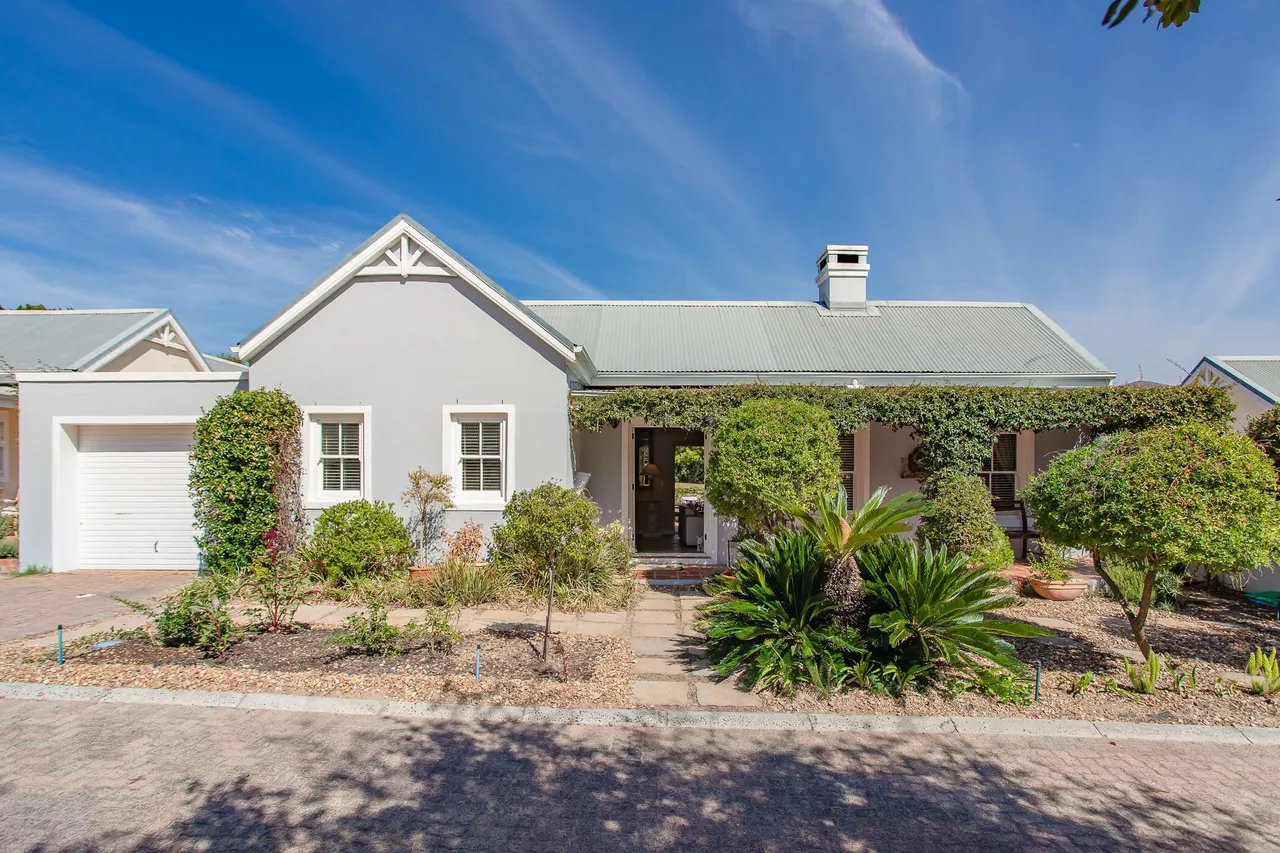
The estates themselves have become an important part of the proposition, offering combinations of security, golf, swimming, tennis, cycling and hiking trails, landscaped open spaces and convenient access to shopping and services.
Cape Town remains roughly an hour away by road from much of the region, adding another layer to its appeal.
Where demand is strongest
While prices differ significantly between the three towns and individual estates, the R4 million to R8 million segment is currently a particularly active part of the market.
That bracket can buy very different properties depending on where buyers look.
| Market | Indicative price* | What buyers find |
|---|---|---|
| Paarl | From ±R3.75m | Compact estate homes |
| Boschenmeer | ±R3.75m to R8m+ | Estate and golf-course living |
| Val de Vie | Just under R7m+ | Three-bedroom homes |
| Val de Vie Polo Village | ±R4.5m+ | One-bedroom/studio apartments |
| Pearl Valley | ±R8m | Residential plots |
| Franschhoek | ±R4m–R8m | Limited stock; apartments and selected homes |
| Stellenbosch – Newinbosch | ±R3.75m–R6.5m | New sustainable homes |
*Prices are indicative based on the market examples supplied by Pam Golding Properties.
Paarl: Choice, estates and multiple entry points
Of the three markets, Paarl offers buyers a particularly broad selection of established estates and residential options.
At Boschenmeer Golf Estate, compact homes start at approximately R3.75 million, according to Borg, while three-bedroom properties can start at around R8 million.
At the upper end of the estate market, Pearl Valley plots are around the R8 million level, while available stock at Val de Vie remains scarce. “The starting price for a three-bedroom home is currently just below R7 million,” Borg says.
The Val de Vie Polo Village provides another route into the estate, with one-bedroom and studio apartments priced from approximately R4.5 million, while two-bedroom apartments range from around R6 million to R7.5 million.
For investors, Paarl’s advantage is therefore not simply prestige. It is the breadth of property formats and price points available within a well-established lifestyle market.
Franschhoek: Scarcity pushes up the entry point
Franschhoek presents a different equation. Its international profile, tourism economy, restaurants, wine estates and relatively constrained residential market contribute to a scarcity premium.
Finding property between R4 million and R8 million is becoming increasingly difficult.
“In sought-after Franschhoek, properties in the R4 million to R8 million price bracket are hard to come by. You will probably end up buying a modern, two-bedroom apartment, which is the most popular investment.”
Larger homes do occasionally become available within the bracket. Pam Golding recently sold an 18-year-old three-bedroom home requiring renovation for R7.9 million in an established estate with a communal swimming pool and tennis court.
The transaction illustrates an important point for investors: in a constrained market, buyers may be paying as much for location and scarcity as for the physical building itself.
Stellenbosch: Sustainability joins the investment equation
Stellenbosch combines an established education, wine and tourism economy with continued residential expansion.
A notable new entrant is Newinbosch, where sustainability has become central to the development proposition. The precinct has achieved a six-star Green Star Sustainable Precincts rating from the Green Building Council of South Africa.
Borg says this can have a direct financial benefit for purchasers because major banks may offer preferential home-loan rates on qualifying Green Star-rated properties.
The precinct has been designed around a live-work-play model, incorporating interconnected walking and cycling routes and accessible community amenities.
Homes at Newinbosch range from approximately R3.75 million to R6.5 million, depending on size.
It represents an evolution of the traditional Winelands estate proposition: buyers are no longer evaluating only security, location and amenities, but increasingly energy efficiency, sustainability and the long-term operating costs of their homes.
Why new developments matter to investors
Continued demand is encouraging further development across the Golden Triangle. For investors, new developments can offer some important structural advantages.
Buying off-plan may provide a period between signing and eventual transfer during which the underlying market can move. Buyers of qualifying new developments also generally do not pay transfer duty because VAT is incorporated into the transaction.
But the investment case ultimately depends on more than avoiding an upfront transaction cost. Investors should consider:
- Rental demand and achievable rentals
- Levies and estate operating costs
- Vacancy risk
- Development pipeline and competing supply
- Resale liquidity
- Tenant demographics
- Long-term capital-growth prospects
Borg says new developments can be particularly attractive where strong rental demand is combined with longer-term growth potential.
The Boland proposition is becoming broader
The significance of the Golden Triangle is that these are no longer three markets appealing to exactly the same buyer.
Paarl offers breadth and established estate infrastructure. Franschhoek offers exclusivity and scarcity. Stellenbosch combines education, economic activity and a new generation of sustainable development.
That gives investors and owner-occupiers several ways to participate in the continued growth of the Winelands. And for buyers considering a primary residence, Borg argues that the decision should start with the lifestyle rather than simply the maximum purchase price.
“Before you settle on a number, work out which lifestyle that can actually buy you and then go and get it.”
REI takeaway
The Boland’s appeal is increasingly about more than scenery. Security, education, lifestyle infrastructure, constrained supply and continued development are creating a residential ecosystem with appeal across generations.
For investors, however, the opportunity still needs to be assessed property by property. The Golden Triangle may identify where demand is concentrating, but entry price, rental yield, levies, supply and eventual resale demand will determine whether an individual property becomes a golden investment.