








Credit Trends & Tenant Health: What Property Managers must know
- Credit demand is rising, but approvals remain tight, stronger tenants are winning access to credit.
- High-risk tenants spend up to 70% of income on debt, screening is non-negotiable.
- Portfolio growth without fee optimisation does not guarantee profitability.
South Africa’s rental market is operating in a tighter credit environment and property managers need to adapt.
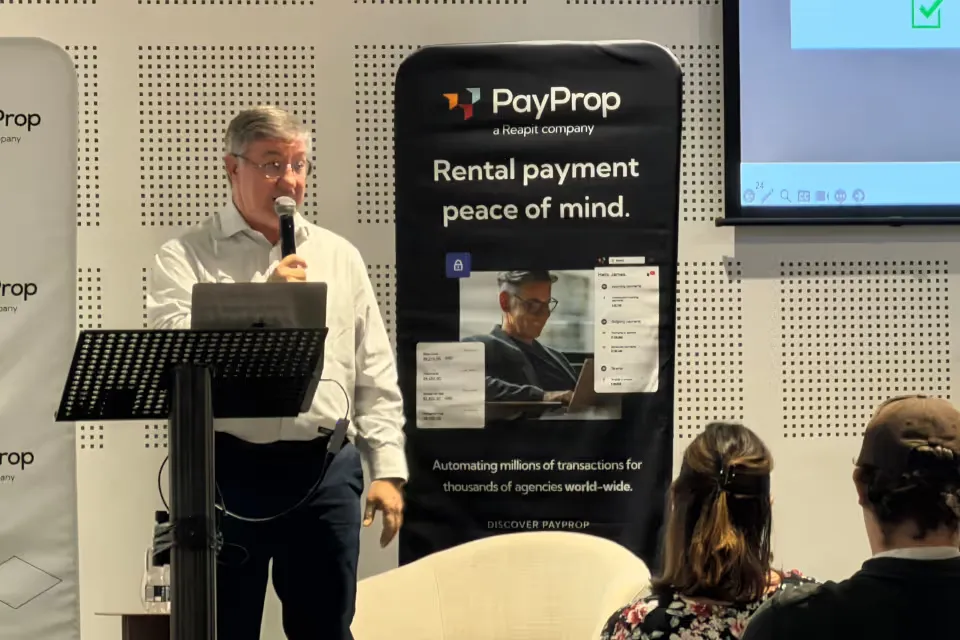
At a recent industry presentation, André Holtshausen, GM of PayProp, unpacked critical data trends around credit applications, tenant financial health and portfolio profitability. The insights offer a practical roadmap for property managers navigating higher application volumes, selective credit approvals and rising operational pressure.
Credit Applications: More demand, fewer approvals
Across the broader credit market, the number of applications has remained fairly consistent, but approvals have not kept pace.
In simple terms: more people are looking for credit than are receiving it. While this reflects pressure across the economy, it also means tenants who do qualify for credit tend to have stronger financial profiles. That dynamic is visible in default data.
A key credit health index, measuring the percentage of previously clean accounts that defaulted in the past three months, shows a recent decline in defaults. On the surface, that’s positive.
But the improvement is partly driven by tighter credit filtering. Fewer risky applicants are gaining access to credit in the first place.
For property managers, this reinforces a core reality: Screening quality matters more than ever.
Understanding Tenant Financial Health
Through its tenant assessment reporting, PayProp captures income and expenditure data during the rental application process.
The aggregated data reveals how tenants are allocating their income:
- 46% of income goes toward servicing debt
- 28% to 29% goes toward rent
- The balance is available for living expenses
That’s the average profile. But the real insight lies in segmentation.
When excluding tenants with severe arrears histories (nine months or more in default), the financial picture improves dramatically:
- Debt servicing drops to around 32%
- Rent remains stable around 27%
- Disposable income increases
The difference is stark when looking at high-risk tenants. In these cases, up to 70% of disposable income is already committed to debt, leaving virtually no financial breathing room.
That is where rental risk escalates. The takeaway for property managers is clear: The tenant assessment report is not an administrative step, it is a risk management tool.
Data submitted to credit bureaus such as TPN and Experian strengthens the ecosystem for everyone. The more accurate the data pool, the better the quality of future tenant assessments.
Mortgage stability and broader context
While consumer credit remains tight, longer-term debt categories such as home loans appear relatively stable.
Retail credit shows more volatility, while secured lending, including home loans, has been more resilient. That stability supports a rental market environment where financially disciplined tenants remain active, but marginal applicants struggle.
This creates both opportunity and responsibility for property managers to refine screening processes and pricing structures.
Profitability: Growth alone is not enough
Holtshausen also addressed a common blind spot.
Portfolio growth does not automatically translate into higher profitability.
Many property managers still operate on a procurement-only model, charging one month’s rent upfront to place a tenant but not managing the lease thereafter.
The risk? If a tenant vacates early or renewals are not properly structured, income continuity suffers.
Full-service lease management, combining upfront placement commission with ongoing management fees, creates more stable revenue. Yet many agencies hesitate to adjust fee structures for fear of losing landlords.
The data suggests that average upfront commissions in the market sit around 7.3%. Even small incremental increases in management fees can materially improve profitability without undermining competitiveness.
Holtshausen challenged property managers to calculate the real hourly value of their time against commission earned. With rising application volumes and increased compliance demands, the workload to secure quality tenants has grown substantially.
Charging appropriately for that effort is not opportunistic, it is sustainable business practice.
Additional revenue & benchmarking
Survey data also highlights additional fees charged nationally, including application fees, lease fees and administration charges.
While structures vary, benchmarking against national norms allows agencies to evaluate whether they are leaving revenue on the table.
Equally important is updating lease agreements to reflect revised fee models and risk mitigation clauses.
The message is not to increase fees blindly, but to align pricing with workload, compliance risk and market realities.
Action Plan for Property Managers
Based on the data trends, three practical priorities emerge:
- Grow Strategically - Rising investor interest in rental assets creates opportunity, but tenant quality must remain central.
- Screen Rigorously - Leverage assessment reports and contribute data to strengthen credit reporting accuracy.
- Optimise Profitability - Review fee structures, benchmark nationally and ensure management income reflects the value delivered.
Summation of way forward
The rental market is not in crisis, but it is selective. More tenants are applying for credit, yet fewer are qualifying. Those who do qualify are financially stronger. High-risk profiles remain highly leveraged and vulnerable.
For property managers, this environment rewards disciplined screening, smart pricing and data-driven decision-making.
Technology platforms like PayProp provide the visibility.
But profitability and risk management ultimately depend on how that data is applied. In a tighter credit cycle, informed operators win.