







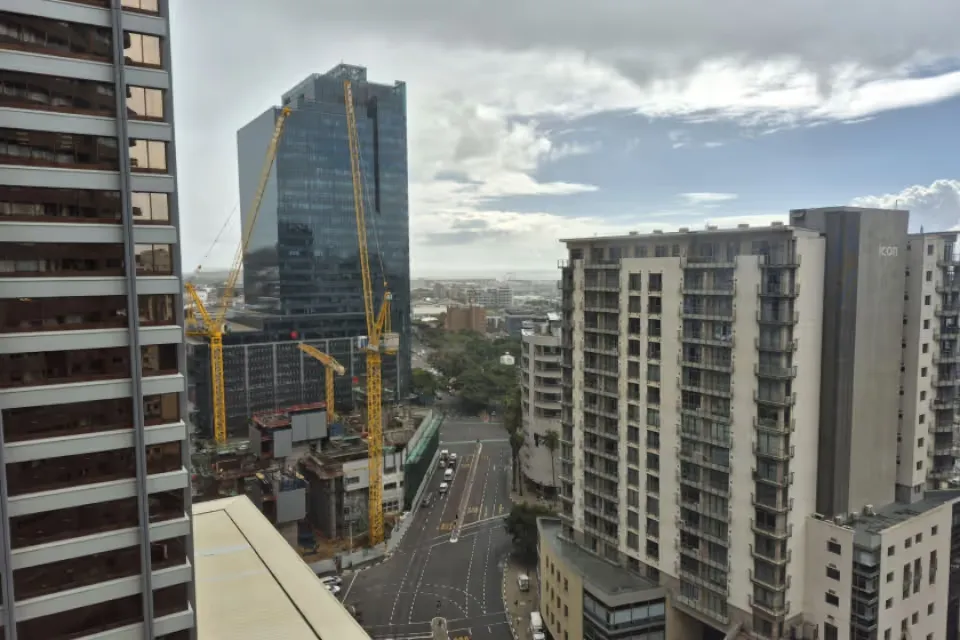
Cape Town CBD property surge gains momentum
- Strong investor demand and limited supply are driving sustained price growth and rental momentum across the Cape Town CBD
- Office vacancies are tightening, with demand rising for quality space and conversions reshaping underperforming assets
- Mixed-use developments and tourism growth are unlocking a seven-day economy and boosting short-term rental demand
Confidence is translating into real momentum
Cape Town’s CBD is not just holding firm, it’s accelerating. Persistent investor confidence, combined with strong residential and commercial demand, is driving a renewed surge in activity across the inner city.
Unlike other metros battling stagnation, the Cape Town CBD continues to benefit from structural demand, lifestyle appeal, and economic outperformance.
As Grant Elliott, Deputy Chairperson of the CCID Board and COO of Thibault Investments notes: “This points to sustained demand and price momentum as we head into 2026.”
With residential prices outperforming nationally and investment flowing into mixed-use developments, the CBD is increasingly being repositioned as a long-term, income-generating investment hub.
Demand for quality space is reshaping the market
The commercial sector is undergoing a clear shift: quality is winning.
According to Quintin Rossi CEO of Spear REIT, supply constraints in premium office space are tightening the market: “This bodes well for gross rental growth of existing CBD office properties, which could be as high as 10 - 12%.”
Demand is particularly strong for A- and P-grade office space with:
- Strong amenities
- Access to transport
- Efficient layouts for large workforces
At the same time, the ongoing conversion of B- and C-grade buildings into residential or long-stay rental stock is unlocking new value and shifting the CBD toward a 24/7 economy.
Office vacancies are tightening
The vacancy story is turning. Cape Town continues to outperform nationally, with significantly lower vacancy rates than Johannesburg and Durban.
According to Rob Kane, CCID Board Chairperson and CEO of Boxwood Property Fund says “Vacancies will drop even further… the CBD continues to meet tenant and staff needs better than many decentralised nodes.”
This tightening supply-demand dynamic is giving landlords:
- Greater pricing power
- More selective tenant profiling
- Improved long-term income stability
As vacancy levels fall, the balance is shifting back toward landlord advantage.
Mixed-use development is driving the next phase
The future of the CBD is integrated. Mixed-use developments, combining residential, retail, hospitality, and office are rapidly transforming the inner city into a live-work-play ecosystem.
Elliott highlights that these developments remain central to growth, while Rossi adds they are key to unlocking seven-day trading, extending activity beyond traditional business hours .
Major developments and refurbishments are not only modernising the CBD but also:
- Increasing density
- Enhancing urban experience
- Driving long-term capital growth
Tourism is fuelling short-term rental demand
Tourism is back and it’s feeding directly into property demand. Event-driven travel, conferences, and leisure tourism are boosting hotel occupancy and short-term letting across the CBD.
Elliott notes a strong pipeline of events and conferences, while Rossi points to continued demand from investors targeting short-term rental opportunities. This creates a powerful dual-income dynamic:
- Long-term rental demand from residents
- Short-term upside from tourism flows
A market moving ahead of the pack
Cape Town’s CBD is not just outperforming, it’s redefining urban property dynamics in South Africa.
The convergence of:
- Strong investor confidence
- Limited supply
- Rising rental growth
- Urban regeneration
This is creating a market that is both resilient and opportunity-rich.
The message is clear: This is no longer a market to watch, it’s a market to position in. For investors, the window is still open, but it’s narrowing as momentum builds.