








Budget 2026: Turning point but SA must take the next step
- Treasury dialled back tax-hike plans, adjusted brackets for inflation, and nudged savings higher, modest relief, not a rescue.
- Markets liked the fiscal intent: rand firmer and bond yields lower after the speech, a confidence signal the real economy still must earn.
- Dawie Roodt’s core message: the problem isn’t “economics”, it’s politics and policy reform is the growth unlock.
Confessions, confusions & forecasts: The Dawie Roodt read
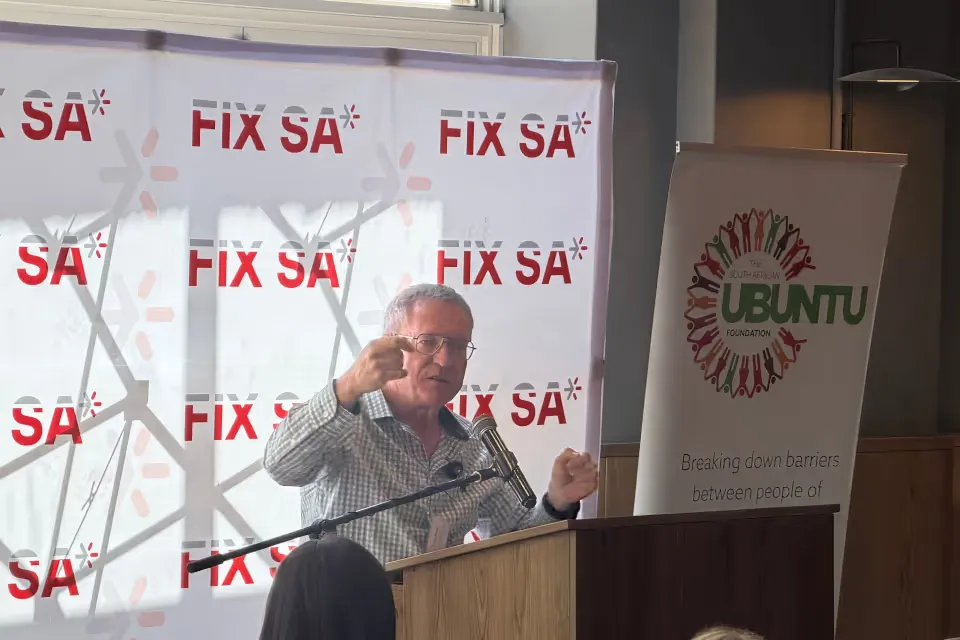
Efficient Group economist Dawie Roodt framed Budget 2026 as a “positive” budget with a crucial caveat: South Africa may be at or near a fiscal turning point, but the country still isn’t growing fast enough and that’s the one thing the Minister of Finance ultimately needs to make the numbers work.
He opened with a veteran’s bluntness (this being his 41st budget analysis) and a global backdrop he says is feeding uncertainty: shifting trade conditions, geopolitics, and a world of elevated asset prices.
His point wasn’t to dramatise global noise, it was to highlight how fragile confidence is, and how quickly capital moves away from uncertainty.
Then he brought it home: South Africa’s growth performance remains the central weakness. Until fixed investment and business confidence lift meaningfully, budgets will keep behaving like tightropes: limited room for relief, relentless pressure on SARS, and rising sensitivity to debt-service costs.
Main budget highlights that matter
Below are the big items that shaped Dawie’s “confessions, confusions and forecasts” lens and why they matter.
- Tax: Relief-by-avoidance, not relief-by-reduction
Headline move: the previously pencilled-in R20 billion tax increase is withdrawn, while personal income tax brackets and medical tax credits are fully adjusted for inflation.
Why it matters
This is government effectively admitting the tax base is already squeezed. It’s not “cutting taxes”; it’s choosing not to make things worse, because the tax system is bumping into behavioural limits.
- Savings Incentives: Small but smart nudges
Budget 2026 increases key savings limits:
- Tax-free savings annual limit: R46,000 (Government of South Africa)
- Retirement fund deduction limit: R430,000 (Government of South Africa)
Why it matters
Roodt’s view is that South Africa needs more domestic savings and investment resilience. These adjustments are directionally right, even if they won’t transform national savings on their own.
- Small Business Admin Relief: A genuinely meaningful change
VAT compulsory registration threshold rises from R1 million to R2.3 million (first adjustment since 2009).
Why it matters
This is real breathing room for micro and small firms that have been crushed by compliance load. It reduces admin friction and improves cashflow flexibility, exactly the kind of “boring reform” that quietly supports growth.
- Fuel & carbon-related increases: The slow bleed continues
Fuel levies increase (petrol and diesel), reinforcing the reality that households and logistics-heavy businesses remain exposed to transport-linked inflation. (National Treasury of South Africa)
Why it matters
Fuel costs ripple into everything, especially food and commuting. Even small levy moves land in a cost-of-living environment already stretched.
- The fiscal signal markets watched: Credibility & the “anchor”
The budget reaffirmed fiscal sustainability intent, with government indicating it will move toward a principles-led fiscal anchor. Markets reacted positively on the day. (Reuters)
Why it matters
If South Africa can convince investors that debt stabilisation is real (not rhetorical), the payoff is lower borrowing costs, which frees up space for real priorities.
What this means for the SA Property Market
Roodt’s analysis has a property investor’s subtext running through it: property doesn’t just need lower rates, it needs confidence, functioning cities, and reliable policy.
- Interest rate path: Cautiously supportive
A lower inflation target framework has already been introduced, now a 3% point target with a 1% tolerance band, explicitly aimed at reducing inflation expectations and creating room for sustainably lower rates over time. (Government of South Africa)
Property Impact
- Rate cuts (when they come) support affordability and activity at the margin.
- More important: stable inflation expectations reduce long-term funding costs and improve mortgage pricing conditions.
- Bond yields, the rand, and sentiment: The “leading indicators”
Markets read the budget as pro-credibility: the rand strengthened and the benchmark bond yield fell after the speech. (Reuters)
Property Impact
Lower bond yields matter because they filter into the long end of funding markets. When government funding costs ease, it reduces systemic pressure on credit pricing, not overnight, but directionally.
- Municipal performance is still the property market’s fault-line
Roodt repeatedly returned to service delivery, safety, and local government functionality as practical constraints on growth.
Property Impact
- Strong nodes will keep outperforming (buyers pay for reliability).
- Weak municipalities will keep bleeding value through infrastructure failure, security cost escalation, and investor avoidance.
- The real estate “opportunity set” he’s implying
If the fiscal and inflation credibility story holds, the winners in property are likely to be:
- Well-run metros and secondary nodes with improving infrastructure
- Rental stock aligned to affordability ceilings (value-for-money dominates)
- Energy-resilient buildings (solar-ready, lower operating risk)
- Mixed-use convenience formats where commuting costs and safety shape behaviour
Dawie’s challenges and the opportunity thesis
The challenges he won’t soften
- Growth is too low to solve unemployment and broaden the tax base.
- The tax base is narrow, which makes “tax the rich” a dangerous fantasy (capital and skills are mobile).
- State capacity and governance remain the binding constraints, not “economic theory”.
The Opportunity Thesis: Reality is starting to beat ideology
Roodt’s most important “forecast” argument is that government is showing more willingness to accept private sector participation and pragmatic reform, because the country can’t afford ideology-first policy anymore.
He argues that if South Africa takes the “next step”, removing policy uncertainty, fixing local government, accelerating SOE reforms, and restoring safety and basic functionality, growth could lift meaningfully. That’s the prize: growth that expands the tax base, reduces fiscal stress, and makes the property market healthier rather than merely interest-rate dependent.
What the future holds: The make-or-break watchlist
If you want to track whether Budget 2026 becomes a turning point or just another temporary reprieve, watch these signals:
- Fixed investment trend (private sector capex) - The real economy vote of confidence
- Municipal reform and service delivery traction - Property value follows functioning infrastructure
- SOE logistics performance (especially ports/rail) - Growth can’t scale without it
- Fiscal anchor credibility - Whether government actually constrains itself
- Inflation expectations staying anchored near the new target - The long-run rate story depends on it (South African Reserve Bank)
A “good” budget that still demands courage
Budget 2026 delivered sensible, credibility-seeking moves: it backed off planned tax hikes, adjusted brackets for inflation, lifted savings incentives, and gave small business a real admin win on VAT thresholds. (National Treasury of South Africa)
But Dawie Roodt’s bottom line is harder: South Africa cannot budget its way to prosperity. Without faster growth, driven by confidence, investment, functional governance and policy certainty, the country stays trapped in low-growth maths.
The budget may mark a turning point in tone and intent. Whether it becomes a turning point in outcomes depends on what happens next.