









Bryan Habana: Greatness, grit and the next chapter
- Bryan Habana’s rise was built on discipline, resilience and seizing opportunity when it appeared.
- His toughest lessons came not in victory, but through setbacks, criticism and the transition beyond rugby.
- Success in business, like sport, depends on team, adaptability, humility and constant reinvention.
Bryan Habana: The highs and lows
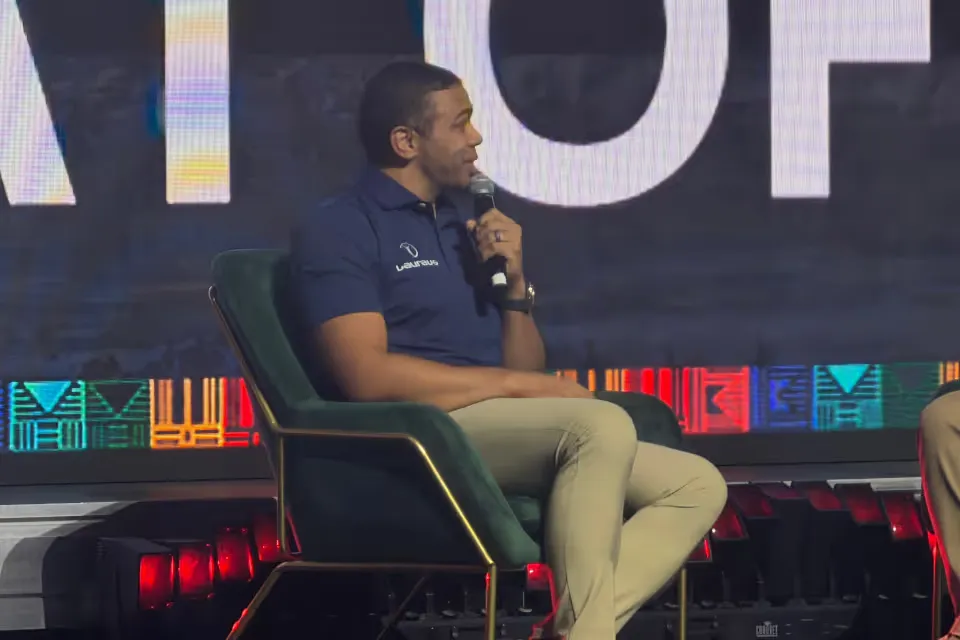
At the recent eXpcon 2026 event at the CTICC in Cape Town, Bryan Habana offered more than a reflection on an iconic rugby career. He shared a candid, deeply human account of ambition, pressure, reinvention and the uncomfortable but necessary transition from elite sport to business.
For South Africans, Habana’s story is already the stuff of legend. A Springbok great, Rugby World Cup winner, 124-cap international and one of the most feared finishers the game has seen, he is part of a generation that helped shape the modern identity of South African rugby.
But what made this discussion especially compelling was not the trophy haul. It was the honesty with which he spoke about the uncertainty after rugby, the sting of failure, the need to unlearn old habits, and the discipline required to build a second career.
His journey is not just a sports story. It is a masterclass in how success is built, lost, rebuilt and redefined.
From unlikely beginnings to Springbok greatness
Habana was the first to admit that his path did not begin with obvious signs of greatness. As a teenager, he played for the under-14 G side at King Edward VII School, hardly the place from which most people would predict a future rugby superstar.
Yet that is precisely what makes his story so powerful. He did not arrive fully formed. He earned his place through work, sacrifice and a relentless desire to improve.
He spoke movingly about the privilege of becoming a Springbok in 2004, describing it as one of the defining moments of his life. It was not just about selection. It was about what that jersey represented: family, country, accountability and the realisation that getting there was only the beginning.
That moment changed his mindset. Reaching the top was not enough. He wanted to stay there. And that meant adapting, improving and refusing to become a one-cap wonder.
Triumph never tells the whole story
It is easy to reduce Habana’s career to tries, titles and glory. But the real insight from his discussion came in his reflection on failure.
He reminded the audience that resilience is not built during the good times. It is forged in the difficult seasons, when confidence dips, criticism grows louder and self-belief is tested.
One of the lowest points of his career came in 2010 in Bloemfontein, when he was booed by a crowd of 43,000 people while walking off the field. For a player who had sacrificed so much for the jersey, it was a brutal experience.
Yet he did not hide from that reality. Instead, he used it to make a larger point: setbacks are not detours from the journey. They are part of the journey.
He also reflected on the Springboks’ difficult 2006 campaign, when a series of losses created doubt around the team. In hindsight, he believes those struggles were crucial in shaping the resilience that ultimately helped South Africa win the 2007 Rugby World Cup.
That is a lesson too many people miss. Failure often prepares us for success in ways success never can.
The hard reset after rugby
If the rugby chapter was about reaching the summit, the business chapter was about learning how to start again.
Habana was refreshingly honest about the transition out of professional sport. When he retired in 2018, he said he had no clear idea what came next. He hoped his brand and profile would help open doors, but he quickly understood that reputation alone is not a business strategy.
That may be one of the most important truths from his talk.
Being Bryan Habana could get him into the room. It could not close the deal.
In business, he had to learn new language, new systems and new skills. He spoke about having to “unlearn”, not to erase the lessons of rugby, but to make space for new ones. In sport, he operated in an environment where elite performance was everything. In business, he had to learn leadership in a different form: listening better, managing people, understanding emotion, and working with teams in ways that demanded empathy, not just execution.
That transition was humbling. It required him to confront what he did not know. And that humility is part of what makes his story so relevant beyond sport.
Lessons we can all learn
Bryan Habana’s journey offers several powerful lessons for entrepreneurs, business leaders and anyone building a life of meaning.
- The first is that opportunity matters, but preparation matters more. Habana made the point that success happens where hard work and preparation meet opportunity. That is true in sport, business and life.
- The second is that relationships matter enormously. He spoke about how he treated people throughout his career, from senior executives to support staff. Those relationships helped shape the opportunities that came later. Too many people underestimate the long-term value of respect, consistency and how you show up when no one is watching.
- The third is that team still matters, even when the spotlight is on the individual. Rugby taught him that nobody succeeds alone. Business reinforced the same truth. Talent may open a door, but sustainable success is almost always collective.
- The fourth is that resilience must be built intentionally. It does not arrive overnight. It is developed over time through introspection, accountability and the willingness to improve, even when it hurts.
- And finally, he spoke with striking honesty about vulnerability. In a sporting world that once viewed emotion as weakness, he now sees openness, empathy and mental wellbeing as essential to long-term performance. That shift matters not just for athletes, but for leaders everywhere.
More than a rugby legend
Bryan Habana’s story is inspiring not because it is flawless, but because it is real.
It is the story of a young South African who dared to dream, a sporting giant who reached the pinnacle, and a man who then had to rebuild himself in a completely different arena. It is about triumph, yes, but also discomfort, humility and the courage to begin again.
That is what makes his journey so relevant to a room full of entrepreneurs, dealmakers and professionals.
Greatness is not a single moment. It is a pattern of discipline, reinvention and learning how to rise again.
Bryan Habana may always be remembered as a Springbok legend. But his next chapter shows that true greatness is not only about what you achieve in the spotlight. It is also about how you adapt when the game changes.