









Young buyers shut out as property gap widens
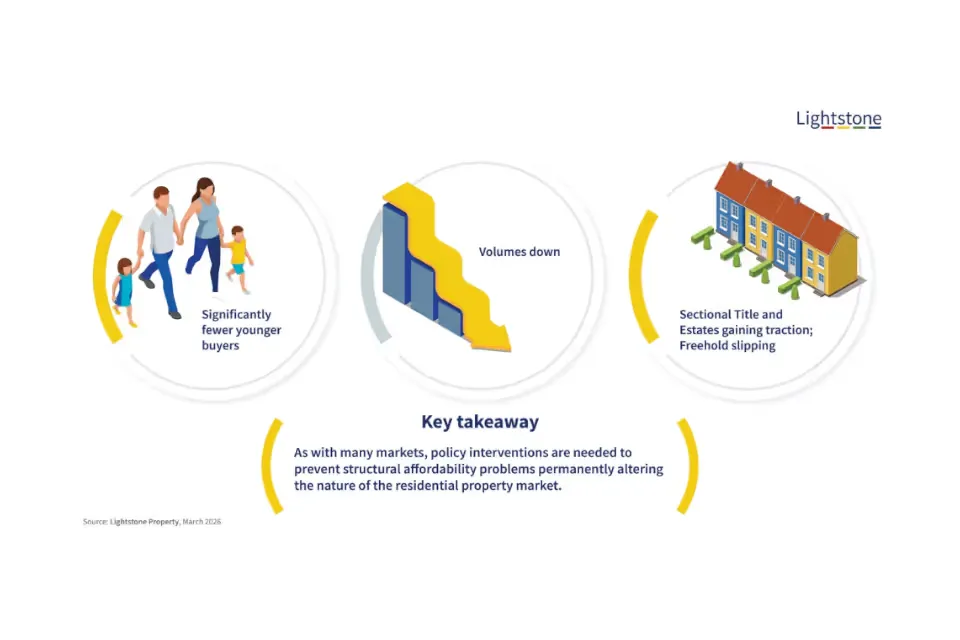
- Young buyers (18 - 35) decline sharply, signalling a structural affordability crisis reshaping long-term housing demand.
- High-value markets outperform, while affordable segments struggle despite stronger percentage growth over time.
- Falling transaction volumes point to weakening market depth and growing reliance on wealth-driven property activity.
Residential pricing under pressure
South Africa’s residential property market is sending mixed signals.
While prices have risen, particularly in lower price bands in percentage terms, the gap between high-value and affordable markets has widened significantly over the past decade. At the same time, transaction volumes are declining, and a more concerning shift is unfolding: young buyers are exiting the market.
This is no longer a cyclical slowdown, it reflects a deeper structural issue.
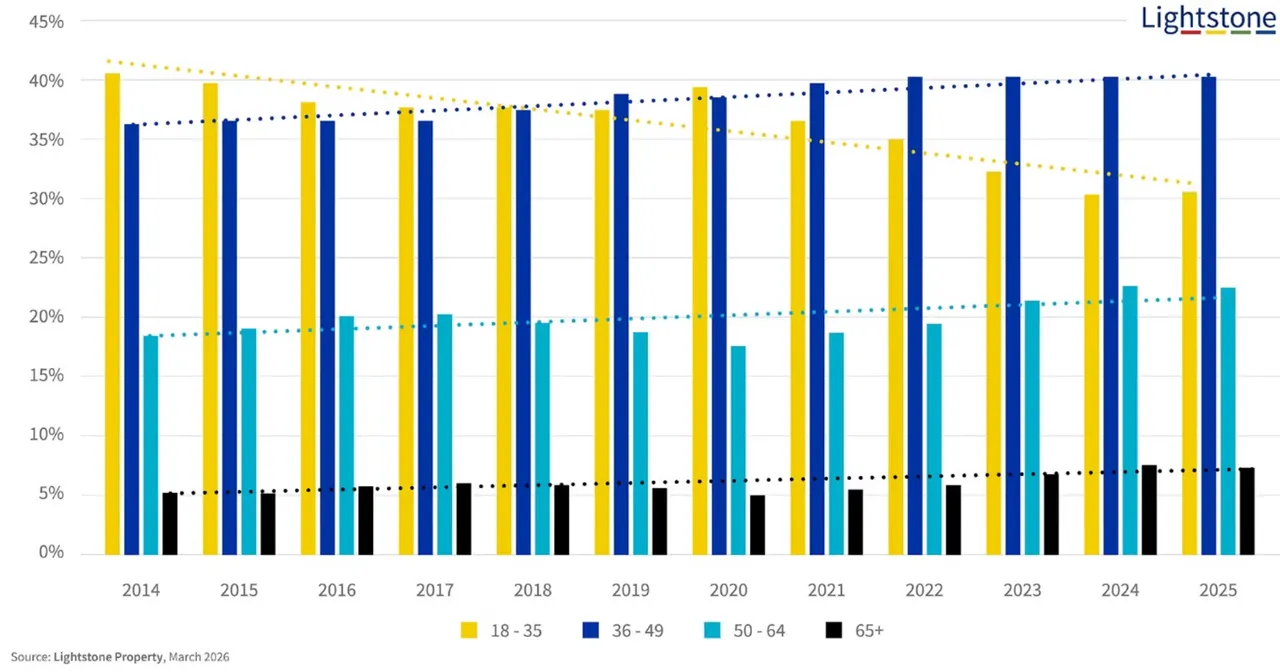
“Our analysis of data from 2014 to 2025 confirms that property volumes have drifted downwards while prices have escalated most significantly in the higher price bands. Perhaps most revealing and worrying, is the decline of buyers between the ages of 18 - 35, both in percentage terms from 40% to 30%, and in absolute numbers from 72,000 in 2014 to 47,000 in 2025,” says Hayley Ivins-Downes, Managing Executive Real Estate at Lightstone Property.
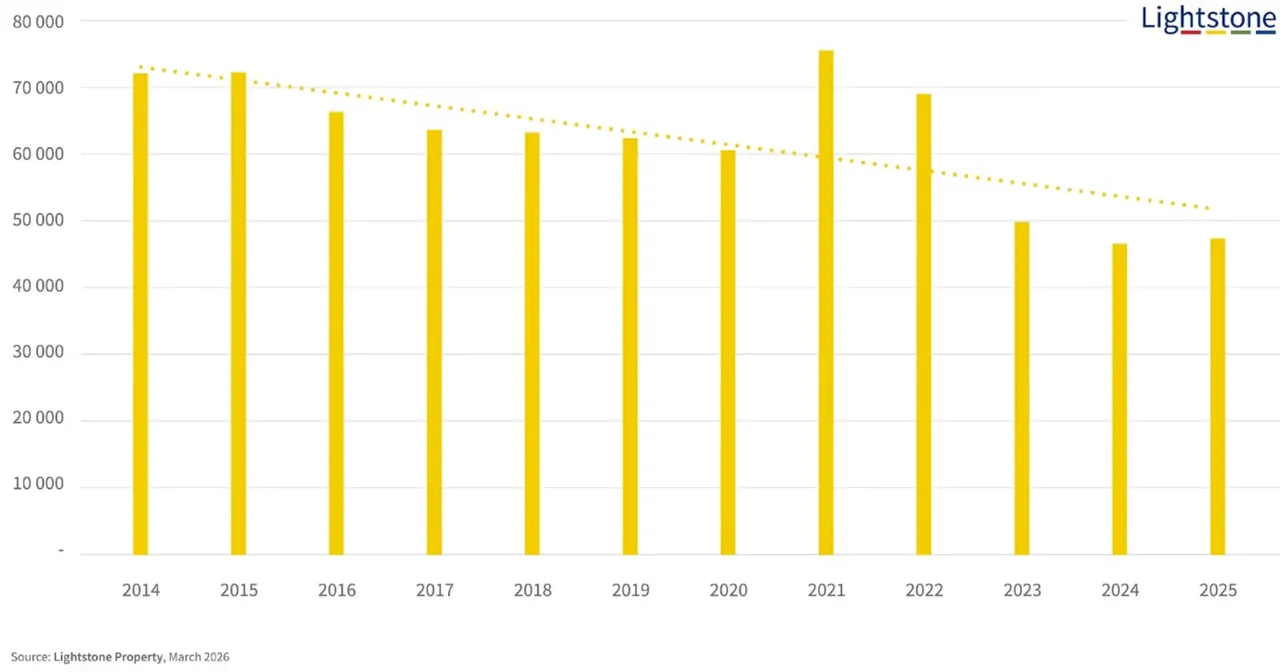
The drop in younger buyers is being driven by multiple pressures:
- House prices outpacing wage growth
- High deposit requirements
- Rising student debt
- Stricter lending criteria post-2008
- Lifestyle shifts and delayed household formation
“There are several reasons behind the drop in younger buyers… Implicit in this shift is a wealth transfer from young to old. We are seeing that younger people rent from older people, often paying higher proportions of their income for housing. In the process, housing wealth has shifted towards older generations,” adds Ivins-Downes.
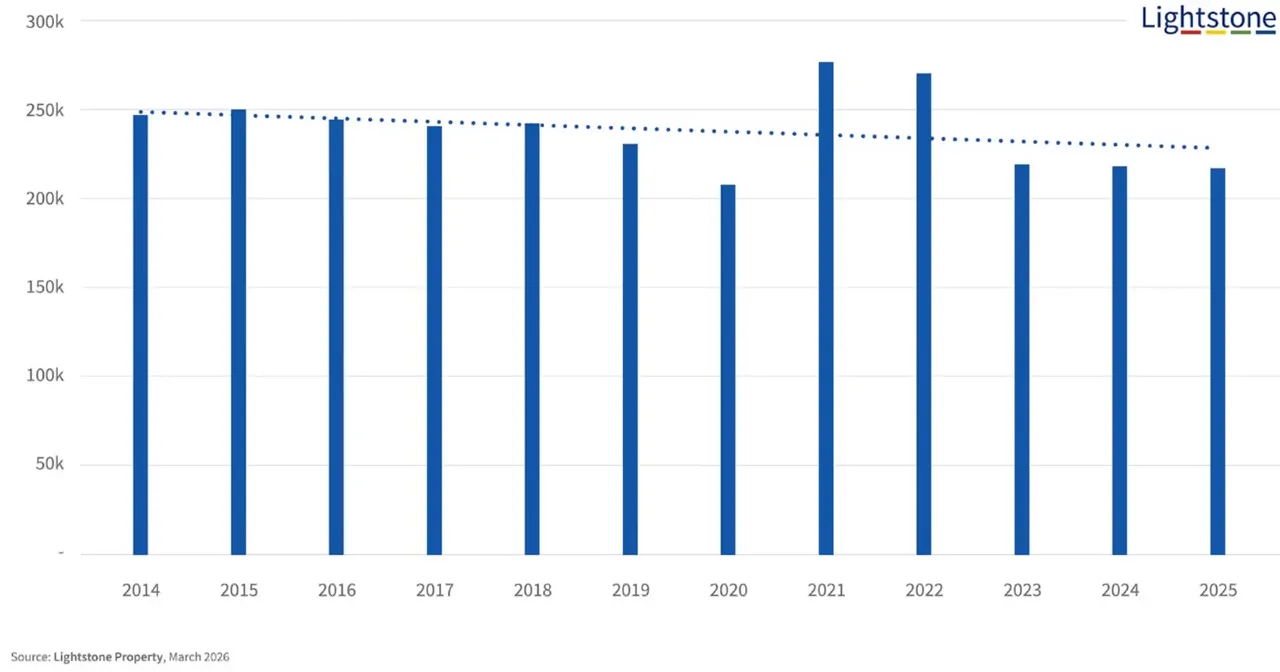
Volumes Drifting
South Africa’s housing market is losing momentum in transaction activity.
Residential property volumes have declined from 247,000 units in 2014 to 218,000 units in 2025, with only the Covid-driven surge in 2021–2022 interrupting the downward trend.
This signals:
- Reduced affordability
- Lower market participation
- A thinning base of entry-level buyers
Rising prices at the top end
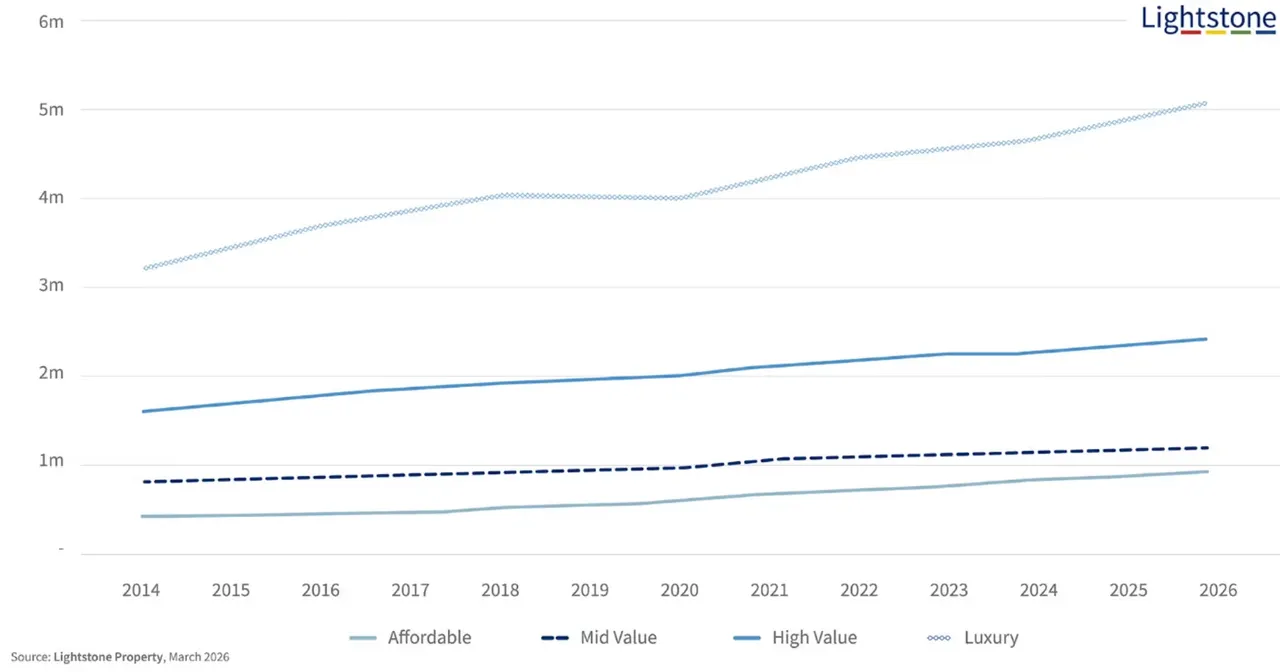
Despite falling volumes and fewer young buyers, prices especially at the top end continue to rise.
Key drivers include:
- Property as a store of wealth and investment asset
- Supply constraints (zoning, planning limits)
- Demographic shifts (older owners holding assets longer)
- Monetary policy effects post-2008
While affordable properties recorded the strongest percentage growth (230%), the absolute value gap between segments continues to widen, reinforcing inequality in access.
Location Drives Value
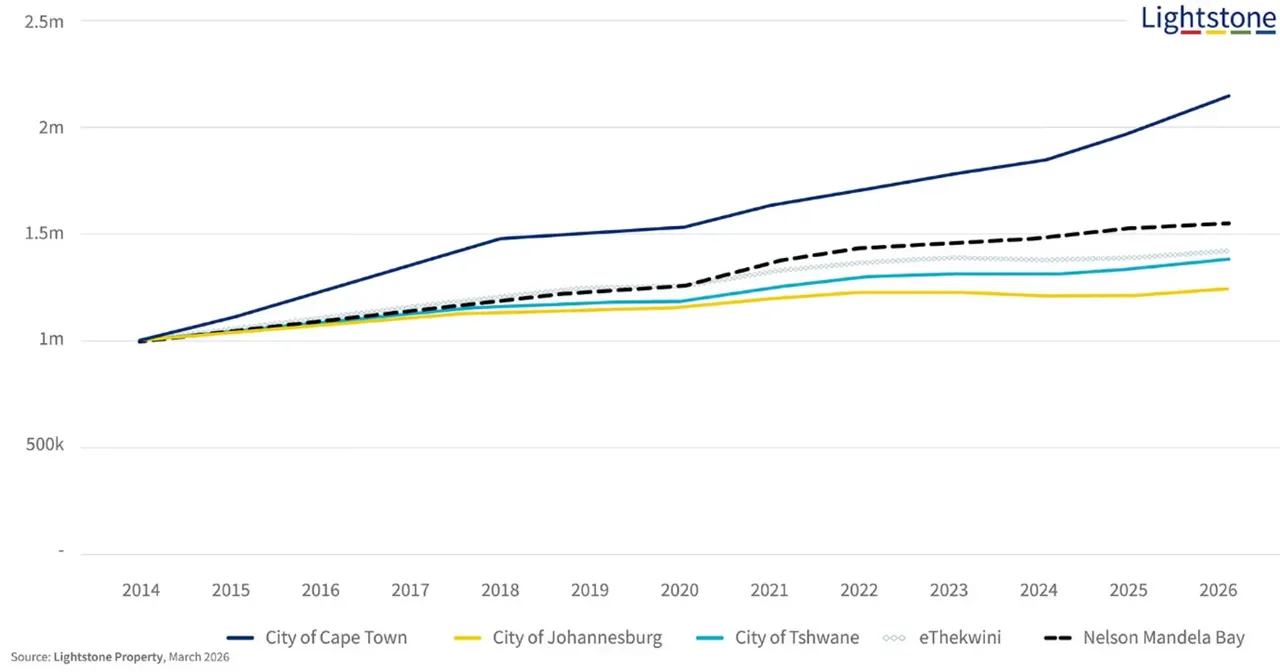
Property performance is highly location-sensitive. A R1 million home in 2014 would now be worth:
- R2.1 million in Cape Town
- R1.5 million in Nelson Mandela Bay
- R1.4 million in eThekwini and Tshwane
- Just over R1.2 million in Johannesburg
This divergence highlights the growing dominance of high-demand regional markets, particularly in the Western Cape.
Shift in Property Preferences
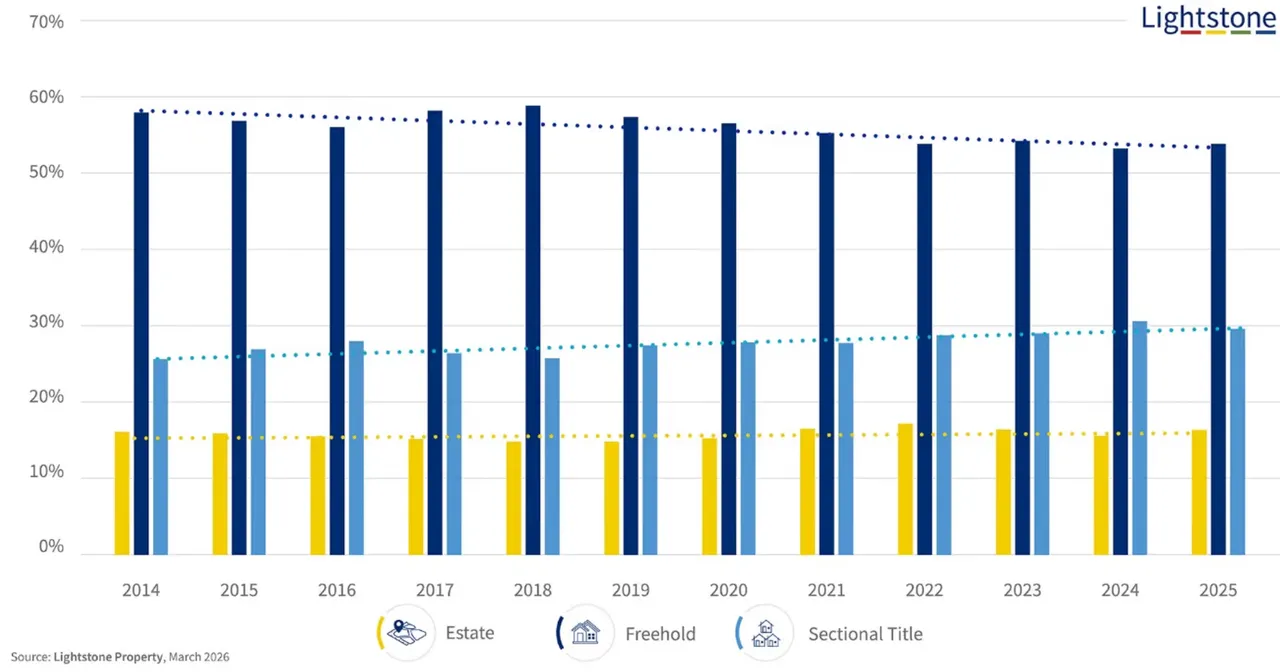
The market is gradually shifting:
- Freehold sales declining
- Sectional title gaining traction
- Estates remaining relatively stable
Lifestyle changes, affordability pressures, and security considerations are reshaping buyer behaviour.
Value Share Trends
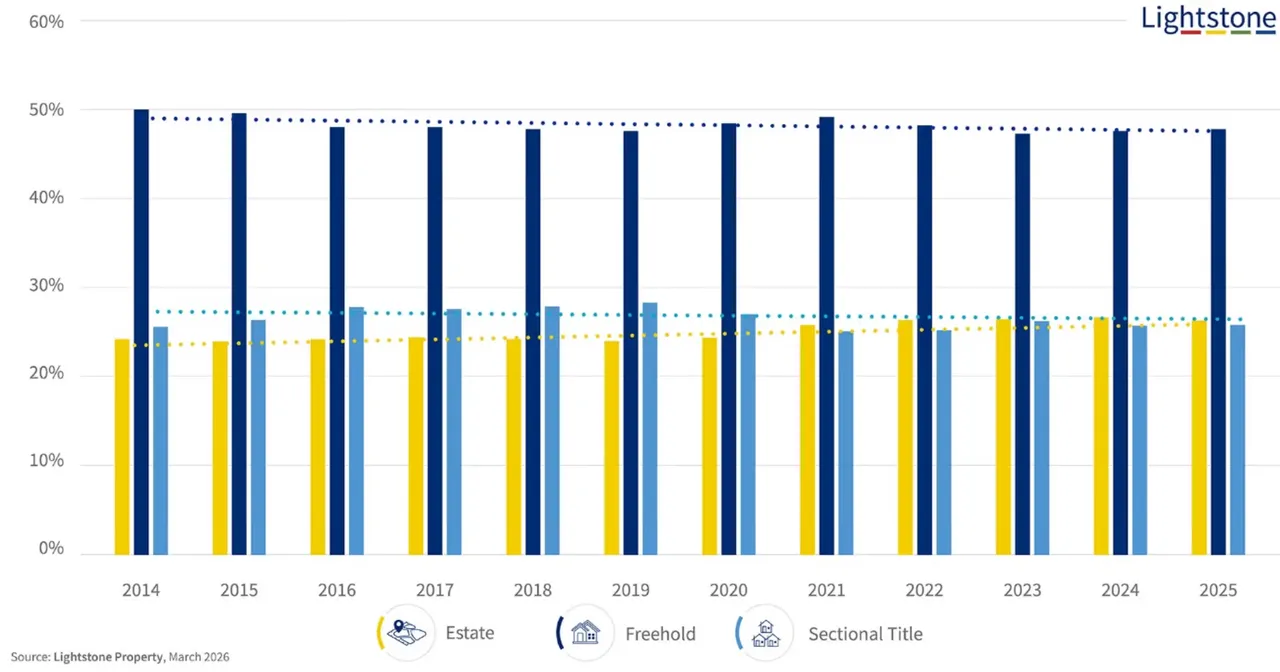
- Freehold: 50% to 48%
- Sectional Title: 25.6% to 25.8%
- Estates: 24% to 26%+
The slow but consistent shift reflects changing living patterns and post-Covid lifestyle adjustments.
Structural Risks Emerging
If current trends persist, several long-term outcomes are likely:
- A permanent renter class as ownership becomes unattainable
- Delayed household formation and slower population-driven demand
- Increased policy intervention (rent control, taxation, supply mandates)
- Long-term demand risk, as fewer first-time buyers enter the market
The traditional property ladder is under pressure and that has implications for the entire housing ecosystem.
Where to from here?
“South Africa’s housing market is resilient all round and robust in parts. Stabilising forces include population growth and immigration, which raise demand, and limited housing supply prevents large price drops. Business and investor confidence in the Western Cape drives the property market forward, and there are pockets elsewhere in the country where the higher price bands do well,” says Ivins-Downes.
Fragmenting residential market
South Africa’s residential market is fragmenting.
- Top-end markets continue to outperform
- Affordable segments are under strain
- Young buyers are falling away
Without meaningful intervention, the trajectory is clear: Lower homeownership, higher rental dependence, and widening wealth inequality.
The risk isn’t just affordability, it’s the long-term sustainability of the housing market itself.