





Sandton Gate central powers Joburg’s mixed-use shift
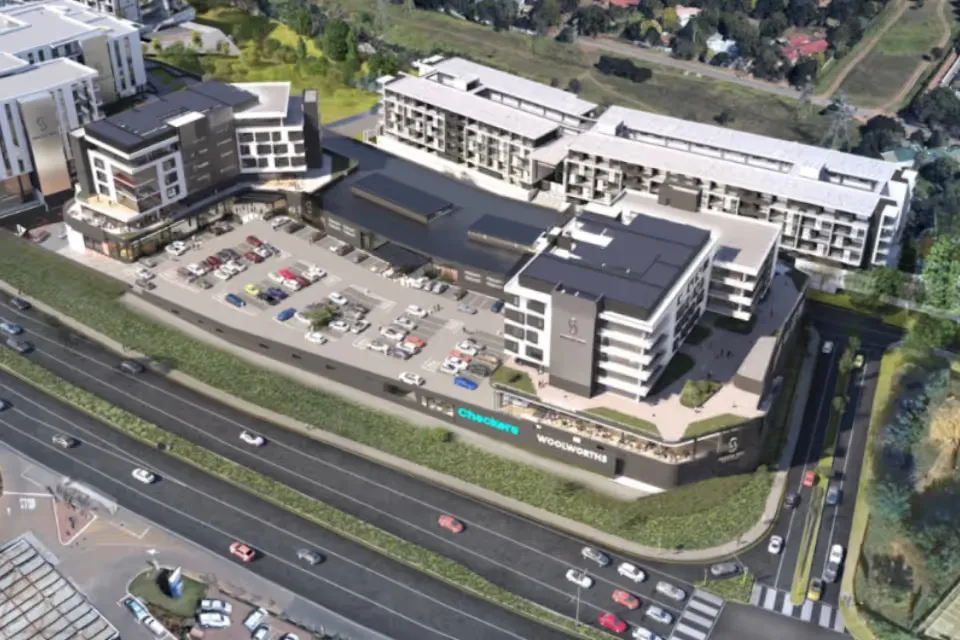
- R1.5bn mixed-use precinct redefining live-work-play in Sandton
- 12,000m² curated retail anchored by lifestyle and convenience
- Integrated offices, apartments and retail drive daily demand
The rise of mixed-use: building cities within cities
Mixed-use developments are no longer a trend, they are the default model for modern urban growth.
In a city like Johannesburg, where congestion, distance, and inefficiency shape daily life, precincts that combine residential, office, and retail into a single, walkable environment are gaining serious traction.
Sandton Gate Central is a clear example of this shift, designed not as a destination you visit occasionally, but as a place that fits into your daily routine.
Introducing Sandton Gate Central
Set on Winnie Mandela Drive, one of Johannesburg’s busiest arterial routes, Sandton Gate Central is positioned at the heart of a rapidly evolving node connecting Sandton, Bryanston, Randburg, and Fourways.
This is not accidental positioning, it’s strategic.
With thousands of professionals moving through this corridor daily, the precinct is designed as a “point of gravity”:
- Coffee before work
- Lunch within walking distance
- Meetings, fitness, errands—all in one place
As Abcon Managing Director Bryce O’Donnell puts it:
“Sandton Gate is built around how people actually live their day.”
Investor snapshot
- Development name: Sandton Gate Central
- Developer: Abcon Developments
- Location: Winnie Mandela Drive, Sandton (linking Sandton CBD, Bryanston, Randburg, Fourways)
- Type of development: Mixed-use (Retail, Office, Residential – 136 apartments)
Scale and investment
- 12,000m² curated retail
- ±10,000m² premium office space (Phase 2)
- 136 residential apartments
- ±26 established commercial tenants
- Total investment:
- Phase 1: R500 million
- Phase 2: R1 billion
This positions Sandton Gate as one of Johannesburg’s most complete mixed-use ecosystems, arguably rivalling established precincts like Melrose Arch in integrated scale.
Designed around real life, not theory
What sets Sandton Gate Central apart is its routine-driven design philosophy.
1. Convenience-led retail mix
Anchored by:
- Checkers
- Woolworths
- Dis-Chem
Supported by:
- Bootlegger Coffee, Kauai, Luigi Coffee
- Absolute Pets, PnA, Rain
- Beauty, wellness, and specialist retail
This is not mall retail, it’s daily-use retail.
2. Hospitality as the anchor
Dining is a major drawcard:
- Tortellino D’Oro (Italian)
- The Baron (premium dining and bar)
- Tightline (coastal seafood concept)
- Vlamo (reimagined Ukko concept)
These are not filler tenants, they are destination restaurants, designed to activate the precinct beyond working hours.
3. Walkable, integrated environment
The precinct is compact and pedestrian-first:
- Everything accessible within minutes
- Fitness, grooming, dining and retail integrated
- Designed to fit seamlessly into daily movement
Architecturally, the goal is simple:
Create a precinct that people use every day, not occasionally.
4. Built-in demand ecosystem
Sandton Gate already benefits from:
- ±2,000 workers within the precinct
- Growing office tenant base
- On-site residential component
This creates constant foot traffic, supporting retail sustainability and reducing vacancy risk.
Why this matters for investors
Sandton Gate Central reflects a deeper shift in property investment:
1. Mixed-use reduces risk
Multiple income streams:
- Retail
- Office
- Residential
This diversification improves resilience.
2. Location is doing the heavy lifting
Positioned between key economic nodes, the precinct taps into:
- Daily commuter flows
- Corporate demand
- Urban densification trends
3. Lifestyle is now an economic driver
People are choosing where to live and work based on:
- Convenience
- Walkability
- Experience
Precincts that deliver this outperform traditional standalone assets.
The bottom line
Sandton Gate Central is more than a new development, it’s a statement about the future of Johannesburg property. It combines:
- Scale (R1.5 billion investment)
- Integration (live, work, play)
- Location (core urban corridor)
- Daily-use relevance
The result is a precinct designed not just to attract people, but to retain them throughout the day. And that’s where real value is created.
In a fragmented city, developments like this don’t just follow demand, they reshape it.