








Reside 2026 signals new era for housing investment
- Reside Summit 2026 united developers, financiers, policymakers and investors around urgent collaboration across South Africa’s housing sector.
- Affordable housing, climate-smart development and construction technology dominated discussions as housing delivery pressure intensifies nationwide.
- Institutional investors and municipalities are increasingly viewing residential property as South Africa’s next major long-term growth sector.
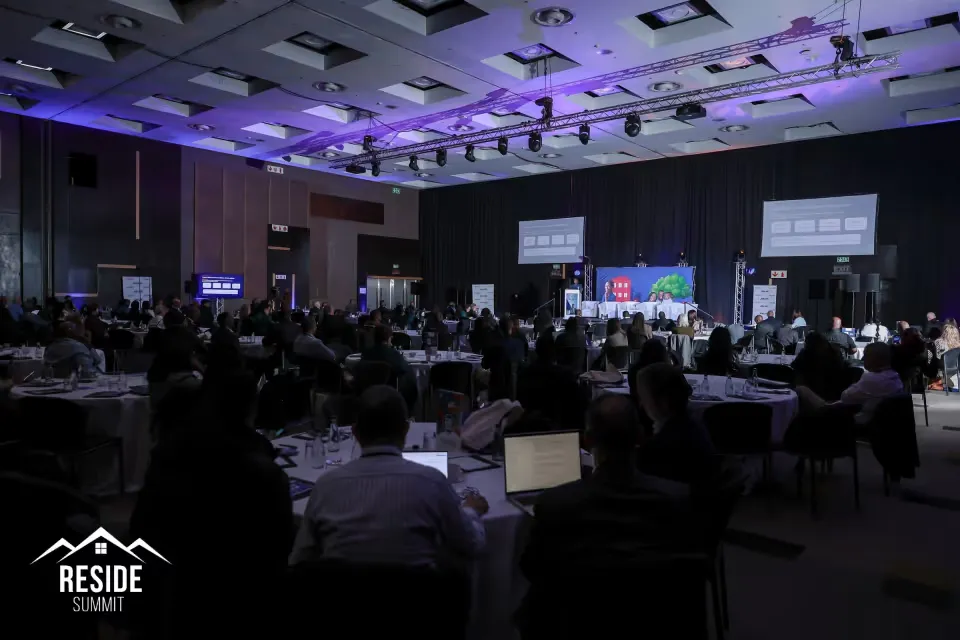
The fourth annual Reside Summit 2026 has firmly positioned itself as one of South Africa’s most important platforms shaping the future of residential property, affordable housing and urban development.
Held at the Sandton Convention Centre from 20 - 21 May, the summit attracted more than 1,000 delegates including developers, financiers, institutional investors, policymakers, municipalities, PropTech innovators, construction specialists, housing experts and industry bodies from across the country.
What emerged over the two days was a clear message: housing in South Africa can no longer operate in fragmented silos.
From student accommodation and affordable rental housing to senior living, bonded ownership, climate-smart housing and construction technology, the summit showcased the growing urgency around collaboration, innovation and large-scale delivery.
Collaboration becomes the industry’s new currency
According to Debbie Tagg, the summit was born out of a growing frustration that South Africa lacked a central platform bringing the fragmented residential sector together.
“Four years ago, there was a conversation in a coffee shop about a big need for collaboration in residential development,” said Tagg.
“It’s a very fragmented industry. You have amazing organisations focusing on commercial property, but nothing in residential.”
Tagg reflected on how the summit has evolved from fewer than 200 delegates at its inaugural event to one of the country’s leading residential property gatherings.
“The energy and excitement, every conversation was, ‘Thank you. We need more collaboration.’ That has been the amazing thing about this journey,” she said.
She revealed that the Reside team has already identified more than 100 industry bodies and associations connected to the residential sector.
“From the plumber right up to the architect, 100. If you’ve been in any other industry, that’s insane. Our commitment is to bring all of them together and reduce obstacles.”
Affordable housing & climate resilience move centre stage
Affordable housing emerged as one of the summit’s strongest investment and policy themes, particularly as urbanisation pressures, infrastructure strain and affordability challenges continue reshaping South Africa’s cities.
A major focus was the growing overlap between affordable housing and climate-smart development. International Finance Corporation representative Diep Nguyen-van Houtte stressed that climate-smart housing can no longer be treated as a luxury add-on.
“Climate-smart housing is not a premium add-on, it’s a cost-of-living intervention when done properly,” she said.
The IFC highlighted the success of its EDGE certification programme, which has already certified more than 40,000 green homes in South Africa, with another 70,000 currently in the pipeline.
The message was clear: South Africa’s housing future will need to become smarter, greener, denser and more scalable.
Construction technology no longer optional
Construction technology also emerged as a dominant talking point as developers battle rising costs, long delivery timelines and a national housing backlog estimated between 2.5 and 3 million units.
Professor Jeffrey Mahachi showcased how modern construction methods are beginning to reshape housing delivery.
“Construction technologies are not an option, they are an industry necessity,” he said.
One of the summit’s standout demonstrations included the University of Johannesburg’s 3D-printed RDP-style house, a 40-square-metre, two-bedroom unit printed in just 10 hours.
The presentation highlighted how rapidly advancing technologies could fundamentally disrupt traditional construction models over the next decade.
Macro pressures continue shaping the market
Despite the optimism around residential property, speakers acknowledged that global macroeconomic risks remain a major concern.
Miyelani Maluleke warned that rising oil prices linked to Middle Eastern tensions are already filtering into inflation and household affordability.
“Petrol prices are up 33% since the start of the conflict. Diesel is up 75%,” he said.
Yet despite these pressures, Maluleke struck a cautiously optimistic tone around South Africa’s improving resilience and growing private sector participation.
“We marked more than 365 consecutive days without load shedding. If you told me that in mid-2023, I wouldn’t have believed you,” he said.
Investors waking up to residential property
One of the summit’s biggest underlying themes was the growing shift of institutional capital toward residential property.
As office and retail sectors continue facing structural pressures globally, investors are increasingly viewing residential housing as a more defensive and resilient long-term asset class.
Simon Chemaly revealed that Absa has already built a R2.3 billion investment and finance book focused on affordable housing developers.
“Residential offers downside protection. It gives investors a natural hedge against fluctuations in office or retail properties,” he said.
Municipal leaders from Johannesburg, Ekurhuleni and other metros also openly called on private developers and investors to partner with government to accelerate affordable housing delivery.
“The land is ready,” said Boniswa Duma. “We have parcels sitting across our metros that could house thousands of families. But we cannot build alone.”
Residential property is thriving
Reside Summit 2026 made one reality unmistakably clear: Residential property is no longer being viewed as a secondary or fragmented sector within the broader real estate economy.
It is rapidly becoming one of South Africa’s most important investment, development and social infrastructure opportunities.
From affordable housing and student accommodation to climate-smart development, construction technology and institutional investment, the summit highlighted an industry beginning to evolve far more collaboratively and strategically than ever before.
Perhaps most importantly, Reside 2026 showed that the conversation around housing is finally shifting from ambition to implementation.
And with affordability pressures, urbanisation and housing demand continuing to rise, the sector’s next challenge is no longer identifying the opportunities. It is delivering them at scale.