








Redefine's R106m solar project powers Cape Town properties
Listen · 1-minute summary
0:00 / 1:24
Read the summary
Redefine's R106 million solar project powers Cape Town properties. The JSE-listed REIT has launched a purpose-built rooftop solar wheeling installation at the Massmart Distribution Centre in Brackengate, the first of its kind on the City of Cape Town's municipal grid. More than 11,691 panels generate 7.014 megawatt-peak of capacity, producing approximately 9,889 megawatt hours of renewable electricity each year. That power is shared across Kenilworth Centre, Blue Route Mall and The Towers office precinct through the municipal network. The project is expected to avoid 9,645 tonnes of carbon emissions annually over a 20 year commitment. It connects to the grid through the Rubicon Substation, runs on an 800 volt system, and includes approximately 300 kilometres of cabling and two kilometres of rooftop walkways. Leon Kok, Chief Operating Officer at Redefine Properties, says, "By using the capacity of one asset to support others, we're creating a more efficient and resilient portfolio." The project forms part of Cape Town's wheeling pilot programme, supporting the city's 2050 Energy Strategy. Read the full story by Neale Petersen on rei.co.za.
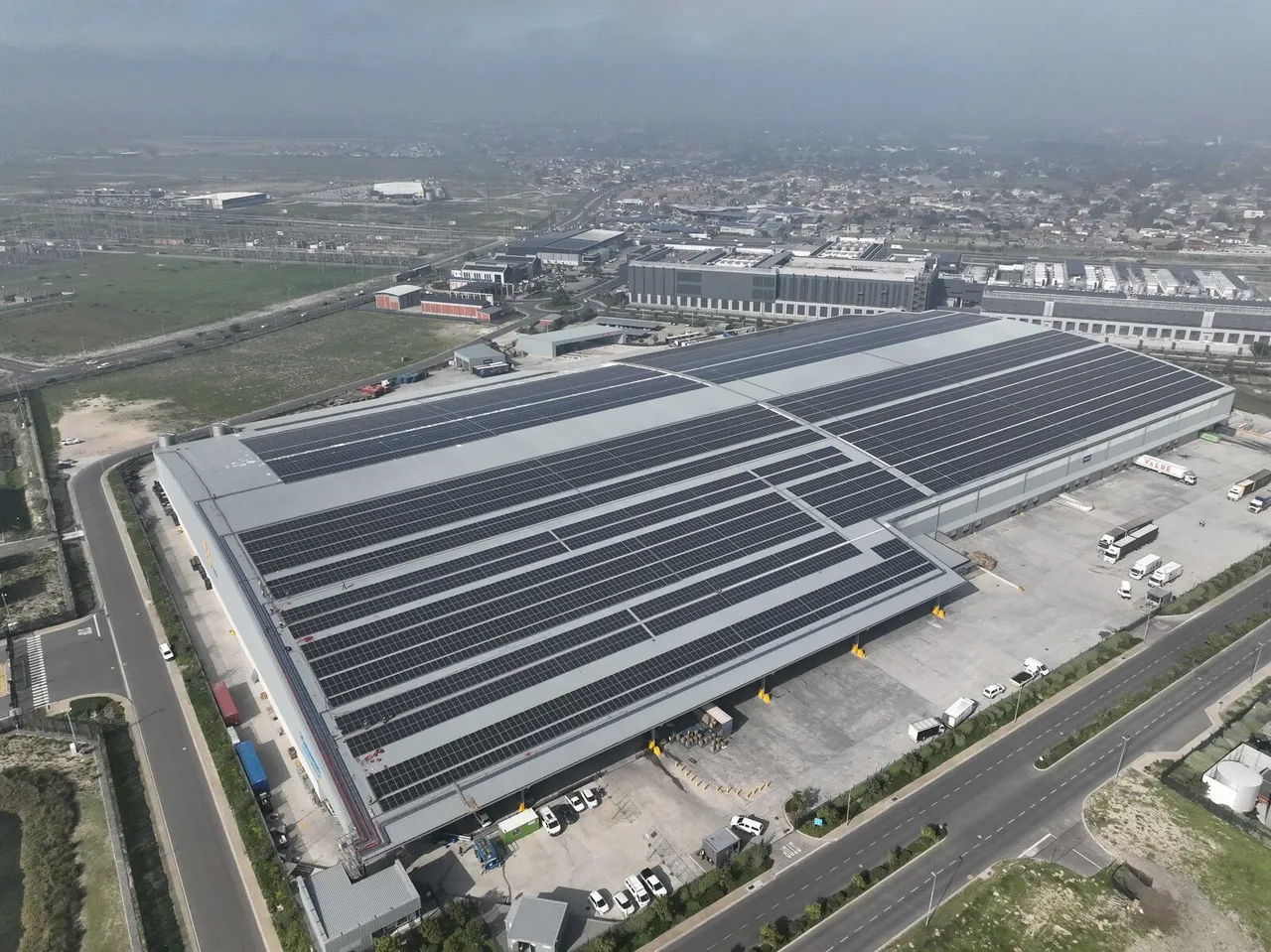
In a first for Cape Town's municipal grid, Redefine Properties is using an industrial rooftop to generate renewable electricity for shopping centres and offices, demonstrating how solar wheeling can reshape commercial property investment.
- R106m investment: Redefine launches Cape Town's first purpose-built municipal rooftop solar wheeling project, connecting industrial, retail and office properties.
- 7MW solar capacity: More than 11,600 panels will generate approximately 9,889MWh annually, supplying renewable energy across Redefine's property portfolio.
- Lower emissions: The 20-year initiative is expected to avoid 9,645 tonnes of carbon emissions annually while strengthening energy resilience.
A new chapter in commercial property energy
South Africa's commercial property sector has reached another milestone in renewable energy, with JSE-listed real estate investment trust (REIT) Redefine Properties launching a R106 million solar wheeling project in Cape Town that allows electricity generated at one property to be allocated to others across its portfolio.
Located at the Massmart Distribution Centre in Brackengate, the purpose-built installation transforms an industrial warehouse rooftop into a renewable energy generation hub serving two major shopping centres and an office precinct. The project represents the first purpose-built rooftop solar wheeling installation of its kind operating within the City of Cape Town's municipal grid.
More importantly, it demonstrates how property owners can move beyond individual rooftop solar installations towards an integrated energy strategy that connects multiple assets.
For commercial landlords and property investors, the implications extend beyond sustainability. The model offers opportunities to improve energy resilience, manage electricity costs and optimise property portfolios.
"The significance of this project lies not only in the scale of the installation, but in the way it allows us to manage energy across our portfolio," says Leon Kok, Chief Operating Officer at Redefine Properties. "By using the capacity of one asset to support others, we're creating a more efficient and resilient portfolio."
1. How Redefine's R106m solar investment works
The Brackengate project uses the large roof area of an industrial distribution facility to generate renewable electricity that can be allocated to other Redefine properties through Cape Town's municipal electricity network.
Rather than limiting solar generation to the property where the panels are installed, wheeling enables the electricity to benefit multiple assets.
The investment at a glance
- Project investment: R106 million.
- Solar generation capacity: 7.014 megawatt-peak (MWp).
- Annual renewable energy generation: Approximately 9,889MWh.
- Solar panels installed: 11,691.
- Industrial rooftop area: Approximately 57,000m².
- Estimated annual carbon emissions avoided: 9,645 tonnes.
- Project commitment: 20 years.
The installation forms part of the City of Cape Town's municipal electricity wheeling pilot programme, which enables private-sector generators to allocate renewable electricity to participating customers through the municipal grid.
2. Four properties connected through one energy strategy
One of the project's most important features is its ability to link properties from different commercial real estate sectors.
Redefine is effectively using the generating potential of an industrial building to support electricity consumption at retail and office properties elsewhere in Cape Town.
The participating properties
- Massmart Distribution Centre, Brackengate: The industrial property hosting the rooftop solar installation and generating renewable electricity.
- Kenilworth Centre: A major shopping centre receiving an allocation of the renewable electricity.
- Blue Route Mall: A retail destination benefiting from the wheeling arrangement.
- The Towers office precinct: A commercial office property included in the renewable energy distribution programme.
This approach illustrates how a diversified property portfolio can create opportunities that would not necessarily exist when buildings are managed individually.
Large industrial rooftops can accommodate substantial solar installations, while retail and office properties often have significant electricity requirements. By connecting the two, property owners can make more effective use of available roof space and renewable generation capacity.
3. The engineering behind the solar wheeling project
Unlike a conventional rooftop solar installation designed primarily to serve its host building, the Brackengate facility required infrastructure capable of connecting generation to the municipal network.
The project combines rooftop solar technology with dedicated electrical infrastructure, metering and grid integration.
Key engineering components
- 11,691 solar panels installed across approximately 57,000m² of industrial roof space.
- 7.014MWp generating capacity designed to produce approximately 9,889MWh annually.
- Municipal grid connection through the Rubicon Substation.
- 800V operating system supporting the installation's electrical infrastructure.
- Dedicated mini-substation building accommodating switchgear and metering equipment.
- Purpose-built inverter station and transformer yard supporting grid integration.
- Approximately 300km of cabling installed across the project.
- Two kilometres of rooftop walkways providing maintenance and operational access.
"The project goes well beyond a conventional rooftop solar installation," says Kok. "It reflects the level of engineering and coordination required to make wheeling viable at scale and our commitment to investing in solutions that deliver measurable impact."
The infrastructure demonstrates that large-scale wheeling requires more than solar panels. Successful implementation depends on grid connectivity, engineering design, municipal cooperation and long-term operational management.
4. Why solar wheeling matters for property investors
Energy infrastructure is becoming an increasingly important component of commercial property investment and asset management.
For REITs and large property owners, electricity costs, supply reliability and environmental performance can influence tenant operating costs, asset competitiveness and long-term investment decisions.
Five potential benefits for commercial property
- Energy resilience: Diversifying electricity supply can reduce dependence on conventional generation sources.
- Portfolio optimisation: Properties with suitable roof space can support electricity requirements elsewhere in the portfolio.
- Operating-cost management: Renewable energy can offer opportunities to manage long-term electricity expenditure, subject to project economics and wheeling charges.
- Environmental performance: Lower emissions can support sustainability objectives and tenant requirements.
- Long-term asset competitiveness: Reliable, efficiently managed buildings may be better positioned to attract and retain occupiers.
Importantly, the commercial benefits depend on the cost of generation, network charges, electricity tariffs, capital investment and operational performance.
While Redefine has disclosed the project's investment value and generating capacity, the announcement does not provide a specific payback period or projected investment return.
5. Cape Town's role in unlocking private energy investment
The project also demonstrates the importance of cooperation between municipalities and private property owners.
Through its wheeling pilot programme, the City of Cape Town is enabling renewable electricity generated at one location to be allocated to customers elsewhere on its network.
This creates opportunities for private investment in energy infrastructure without requiring every participating property to host its own generating facility.
Alderman Xanthea Limberg, the City's Mayoral Committee Member for Energy, says the initiative supports Cape Town's longer-term energy strategy and its objective of expanding renewable electricity participation.
"The city's pooled wheeling facility represents a decisive leap forward in advancing the bold vision set out in our 2050 Energy Strategy," says Limberg.
She adds that collaboration with Redefine demonstrates how municipal reform can unlock renewable energy investment and improve the resilience of urban electricity systems.
For the broader property industry, the significance lies in creating a framework that other commercial landlords and developers may be able to adopt.
6. Redefine's broader property investment strategy
The solar wheeling initiative forms part of Redefine's environmental, social and governance (ESG) strategy, with a focus on improving operational efficiency and long-term asset performance.
The JSE-listed REIT has a diversified property portfolio spanning retail, office and industrial assets in South Africa, alongside investments in Poland.
According to the company's announcement, its property platform is valued at approximately R101.2 billion, with a market capitalisation of around R49.9 billion. Its diversified asset base provides opportunities to implement energy strategies across multiple property types rather than treating electricity generation and consumption as separate activities. The Brackengate project is a practical example of that approach.
REI PERSPECTIVE | The future of property is connected
Redefine's R106 million solar wheeling project represents an important shift in how commercial property owners can approach energy management. For years, rooftop solar has largely been considered a building-by-building investment.
Wheeling introduces a broader opportunity: managing energy generation and consumption across an entire property portfolio.
The implications are particularly relevant for REITs, industrial landlords, shopping centre owners and developers with multiple properties.
Three lessons stand out:
- Think beyond individual buildings: The value of renewable energy can extend across an entire property portfolio.
- Invest in infrastructure strategically: Grid connectivity and municipal partnerships are becoming important components of energy investment.
- Measure commercial performance: Energy resilience and sustainability must ultimately support sound property economics.
As electricity requirements evolve and commercial property owners seek greater operating efficiency, projects such as Brackengate could provide a practical model for future investment.
The bottom line: Redefine is demonstrating that the next generation of commercial property investment will not only be about buildings, tenants and locations. It will increasingly be about how properties connect, share infrastructure and use energy more intelligently.
Source: Redefine Properties announcement, 20 October 2026.