




.avif)
.avif)

Mixed-use neighbourhoods surge as lifestyle demand grows
- Mixed-use neighbourhoods in Cape Town are delivering double-digit price growth, outperforming both city and national property averages.
- Live-work-play precincts attract strong investor demand with rental yields typically ranging between 7% and 10%.
- The “15-minute neighbourhood” model is reshaping urban living, reducing commuting while boosting property values.
The rise of the mixed-use neighbourhood
Mixed-use neighbourhoods are emerging as some of South Africa’s best-performing property markets, with strong price growth and rising demand from both homeowners and investors.
According to the Seeff Property Group, several of Cape Town’s leading mixed-use precincts have recorded double-digit price growth year-on-year and over the past five years, outperforming both the broader Cape Town and national residential markets.
Average property prices in some of these areas have risen between 30% and more than 50% over the past five years, with annual growth currently ranging between 12% and 16%. This significantly exceeds the 9.1% average growth recorded in Cape Town and the 6.6% national average, based on StatsSA data to around September 2025.
These precincts reflect the growing popularity of the “15-minute neighbourhood” concept, where residents can access workspaces, retail, leisure and daily amenities within walking distance of their homes.
The appeal is simple: less commuting, improved lifestyle convenience and vibrant integrated urban communities.
Cape Town’s mixed-use precincts lead the pack
Several Cape Town neighbourhoods have become standout performers within the mixed-use property category.
Recent market data highlights strong price growth across key areas:

These precincts combine residential, retail, hospitality and office developments into highly integrated environments that appeal strongly to modern buyers and tenants.
For investors, they offer consistent rental demand and stable yields. Most mixed-use precincts generate rental yields between 7% and 10%, although premium areas such as the V&A Waterfront tend to deliver lower yields of around 4% to 6% due to higher property prices.
Century City: a benchmark mixed-use success story
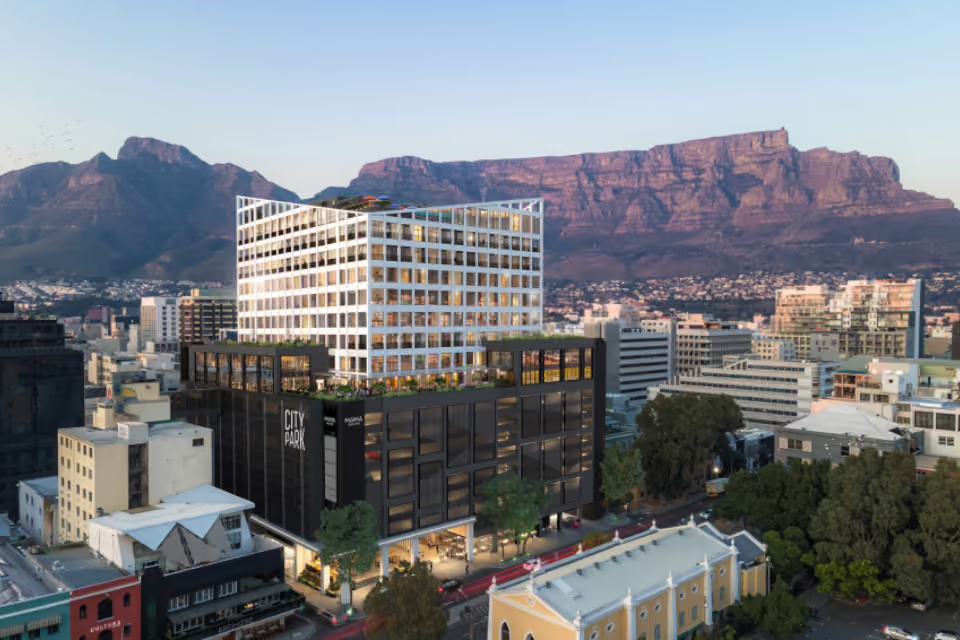
One of the most successful examples of the mixed-use model is Century City in Cape Town, which continues to attract strong demand from both buyers and tenants.
Helga Clemo, licensee for Seeff Century City, says the lifestyle offering has been fully embraced by residents and investors.
“The lifestyle has been wholly embraced by tenants, buyers and investors and the area is flourishing. Prices have risen by more than 20% over the past two years, and stock levels remain low due to sustained demand.”
The Century City market is currently experiencing a multi-year high, with both sales and rental properties being snapped up quickly. The average sales price now sits at around R2.835 million, although Seeff has recently achieved sales as high as R4.5 million, R6 million and R6.9 million.
Rental demand is equally strong, with the average rental around R19,100 per month, while premium properties have achieved rentals of R40,000, R56,000 and even R81,600 per month.
Properties in the area are predominantly sectional title apartments (around 83% of stock), with freehold homes in estates accounting for about 17%.
The most active price band for sectional title properties ranges between R1.8 million and R3 million, while luxury penthouses can reach R7.9 million. Full-title homes typically range from R3.5 million to R4.5 million, although properties in top estates can reach R12 million to R16 million.
Century City’s success is built around its integrated lifestyle offering. Residents benefit from a blend of offices, hotels, retail, and leisure amenities including Canal Walk Shopping Centre, Virgin Active, Intaka Island Nature Reserve and extensive canal and walking trails.
With MyCiTi bus access and close proximity to the CBD and beaches, the precinct offers a seamless urban living experience.
Mixed-use growth beyond Cape Town
The mixed-use model is gaining traction across South Africa.
Several other developments have become highly successful live-work-play precincts, including:
- Menlyn Maine (Pretoria East) - Prices between R1.95m and R3.2m with around 28% growth over five years.
- Melrose Arch (Johannesburg) - Prices between R3.1m and R4.5m with roughly 18% five-year growth.
- Umhlanga Ridge (Durban) - Prices between R2.8m and R5.5m with approximately 42% growth over five years.
- Waterfall, Midrand (Johannesburg) - A rapidly expanding mixed-use node attracting corporate offices, residential estates and lifestyle amenities.
These precincts are increasingly becoming magnets for young professionals, remote workers and semigration buyers seeking convenient, secure and well-managed environments.
The future of urban living
The continued success of mixed-use precincts reflects a fundamental shift in how people want to live, work and interact within cities.
Buyers are increasingly prioritising walkability, convenience, security and lifestyle integration, while investors value the strong rental demand and capital growth potential these developments offer.
As South African cities continue to densify and commuting pressures grow, the 15-minute neighbourhood model is likely to play an even larger role in shaping the future of urban property markets.
For investors and homeowners alike, mixed-use developments are proving that well-planned lifestyle precincts can deliver both quality of life and strong property returns.





.svg)

.avif)

















.avif)