






Johann Rupert backs property rights with ‘Khaya Lam’ boost
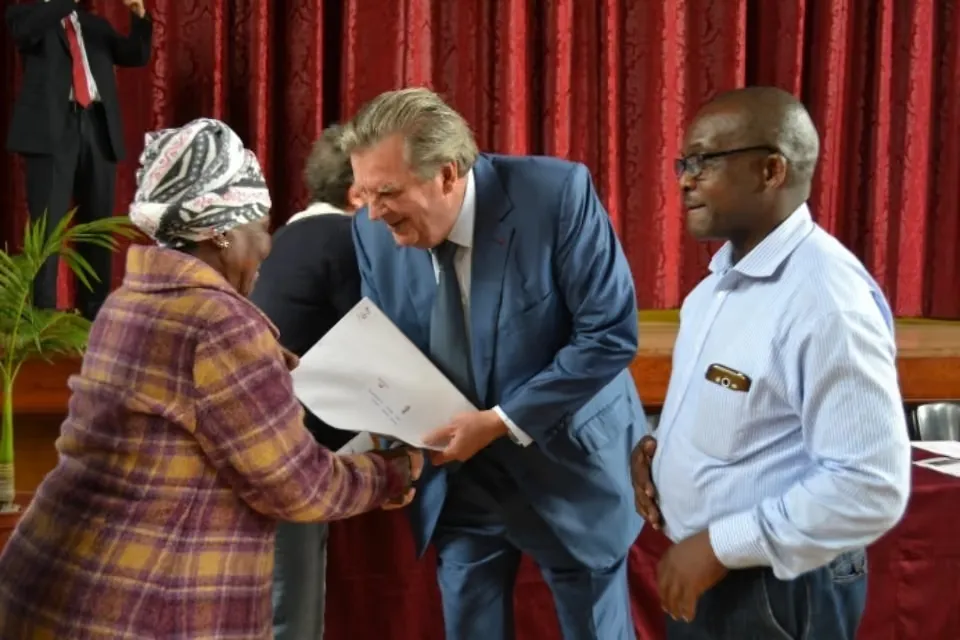
- Johann Rupert has recapitalised Khaya Lam, accelerating free title deed transfers to township families across South Africa.
- More than 24,000 title deeds have already transformed tenants into homeowners, unlocking wealth and economic opportunity.
- The Free Market Foundation says secure property rights remain one of the most powerful tools for reducing poverty and inequality.
Rupert strengthens South Africa's property rights drive
South Africa's drive to expand homeownership and unlock wealth in historically disadvantaged communities has received a significant boost after global billionaire Johann Rupert recapitalised the Free Market Foundation's (FMF) Khaya Lam (My Home) land reform initiative.
Rupert, whose wealth is estimated by Forbes at around US$17 billion, has provided fresh backing through the Reinet Foundation and Remgro, reaffirming his long-standing commitment to one of South Africa's most successful title deed programmes.
The investment ensures the continued expansion of a project that has already helped transform more than 24,000 township tenants into legal homeowners, giving thousands of South African families the opportunity to build wealth through secure property ownership.
Turning dead capital into generational wealth
Unlike most policy think tanks, the Free Market Foundation has translated its advocacy for private property rights into practical action through the Khaya Lam initiative.
Launched in 2010, the programme works alongside municipalities, funders and conveyancing attorneys to transfer ownership of municipal rental homes into the names of their lawful occupants, free of charge.
For many beneficiaries, receiving a title deed represents far more than a legal document. It provides security of tenure, access to formal finance, the ability to improve or leverage the property, pass it on to future generations and ultimately convert what economists often describe as "dead capital" into productive wealth.
As the late Nelson Mandela famously observed:
"A man is not a man until he has a house of his own."
That principle remains at the heart of Khaya Lam's mission.
Rupert doubles down on property ownership
According to FMF President Temba Nolutshungu, Rupert has consistently demonstrated his belief that secure property rights can fundamentally improve the lives of ordinary South Africans.
"This is not the first time Mr Rupert has shown his dedication to fundamentally improving the lives of ordinary South Africans. Between 2018 and 2024, the Reinet Foundation and Remgro donated R25 million each to Khaya Lam, funding more than 18,000 property transfers."
The latest recapitalisation ensures that the programme can continue expanding its reach to thousands more qualifying households across the country.
A proven model for land reform
Khaya Lam has steadily built momentum over the past decade. The project's first title deed handover took place in 2013, exactly one hundred years after the passing of the 1913 Natives Land Act, a symbolic milestone in South Africa's journey towards restoring property rights.
Since then, the programme has continued to grow:
- 2010: Khaya Lam established
- 2013: First title deeds transferred
- 2023 January: 10,000 transfers achieved
- 2026 June: More than 24,000 title deeds successfully transferred
The initiative has also received widespread recognition, earning awards from organisations including the Atlas Network, Impumelelo Centre for Social Innovation, FW de Klerk Foundation, Reside Summit, and the Bertie Lubner Family Foundation.
Property rights drive economic freedom
FMF CEO David Ansara believes secure ownership remains one of the most powerful tools available to reduce poverty and promote economic inclusion.
"The Khaya Lam project seeks to ensure that all South Africans, regardless of race or income level, are invested in a policy environment where private property rights are secure from state interference."
He says insecure tenure has historically trapped millions of South Africans in poverty. "Dignity is out of the question when the place in which you live is not securely yours."
For the FMF, property ownership is not simply about housing, it is about creating incentives for investment, protecting family assets and allowing ordinary South Africans to participate fully in the formal economy.
The human impact behind the numbers
While the statistics are impressive, Terry Markman, Head of Khaya Lam, says the programme's greatest success lies in the lives it changes. "The numbers tell one tale, but it is the human stories that are compelling."
He recalls one particularly remarkable beneficiary. "Our oldest-ever recipient, born on 15 July 1919, was 106 years old when she finally received her title deed. She walked into the event hall unaided, ready to receive the legal security of the home she had occupied for decades."
Stories like these illustrate how secure ownership provides not only financial security but also dignity, independence and peace of mind.

Why it matters
At a time when South Africa continues to debate land reform, housing delivery and economic transformation, the Khaya Lam model demonstrates that expanding private property ownership can deliver measurable social and economic benefits without undermining existing property rights.
By giving families legal ownership of the homes they already occupy, the programme enables homeowners to improve their properties, access finance, create intergenerational wealth and participate more fully in the formal economy.
Johann Rupert's latest investment signals growing confidence that secure property rights remain one of the country's most effective tools for addressing inequality and unlocking long-term prosperity.
The bigger picture
Khaya Lam has become one of South Africa's most successful examples of practical land reform.
With fresh support from Johann Rupert, the initiative is set to help thousands more families move from tenancy to ownership, transforming municipal rental housing into privately owned assets and giving more South Africans the opportunity to build lasting wealth through property.
In a country where homeownership remains one of the strongest foundations for financial security, the programme demonstrates that meaningful land reform is not only possible, but already changing lives, one title deed at a time.