









Industrial Property: Where R30m buys the best returns
Listen · 1-minute summary
0:00 / 1:21
Read the summary
Industrial Property: Where R30 million buys the best returns. Industrial property remains South Africa's strongest commercial sector, but Swindon Property says the opportunities in Cape Town, Johannesburg and Durban look very different. Cape Town leads rental growth at 11.7 percent, followed by Central Witwatersrand at 8.4 percent, East Rand at 6.4 percent and Durban at 4.6 percent. Cape Town's industrial vacancy rate sits at around 3.3 percent, reflecting tight supply and higher prices. A R30 million investment could deliver between R2.4 million and R2.7 million in annual net operating income, depending on yield. Swindon warns that a higher yield can signal greater risk, not better value. As Marcus te Vaarwerk, Industrial Director at Swindon Property, puts it: "With R30 million to invest, an investor could access very different opportunities in Cape Town, Johannesburg and Durban." Location, tenant quality, building specifications and vacancy risk matter more than headline yields. The right asset, not the highest yield, is what delivers lasting returns. Read the full story by Neale Petersen on rei.co.za.
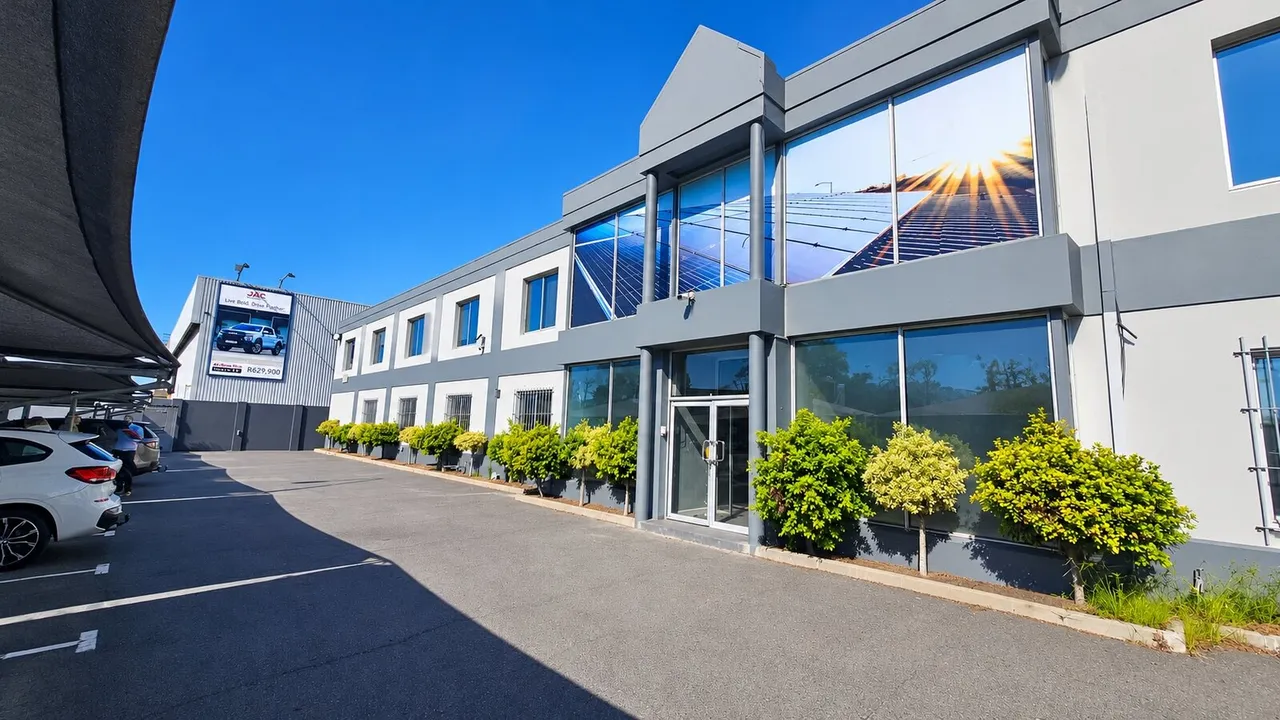
Industrial property continues to outperform traditional commercial property segments, but investors face very different opportunities across Cape Town, Johannesburg and Durban. Swindon Property examines where value lies, why rental growth matters and how to avoid paying too much for the wrong asset.
- Cape Town leads industrial rental growth at 11.7%, followed by Central Witwatersrand at 8.4%, East Rand at 6.4% and Durban at 4.6%.
- A R30 million industrial investment could deliver R2.4 million to R2.7 million in annual net operating income at illustrative yields.
- Swindon Property warns that location, tenant quality, building specifications and vacancy risk matter more than headline yields or purchase price.
Industrial property holds its ground as investors chase returns
South Africa's industrial property sector continues to demonstrate resilience relative to the office and retail markets, supported by demand for warehousing, logistics, distribution and manufacturing facilities.
However, for investors looking to deploy R30 million into commercial property, the choice between Cape Town, Johannesburg and Durban is becoming increasingly complex.
While Cape Town offers strong rental growth and constrained industrial supply, Johannesburg provides greater choice and potentially more floor space for the same investment. Durban, meanwhile, benefits from its strategic position as South Africa's principal port and logistics gateway.

According to Marcus te Vaarwerk, Industrial Director at Swindon Property, investors should look beyond headline yields and purchase prices to understand the long-term income potential and risks associated with individual assets.
“With R30 million to invest, an investor could access very different opportunities in Cape Town, Johannesburg and Durban.”
The central question is not simply where investors can buy the most industrial space, but where they can secure sustainable income, quality tenants and long-term capital value.
1. Industrial rental growth: Cape Town leads the market
Research from Rode & Associates for the second quarter of 2026 highlights the differing performance of South Africa's major industrial markets.
Prime industrial rental growth - Q2 2026
Year-on-year change for approximately 500m² premises
| Market | Rental growth |
|---|---|
| Cape Town | 11.7% |
| Central Witwatersrand | 8.4% |
| East Rand | 6.4% |
| Durban | 4.6% |
Source: Rode Q2 2026 figures quoted by Swindon Property
Cape Town's industrial vacancy rate also averaged approximately 3.3% during the first half of 2026, reflecting relatively tight availability.
Key market highlights:
- Cape Town recorded the strongest rental growth among the selected markets.
- Johannesburg's industrial performance varied between the Central Witwatersrand and East Rand.
- Durban maintained positive rental growth, supported by logistics and manufacturing demand.
- Lower vacancies can strengthen landlords' negotiating positions, but may also push acquisition prices higher.
These figures illustrate the sector's resilience, although rental growth alone does not establish which market will deliver the strongest total investment return.
2. Cape Town: Strong demand, limited supply and higher prices
Cape Town's established industrial precincts continue to benefit from sustained occupier demand and constrained availability of suitable space. The result has been strong rental growth, particularly for well-located properties with modern specifications and reliable infrastructure.
However, limited supply also creates a challenge for buyers: competition can push acquisition prices higher, compressing initial yields. Te Vaarwerk cautions that a R30 million investment may secure significantly less floor area in Cape Town than in Johannesburg or Durban.
What investors should prioritise:
- Established industrial nodes with consistent tenant demand.
- Reliable electricity supply and adequate power capacity.
- Efficient transport links and access for heavy vehicles.
- Sufficient loading areas, yard space and functional building layouts.
- Acquisition prices that leave room for future rental and capital growth.
“The challenge is to secure a competitive, lettable asset without paying a premium that compromises initial yields or leaves insufficient room for future growth.”
For investors, Cape Town offers a compelling growth proposition, but buying at the right price remains essential.
3. Johannesburg: More choice, but greater asset-selection risk
Greater Johannesburg offers one of South Africa's largest and most diverse industrial property markets.
Its extensive manufacturing, logistics and distribution networks provide investors with opportunities ranging from older industrial premises to modern logistics facilities.
A R30 million budget could potentially acquire substantially more floor area than in Cape Town, but lower prices do not automatically translate into better returns. Building condition, infrastructure reliability and competing supply vary significantly between industrial nodes.
Key investment considerations:
- Older buildings may require substantial refurbishment.
- Insufficient eaves height, loading facilities or power capacity can limit tenant demand.
- Security and surrounding infrastructure influence operating costs.
- Competition from newer warehouses can affect rental growth and vacancy risk.
- Well-positioned assets may offer attractive entry prices and repositioning opportunities.
Te Vaarwerk warns: “A lower purchase price per square metre does not necessarily represent better value if a building requires extensive capital investment or is difficult to re-let.”
Johannesburg's principal advantage is its scale and flexibility. However, investors must carefully assess the competitiveness of each building rather than relying on broader market averages.
4. Durban: Logistics and port access underpin demand
Durban's industrial property market is closely connected to the Port of Durban and the N3 freight corridor linking KwaZulu-Natal with Gauteng. Established industrial precincts such as Riverhorse Valley, Springfield and Prospecton accommodate logistics operators, manufacturers and distribution businesses.
Although Durban's reported rental growth of 4.6% was below that of Cape Town and the selected Johannesburg markets, this does not necessarily indicate weaker investment prospects.
Key market drivers:
- Proximity to the Port of Durban and major freight routes.
- Demand from logistics, manufacturing and distribution operators.
- Established industrial precincts with access to commercial networks.
- Opportunities for warehouses serving regional and national supply chains.
- Potential value in assets suited to specialised occupier requirements.
Te Vaarwerk explains that a well-positioned warehouse serving established distribution networks can offer a compelling investment case, even where broader rental growth is more moderate. For Durban investors, transport access, infrastructure reliability and operational suitability are central to long-term tenant retention.
5. What could R30 million earn in industrial property?
While rental growth attracts attention, investors ultimately need to understand how much sustainable income a property can generate. Swindon illustrates this using two hypothetical industrial properties, each acquired for R30 million.
Illustrative annual net operating income
- 8% net initial yield: R2.4m - R200,000 per month equivalent
- 9% net initial yield: R2.7m - R225,000 per month equivalent
- R300,000 - Annual income difference
Illustrative net operating income before financing costs and tax, not actual market quotations or guaranteed returns. Acquisition costs and property-specific expenses must be assessed separately.
At face value, the 9% yielding property appears more attractive. However, a higher initial yield may indicate greater risk. The building could be older, poorly located, expensive to maintain or occupied by a tenant with a short lease or weaker financial position.
A lower-yielding asset may offer stronger income security, lower vacancy risk and better prospects for sustainable rental growth. The critical distinction: Net initial yield should not be confused with gross rental yield or treated as a guaranteed future investment return.
6. Six factors that determine long-term industrial returns
According to Swindon, industrial investment decisions should be based on a detailed assessment of the asset rather than purchase price alone.
- Tenant quality and lease security: Evaluate financial strength, lease duration, rental escalations and renewal prospects.
- Building specifications: Assess eaves height, floor loading, electricity capacity, loading facilities and yard space.
- Operating costs: Consider municipal rates, insurance, maintenance, compliance and potential refurbishment expenditure.
- Location and infrastructure: Examine road access, security, utilities and proximity to customers and suppliers.
- Vacancy and reletting risk: Establish how long the property might remain vacant and what incentives or upgrades a replacement tenant may require.
- Adaptability: Favour buildings that can accommodate different industrial and logistics users as market requirements evolve.
One particularly important due-diligence question is whether the property would remain attractive to another occupier if the existing tenant vacated.
A building that can accommodate several potential tenants may offer stronger long-term resilience than a highly specialised asset with limited alternative uses.

7. Where should investors deploy their capital?
Each of South Africa's three major industrial markets presents a different investment proposition.
| Market | Principal opportunity | Main investment risk |
|---|---|---|
| Cape Town | Strong rental growth and constrained supply | High acquisition prices and potential yield compression |
| Johannesburg | Greater choice, scale and acquisition flexibility | Uneven building quality, infrastructure and vacancy exposure |
| Durban | Port-linked logistics and manufacturing demand | Infrastructure dependence and operational suitability |
For investors seeking growth, Cape Town's supply constraints may be attractive. Those prioritising acquisition flexibility and asset repositioning may find opportunities in Johannesburg, while Durban offers exposure to established logistics and manufacturing networks.
However, none of these markets provides a universal answer. The right investment depends on the relationship between purchase price, sustainable income, capital expenditure, tenant demand and future marketability.
Buy the right asset, not simply the highest yield
Industrial property continues to offer opportunities for South African commercial property investors, supported by demand from logistics, distribution, warehousing and manufacturing businesses.
Yet strong sector performance should not distract buyers from the fundamentals of property investment. Cape Town's rental growth, Johannesburg's extensive industrial market and Durban's logistics advantages each present opportunities, but also different risks.
As te Vaarwerk concludes: “Ultimately, the strongest investment is not necessarily the one offering the most floor space or the highest initial yield. It is the asset that combines an appropriate purchase price with sustainable income, manageable risk and the potential to remain competitive as occupier requirements and market conditions evolve.”
For investors deploying R30 million or more, the winning strategy is not simply identifying the strongest market. It is securing a well-located, adaptable industrial property with sustainable rental income at the right price.