






Green affordable housing sets new inner-city benchmark
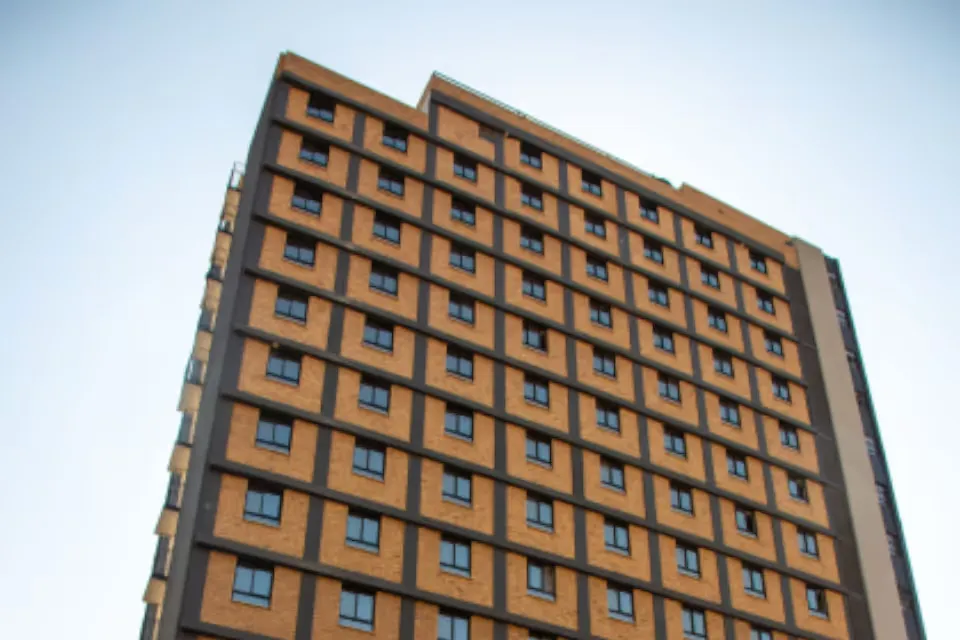
- Remington House transforms a hijacked Johannesburg office block into sustainable affordable housing with 133 new residential rental units.
- TUHF’s first EDGE-certified pilot delivers major energy, water and carbon savings through green urban redevelopment.
- The project strengthens Johannesburg CBD regeneration while creating quality affordable housing close to jobs, transport and universities.
Affordable housing in South Africa is undergoing a major transformation as developers and financiers increasingly focus on sustainable urban regeneration projects that combine affordability, density and green building innovation.
One of the latest examples reshaping Johannesburg’s inner-city housing landscape is Remington House, a landmark mixed-use redevelopment project in the Johannesburg CBD backed by TUHF Limited.
Located on Nugget Street, Remington House has been converted from a vacant and previously hijacked office building into a modern EDGE-certified affordable rental development, creating much-needed well-located accommodation in the city centre.
The project marks TUHF’s first pilot development to achieve EDGE certification through its partnership with the International Finance Corporation, demonstrating how sustainable building practices can be successfully integrated into affordable housing developments at scale.
Inner-city regeneration gains momentum
As South Africa’s metros continue facing mounting pressure for affordable accommodation close to economic hubs, projects such as Remington House are highlighting the growing importance of brownfields redevelopment.
Rather than demolishing the original structure, the development retained much of the existing building frame and lift shafts, significantly reducing construction waste and embodied carbon while accelerating the redevelopment process.
According to Khumbulani Chikomo, the project demonstrates the potential of targeted densification and adaptive reuse in South Africa’s urban centres.
“Remington House proves what focused densification and reuse of existing assets can achieve in the inner city,” says Chikomo. “The greening is not cosmetic. It stabilises running costs for entrepreneurs and shields tenants from service failures, which improves affordability and quality of life.”
The development also reflects the increasing overlap between affordable housing, student accommodation and mixed-use urban precincts.
Originally designed as a multi-family rental project, strong demand has resulted in the building operating largely as student accommodation, alongside adjacent TUHF-supported properties that collectively serve nearly 1,000 students in the area.
Remington House Project Facts
Development Overview
- Location: Johannesburg CBD
- Address: Nugget Street
- Development Type: Brownfields office-to-residential conversion
- Gross Building Area: 7,191sqm
- Residential Units: 133 bachelor apartments
- Retail Component: 5 ground-floor retail units
- Parking Bays: 14 secure parking spaces
- Shared Amenities: Study centre and gymnasium
Sustainability Features
- Centralised heat pump systems
- Solar power installation
- Borehole and filtration system
- LED lighting throughout
- Low-flow taps and showers
- Dual-flush toilets
- Optimised façade glazing for energy efficiency
EDGE Certification Results
- Energy savings: 27.81%
- Water savings: 22.40%
- Embodied carbon reduction: 51%
IFC Green Incentives
Successful EDGE certification unlocks a performance-based incentive of approximately R18,500 per residential unit through the IFC programme, assisting with loan settlement and improving long-term project viability.
Affordable housing meets green finance
The Remington House project also signals the growing role of green finance in South Africa’s affordable housing market.
Through TUHF’s partnership with IFC and the Market Accelerator for Green Construction programme, developers are increasingly incentivised to incorporate sustainable systems that lower operating costs while improving long-term building resilience.
Importantly, these interventions are not only environmentally focused, they directly improve affordability for tenants through lower utility costs and improved service reliability.
The project further strengthens the argument for affordable housing developments located close to transport nodes, employment opportunities and educational institutions — reducing commuting costs while supporting more efficient urban growth.
A Blueprint for future urban housing
Remington House represents far more than a single redevelopment project.
It offers a scalable model for how ageing and abandoned buildings in South Africa’s CBDs can be repositioned into sustainable affordable housing assets that support urban regeneration, densification and inclusive economic growth.
With demand for affordable rental accommodation continuing to rise across South Africa’s metros, projects such as Remington House are increasingly likely to shape the next phase of inner-city residential investment.
As municipalities, financiers and private developers search for workable housing solutions, the combination of green finance, adaptive reuse and affordable rental housing could become one of the country’s most important urban development trends over the next decade.