






Fuel price relief brings hope, but inflation risks remain
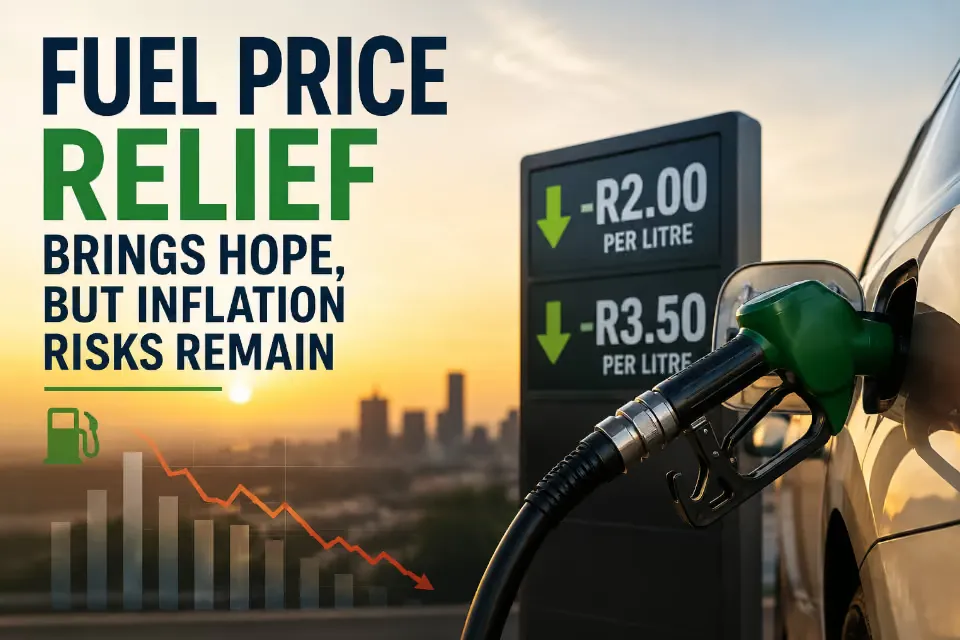
- July's sharp fuel price cuts offer welcome relief, but inflationary pressures from earlier fuel hikes are still filtering through the economy.
- Lower oil prices improve the outlook for inflation and interest rates, supporting consumer confidence and property market stability.
- John Loos expects the Reserve Bank to keep rates unchanged in July, with modest rate cuts potentially returning during 2027.
Fuel price relief offers welcome breathing space
South African consumers have received some much-needed relief with the sharp decline in July fuel prices, easing pressure on household budgets after a difficult second quarter marked by soaring fuel costs, higher inflation and a surprise interest rate hike.
However, according to independent economist John Loos, while the latest fuel price reductions are positive news, the economy has yet to fully absorb the inflationary impact of the steep petrol and diesel price increases experienced during April and May.
Petrol prices declined by approximately R2.00 per litre in July, while diesel prices fell by between R3.14 and R3.59 per litre, offering immediate relief to motorists, transport operators and businesses heavily reliant on fuel. The reductions should also begin easing pressure on consumer inflation over the coming months.
Inflation outlook improves, but consumers aren't out of the woods yet
The latest fuel price adjustment could mark an important turning point for inflation.
Loos notes that Gauteng's annual petrol price inflation is expected to slow sharply from 31.6% in June to around 19% in July, reducing one of the biggest drivers of recent consumer price increases. This should help moderate headline inflation in the months ahead.
Yet the economist cautions against assuming inflation pressures have disappeared. "The direct fuel price increases were felt immediately by consumers, but the secondary effects still have to work their way through the economy," he explains.
Transport operators, manufacturers, retailers and logistics companies often pass higher fuel costs on to consumers only after a delay. Public transport fares and the cost of goods transported across the country are therefore still expected to reflect the second-quarter fuel shock in upcoming inflation data.
What It Means for the Economy and Property Market
For South Africa's property sector, moderating fuel prices are encouraging.
Lower inflation reduces pressure on household disposable income, improves consumer confidence and helps stabilise affordability at a time when residential demand has already begun slowing following May's interest rate increase.
If inflation begins easing as expected, the South African Reserve Bank is more likely to adopt a cautious "wait-and-see" approach rather than implementing another interest rate increase.
Loos now believes there is a significant probability that the Monetary Policy Committee will leave interest rates unchanged at its July meeting, provided global oil prices remain relatively stable.
For homeowners and prospective buyers, that would provide valuable certainty after months of rising borrowing costs.
Oil Prices Hold the Key
Much of the improved outlook depends on developments far beyond South Africa's borders.
The sharp decline in Brent crude oil prices—from around US$95 per barrel in early June to approximately US$73 per barrel at the start of July—has been driven largely by easing tensions surrounding the US-Iran conflict and expectations that oil exports through the Strait of Hormuz will continue uninterrupted.
Loos believes political pressure ahead of the US mid-term elections provides additional incentive for the United States to avoid a prolonged conflict that could reignite global energy inflation.
Should Brent crude remain in the US$70–75 per barrel range, South Africa could see further domestic fuel price relief during the second half of the year.
Interest Rates May Finally Stabilise
Despite encouraging fuel prices, the inflation battle is not yet over.
Inflation expectations among businesses and consumers have increased, with average expectations for 2026 rising from 3.6% to 4.4%, a factor the Reserve Bank monitors closely when making interest rate decisions.
While another rate increase cannot be completely ruled out, Loos believes recent improvements in oil markets make an unchanged repo rate the more likely outcome in July.
Looking further ahead, he expects interest rates to remain broadly stable for the remainder of 2026 before modest rate cuts resume during 2027, assuming inflation continues easing.
The Road Ahead
Although July's fuel price reductions offer welcome relief, Loos warns that 2026 is still likely to prove more challenging for consumers than last year.
Household spending is expected to slow as higher living costs and tighter financial conditions continue weighing on disposable incomes. He also expects housing demand to remain subdued through the winter months before strengthening again later in the year as inflation stabilises and expectations of future interest rate cuts begin to build.
What Does It Mean for Investors?
For property investors and homeowners, the latest fuel price relief is an encouraging signal rather than a turning point.
Lower fuel prices should help moderate inflation, ease pressure on consumers and improve the interest rate outlook, creating a more supportive environment for residential property over time. However, the delayed impact of earlier fuel increases means households and businesses are not yet through the toughest phase.
If global oil prices remain contained and inflation continues to ease, the second half of 2026 could provide a more stable backdrop for property investment, with improving affordability, stronger consumer confidence and the prospect of interest rate cuts returning in 2027.