





Five checks before you hire a building contractor
- Registration, compliance and certification matter as much as price when appointing a contractor.
- Non-compliant contractors expose homeowners to legal, financial and safety risks.
- Five simple questions can help prevent costly disputes and protect your investment.
Choosing the cheapest quote could become the most expensive decision if you overlook compliance, skills and accountability.
Renovating or building? Start with the right questions
South Africans continue to invest heavily in improving their homes. According to Statistics South Africa, residential building plans worth R46.9 billion and additions and alterations valued at a further R30.2 billion were approved in 2025.
For most homeowners, renovating or building is one of the largest financial commitments they will ever make. Yet while many focus on obtaining competitive quotes, project timelines and contractor references, the real difference between a successful project and a costly dispute often lies elsewhere.
"Building and renovation projects involve multiple parties and significant risk. Homeowners should first ensure that everyone working on the project is properly registered, compliant and qualified," says Danie Hattingh, Spokesperson for Business at the Building Industry Bargaining Council (BIBC).
He advises homeowners to look beyond online reviews and contractor-supplied references. "Ask to see completed projects and speak directly to previous clients about the quality of the workmanship, whether deadlines were met and how any problems were resolved."
Before signing a contract, Hattingh says every homeowner should ask five critical questions.
1. Is the contractor registered and compliant?
The first question should never be about price, it should be about compliance. A reputable contractor should readily provide proof of statutory registrations and industry compliance.
Within the BIBC's jurisdiction, principal contractors, subcontractors, labour-only contractors and their employees are required to be registered with the Council. Homeowners should also verify compliance with the:
- National Home Builders Registration Council (NHBRC)
- South African Revenue Service (tax compliance)
- Unemployment Insurance Fund (UIF)
- Skills Development Levy (SDL)
- Compensation Fund or Federated Employers Mutual Assurance Company (FEM)
"Verifying a contractor's registration and compliance is one of the simplest and most effective ways homeowners can protect themselves before work even begins," says Hattingh.
2. Are workers' wages and benefits up to date?
Compliance extends well beyond paperwork. Responsible contractors ensure their employees receive the wages, pension contributions and statutory benefits to which they are entitled.
Contractors who ignore these obligations often gain an unfair pricing advantage while exposing both workers and homeowners to greater risks.
"The likelihood of poor workmanship, delays and even project abandonment increases when contractors fail to meet their obligations to workers," says Hattingh.
He notes that labour exploitation frequently involves vulnerable workers who may accept below-minimum wages, including undocumented foreign nationals working under similarly precarious conditions.
For homeowners, this should serve as a warning sign. Businesses that neglect their legal obligations in one area often cut corners elsewhere.
3. Are the tradespeople on site properly skilled and certified?
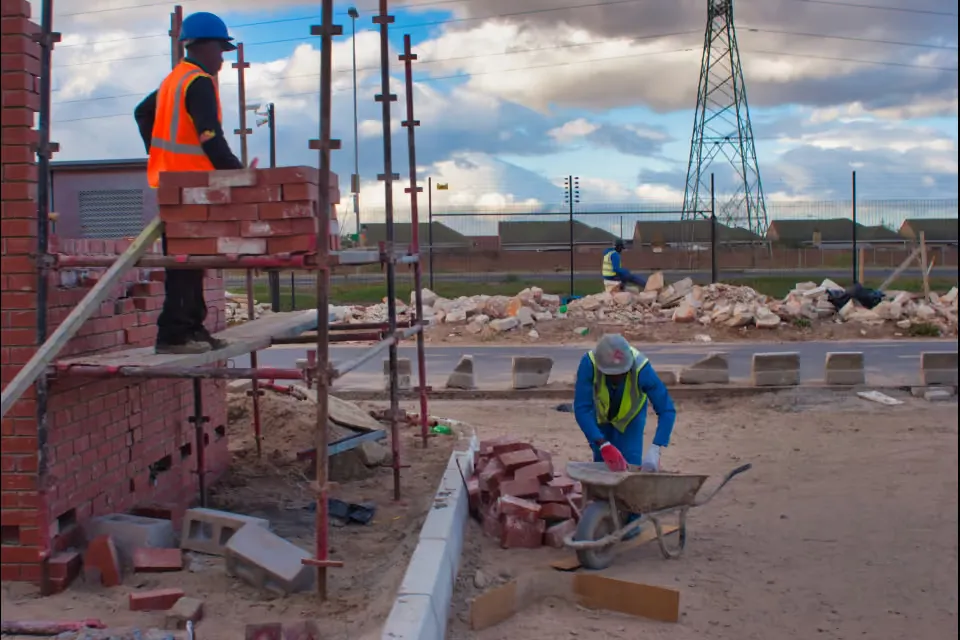
The qualifications of the person who wins the contract are only part of the story. Homeowners should also establish who will actually be carrying out the work.
"Ask who will be on site every day, who will supervise the project, whether the tradespeople are suitably qualified and request a list of authorised workers," Hattingh advises.
A contractor may have excellent credentials, but if unqualified or inexperienced workers perform the work, the risks increase significantly.
Poor workmanship, safety incidents, construction defects, project delays and expensive remedial work often stem from inadequate supervision and insufficient skills.
Knowing exactly who is working on your property also strengthens site security and improves accountability throughout the project.
4. Who carries liability if something goes wrong?
Few homeowners consider liability until something goes wrong.
Before work begins, they should clearly understand who is responsible for worker safety, insurance, injuries and any damage that may occur on site.
"Non-compliant contractors can expose homeowners to significant legal, financial and insurance risks, particularly where workers are not properly registered, insured or supervised," warns Hattingh. He believes one question often reveals everything homeowners need to know: "Does the contractor demonstrate a genuine culture of compliance?"
The answer often reflects how seriously they take safety, quality, professionalism and accountability.
5. Is there recourse if the contractor disappears?
Even well-planned projects can encounter problems. That is why every homeowner should insist on a comprehensive written contract before work begins. The agreement should include:
- Clearly defined payment milestones
- Scope of work
- Completion dates
- Defect liability provisions
- Procedures for handling disputes
If a contractor abandons the project or fails to complete the work to an acceptable standard, homeowners should immediately document the site, notify the contractor formally and obtain professional advice.
Keeping detailed records of contracts, invoices, inspections, photographs and communications can prove invaluable if legal action or insurance claims become necessary.
Choosing the right contractor protects everyone
Selecting a compliant contractor is about far more than reducing personal risk. It supports responsible businesses, promotes fair employment practices and encourages higher standards across South Africa's construction industry.
"Homeowners play an important role in shaping the industry," concludes Hattingh. "Choosing compliant contractors supports professional, responsible businesses and helps keep quality, safety and accountability at the centre of the building industry."
For homeowners planning their next renovation or building project, the cheapest quote is not always the best value. Taking the time to ask the right questions before construction begins could save months of frustration, substantial financial loss and costly legal disputes later.
By looking beyond price and focusing on compliance, competence and accountability, homeowners place themselves in the strongest possible position to protect both their investment and the people working to build it.