









First-time home prices hit record R1.48m despite rate hikes
Listen · 1-minute summary
0:00 / 1:19
Read the summary
First-time home prices hit record R1.48 million, surging 16.4 percent annually despite rate hikes. That's according to BetterBond's November Property Brief, which shows buyers entering the market at record prices even as interest rates rise. After adjusting for inflation of 4.5 percent, real house price growth comes in at approximately 11.9 percent. But incomes are keeping pace too. Average first-time buyer incomes reached R58,200 a month, with income growth averaging around 10 percent annually since 2021. Stephan Potgieter, CEO of BetterHome Group Mortgage Origination and BetterBond, says, "Despite renewed interest rate pressure, this growing purchasing power is helping first-time buyers sustain their activity in the residential property market." The Western Cape remains the priciest province, with first-time buyer prices exceeding R2 million for the first time, up 12.7 percent annually. Meanwhile, residential building plans approved rose 4.7 percent to R67.4 billion, with flats and townhouse plans up 18 percent year on year. Read the full story by Neale Petersen on rei.co.za.

BetterBond’s November Property Brief reveals first-time buyer prices surged 16.4%, while rising incomes and resilient demand continue to support South Africa’s housing market.
- First-time buyer prices reach a record R1.48 million, surging 16.4% annually despite higher interest rates and affordability pressures.
- Average first-time buyer incomes hit R58,200 monthly, supported by annual income growth of approximately 10% since 2021.
- Western Cape first-time buyer prices exceed R2 million, while residential building plans rise 4.7% to R67.4 billion.
First-time buyers defy rising rates & record property prices
South Africa’s first-time homebuyers are entering the property market at record prices, but stronger household incomes and improving financial resilience are helping sustain demand despite renewed pressure from higher interest rates.
According to BetterBond’s November 2026 Property Brief, the average purchase price paid by first-time buyers reached a record R1.48 million in October, representing a 16.4% year-on-year increase, the highest annual growth recorded in its data.
After adjusting for inflation of 4.5%, this translates into real house price growth of approximately 11.9%, highlighting the growing cost of entering South Africa’s residential property market.
However, buyers’ purchasing power has also strengthened. Average monthly incomes among first-time buyers reached R58,200, with income growth averaging approximately 10% annually since 2021.
The findings suggest that, while affordability remains a major obstacle, improving earnings are enabling many buyers to remain active in a market characterised by higher borrowing costs and rising property values.

Stephan Potgieter, CEO of BetterHome Group Mortgage Origination and BetterBond, says stronger incomes are playing an increasingly important role.
“Despite renewed interest rate pressure, this growing purchasing power is helping first-time buyers sustain their activity in the residential property market.”
PROPERTY MARKET SNAPSHOT: NOVEMBER 2026
BetterBond’s latest research highlights several important trends influencing residential property investment and homeownership.
- Average first-time buyer price: R1.48 million, a record high.
- Annual first-time buyer price growth: 16.4%.
- Real price growth: Approximately 11.9% after inflation.
- Average first-time buyer income: R58,200 per month.
- Average income across all buyers: R76,800 per month.
- Average first-time buyer deposit: Just under R200,000.
- Average deposit ratio: 13.4% of purchase price.
- Western Cape first-time buyer prices: Above R2 million.
- Residential building plans approved: R67.4 billion, up 4.7%.
- Flats and townhouse plans: Increased 18% year on year.
- Home loan application activity: 6% above the post-recovery level recorded in 2024.
Regional Property Prices: Western Cape leads the market
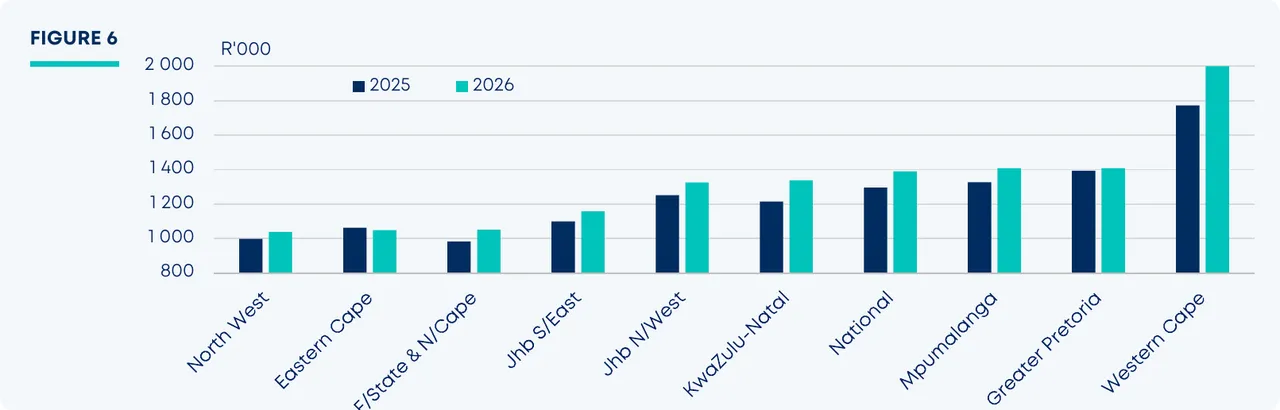
Location remains one of the biggest determinants of affordability, with BetterBond’s regional data revealing significant differences in first-time buyer prices across South Africa.
Seven regions recorded house price growth above inflation, while the Eastern Cape was the only region where average first-time buyer prices declined over the past year.
Regional market highlights
- Western Cape: Remains the country’s most expensive province for first-time buyers, with prices increasing 12.7% annually and exceeding R2 million for the first time.
- KwaZulu-Natal: Recorded the second-highest annual price growth at 10%, although average first-time buyer prices remain below the national average.
- Mpumalanga: Average first-time buyer prices reached approximately R1.4 million, placing the region alongside Greater Pretoria among the highest-priced markets after the Western Cape.
- Greater Pretoria: Continues to command relatively high first-time buyer prices, averaging around R1.4 million.
- Johannesburg: Properties in the north-western suburbs cost approximately 14.4% more than those in the south-eastern suburbs.
- Eastern Cape: The only region recording a decline in average first-time buyer purchase prices.
These regional differences underline the importance of local affordability, employment opportunities, housing supply and buyer preferences in determining property market performance.
For investors and developers, the strong price growth in several regions also highlights the potential for demand-driven residential development, particularly where affordable stock remains limited.
Deposits: The R200,000 barrier to homeownership
While rising incomes are supporting demand, saving for a deposit remains one of the most significant financial obstacles facing first-time buyers.
BetterBond reports that the average deposit paid in October was just under R200,000, equivalent to approximately 13.4% of the purchase price.
Key deposit trends
- Average deposit: Just under R200,000.
- Deposit-to-price ratio: Approximately 13.4%.
- Real deposit values: Around 7% lower than in the first quarter of 2024.
- Affordability: Higher purchase prices continue to increase the amount buyers need to save.
- Financing benefit: Larger deposits can reduce monthly repayments and total interest costs.
Despite the challenges, the deposit burden has eased somewhat in inflation-adjusted terms compared with early 2024, when interest rates were at their peak.
Dr Roelof Botha, economic advisor to BetterBond, says larger deposits can also strengthen a buyer’s long-term financial position.
“A higher deposit also has its advantages, as it can help reduce a buyer’s monthly loan repayment as well as interest payable over the loan period.”
For prospective buyers, the trade-off is clear: a larger deposit may delay a purchase, but it can reduce borrowing costs and improve affordability over the life of a home loan.
Income growth: The key driver behind buyer resilience
One of the most significant findings in BetterBond’s November Property Brief is the continued growth in homebuyer incomes.
Despite higher property prices, average monthly incomes have reached record levels for both first-time and repeat buyers.
Income and affordability highlights
- First-time buyer monthly income: R58,200.
- Average income across all buyers: R76,800.
- Average annual first-time buyer income growth: Approximately 10% since 2021.
- Current inflation: 4.5%.
- Home loan application activity: Remains 6% above the level recorded following the 2024 recovery.
Botha attributes much of the market’s resilience to buyers’ ability to grow their earnings faster than inflation. This has helped offset some of the pressure created by rising home prices and higher mortgage repayments.
However, the interest rate environment remains challenging. Following a series of rate cuts beginning in September 2024, the prime lending rate increased from 10.25% in April 2026 to 10.75% in September.
Potgieter says this has discouraged some prospective buyers, but stronger incomes are helping others maintain their purchasing power. “It means a first-time buyer can still afford a larger bond despite having a higher monthly bond repayment.”
The continued strength in applications suggests that a meaningful segment of the market remains financially capable of purchasing property, even as affordability pressures persist.
Housing supply: New development struggles to keep pace
Rising demand is only part of the explanation for higher house prices. The supply of newly completed housing also plays an important role. BetterBond’s latest research highlights a widening gap between residential building plans approved and completed developments.
During the first eight months of 2026, the ratio of the value of completed residential buildings to approved plans in metropolitan and larger municipalities declined from 65.8% in 2025 to 56%.
Residential construction highlights
- Building plans approved: R67.4 billion during the first eight months of 2026.
- Annual growth in approved plans: 4.7%.
- Completion-to-approval value ratio: Declined from 65.8% to 56%.
- Flats and townhouses: Approved plans increased 18% annually.
- Leading development province: Western Cape.
- Other major development markets: Gauteng and KwaZulu-Natal.
The increase in approved plans is encouraging, particularly for flats and townhouses, which can offer more accessible entry points into homeownership. However, approved plans do not automatically translate into completed homes.
For property developers, the challenge is converting planning activity into financially viable projects that respond to demand at affordable price points. The 18% increase in approved flats and townhouse plans also points to continued interest in higher-density residential development.
Household finances: Signs of improving resilience
Despite renewed interest rate pressure, South African households are beginning to show signs of financial recovery following several years of constrained disposable income.
According to the South African Reserve Bank’s Quarterly Bulletin, real household disposable income began improving after interest rates started declining in the third quarter of 2024.
Botha says lower borrowing costs have helped households retain more of their income after debt repayments. The improvement is also reflected in the Altron Fintech Household Resilience Index (AFHRI), which tracks household financial health using 20 indicators.
Household financial indicators
- Real disposable income: Increased 2.7% year on year in the second quarter of 2026.
- Household resilience: Fifteen of the index’s 20 indicators recorded positive growth.
- Debt servicing: Earlier interest rate reductions provided some relief to indebted households.
- Purchasing power: Income growth above inflation has supported residential property demand.
Although the latest increase in interest rates introduces renewed pressure, these indicators suggest that household financial conditions have improved from the lows experienced during the previous high-interest-rate cycle.
What this means for property investors and developers
BetterBond’s findings provide important signals for the residential property market. First-time buyers are demonstrating greater financial resilience than headline interest rates and affordability pressures might suggest.
However, record purchase prices and deposit requirements mean affordability remains a significant constraint, particularly in higher-priced regions.
For investors and developers, several trends stand out:
- Demand remains active: First-time buyers continue to participate despite rising prices.
- Affordable housing opportunities: Higher entry-level prices reinforce demand for appropriately priced residential stock.
- Regional opportunities: Significant differences in house prices create distinct local investment markets.
- Higher-density development: Growing approvals for flats and townhouses point to continued interest in more accessible housing formats.
- Financing remains critical: Deposits, lending rates and income growth will continue to influence purchasing decisions.
The bottom line: First-time buyers remain a market force
South Africa’s residential property market continues to demonstrate resilience, with first-time buyers remaining an important source of demand despite rising interest rates and record property prices.
BetterBond’s November data shows that average first-time buyer prices have climbed to R1.48 million, while monthly incomes have reached R58,200; highlighting both the growing cost of homeownership and the improved purchasing power of buyers active in the market.
The challenge ahead will be ensuring that housing supply, mortgage affordability and household income growth remain sufficiently aligned to support sustainable market activity.
For property investors, developers and lenders, the message is clear: first-time buyer demand has not disappeared. But unlocking the next phase of residential market growth will depend on delivering homes at price points that buyers can realistically afford.
DOWNLOAD: BetterBond Property Brief - November 2026
Source: BetterBond November 2026 Property Brief, with commentary from Stephan Potgieter, CEO of BetterHome Group Mortgage Origination and BetterBond, and Dr Roelof Botha, economic advisor to BetterBond.