










Dipula's R3bn deal spree fuels 8.6% dividend growth

Dipula Properties beats earnings guidance, grows its portfolio to R12.2bn and targets further expansion in defensive retail and industrial assets, with 8 - 10% growth forecast for 2027.
- Dipula beats guidance with 8.6% distributable earnings growth per share, R636m in distributable earnings and a 90% dividend payout ratio.
- R3bn in acquisitions, including nine Moolman shopping centres, strengthens its retail portfolio as property values climb to R12.2bn.
- Vacancies fall to 6%, gearing improves to 31.8%, and Dipula forecasts 8–10% distributable earnings growth per share in FY2027.
A transformative year for one of SA’s growing REITs
Dipula Properties (JSE: DIB) has capped a transformative financial year with stronger earnings, improved occupancy, a healthier balance sheet and a R3 billion acquisition programme that is reshaping its national property portfolio.
The South Africa-focused real estate investment trust (REIT), which owns 152 properties spanning nearly 900,000m² across the country, reported an 8.6% increase in distributable earnings per share to 62.17 cents for the year ended 31 August 2026, outperforming its guidance of 7% to 8%.
Total distributable earnings climbed 22% to R636 million, supported by improved operational performance, strategic acquisitions and disciplined capital management.
The results mark a significant milestone for Dipula, which has spent more than two decades building a diversified property business and 15 years as a JSE-listed company.
Its portfolio is increasingly concentrated in convenience, township and rural retail centres, supported by logistics and industrial assets, while management continues to reduce exposure to non-core offices and residential properties.
INVESTMENT HIGHLIGHTS: FY2026 RESULTS SNAPSHOT
- Distributable earnings: R636 million, up 22%.
- Distributable earnings per share: 62.17 cents, up 8.6%.
- Dividend payout ratio: Maintained at 90%.
- Property portfolio: R12.2 billion, up 13%.
- Revenue: R1.7 billion, up 11%, excluding straight-lining.
- Net property income: Increased 12%.
- Acquisitions: R3 billion in transactions concluded.
- New equity raised: R2 billion.
- Portfolio vacancies: Reduced from 8.5% to 6%.
- Tenant retention: Improved from 76% to 85%.
- Gearing: Reduced from 34.9% to 31.8%.
- FY2027 outlook: 8% - 10% distributable earnings growth per share.
R3 Billion acquisition drive reshapes the portfolio
One of the defining features of Dipula’s financial year was its aggressive but targeted acquisition strategy, designed to increase exposure to defensive property sectors offering sustainable income growth.
The company concluded acquisitions totalling R3 billion, including its largest transaction to date: the R2 billion acquisition of nine shopping centres from the Moolman Group and its co-investors.
The transaction covers 89,168m² of gross lettable area across four provinces, strengthening Dipula’s position in convenience, township and rural retail markets.
Key acquisition highlights
- Moolman portfolio
Nine shopping centres acquired for R2 billion, with transfers expected to begin towards the end of November 2026. - Birch Acres Square
A 6,203m² retail centre in Tembisa acquired for R145 million, transferred in July 2026. - Other acquisitions
Protea Gardens Mall, Woolworths Gezina, Bayer Klerksdorp and Airborne Business Park. - Asset disposals
Twenty non-core properties sold for R200 million. - Residential exit
Post-year-end agreement to dispose of all but one non-core residential property for R268 million.
The acquisitions are being funded through a combination of new equity, debt, disposal proceeds and dividend reinvestment programmes. Importantly, the strategy is also improving geographic diversification, with Gauteng exposure declining from 58% to 54%.

Retail leads as Dipula builds a more defensive portfolio
Dipula’s property mix reflects a deliberate shift towards assets serving everyday consumer needs, supported by logistics and industrial properties.
At year-end, its R12.2 billion portfolio comprised:
- Retail: 68% of portfolio value.
- Logistics and industrial: 15%.
- Offices: 14%.
- Affordable residential: 3%.
Retail exposure increased by nine percentage points, while the company’s office exposure continues to decline. Management expects offices to represent less than 10% of portfolio value following further acquisitions and disposals.
This repositioning is designed to improve income resilience, strengthen tenant demand and concentrate capital in sectors offering attractive long-term fundamentals.
Property performance: Vacancies fall, tenants stay longer
Operational improvements provided another important driver of Dipula’s results. Strong leasing activity, including a 20% increase in new leases signed, supported occupancy and rental income.
Operational performance highlights
- Overall vacancies: Declined to 6% from 8.5%.
- Retail vacancies: Improved to 4.5% from 5.1%.
- Office vacancies: Reduced to 21.7% from 26.4%.
- Tenant retention: Increased to 85% from 76%.
- Retail and industrial retention: Reached 87%.
- Cost-to-income ratio: Improved marginally to 42.6%.
The improvements reflect proactive leasing, stronger tenant relationships and continued attention to operating efficiencies.
Izak Petersen, CEO of Dipula Properties, describes the portfolio as “firing on all cylinders”, with improved performance indicators demonstrating the benefits of disciplined property management.
“This transformative year reflects the positive results of consistency in responsible capital management, selective acquisitions and redevelopments, organic portfolio growth and hands-on disciplined asset and property management.”
Balance sheet creates capacity for growth
Dipula’s financial position strengthened materially during the year, providing greater flexibility to fund acquisitions and capital improvements. The company’s inclusion in the FTSE/JSE All Property Index and SA REIT Index from March 2026 helped broaden its investment appeal.
Financial and capital highlights
- Market capitalisation: Increased 70%.
- Net asset value: Increased 20% in aggregate.
- NAV per share: Improved 6%.
- Gearing: Declined to 31.8%.
- Interest cover ratio: Improved from 2.8 times to 3.2 times.
- Debt refinancing: R2 billion refinanced at more competitive margins.
- New equity: R2 billion raised to support expansion.
The improved capital structure strengthens Dipula’s capacity to pursue opportunities while maintaining prudent debt levels.
Green investment: Solar capacity more than triples
Sustainability has become an increasingly important component of Dipula’s asset management and capital investment strategy.
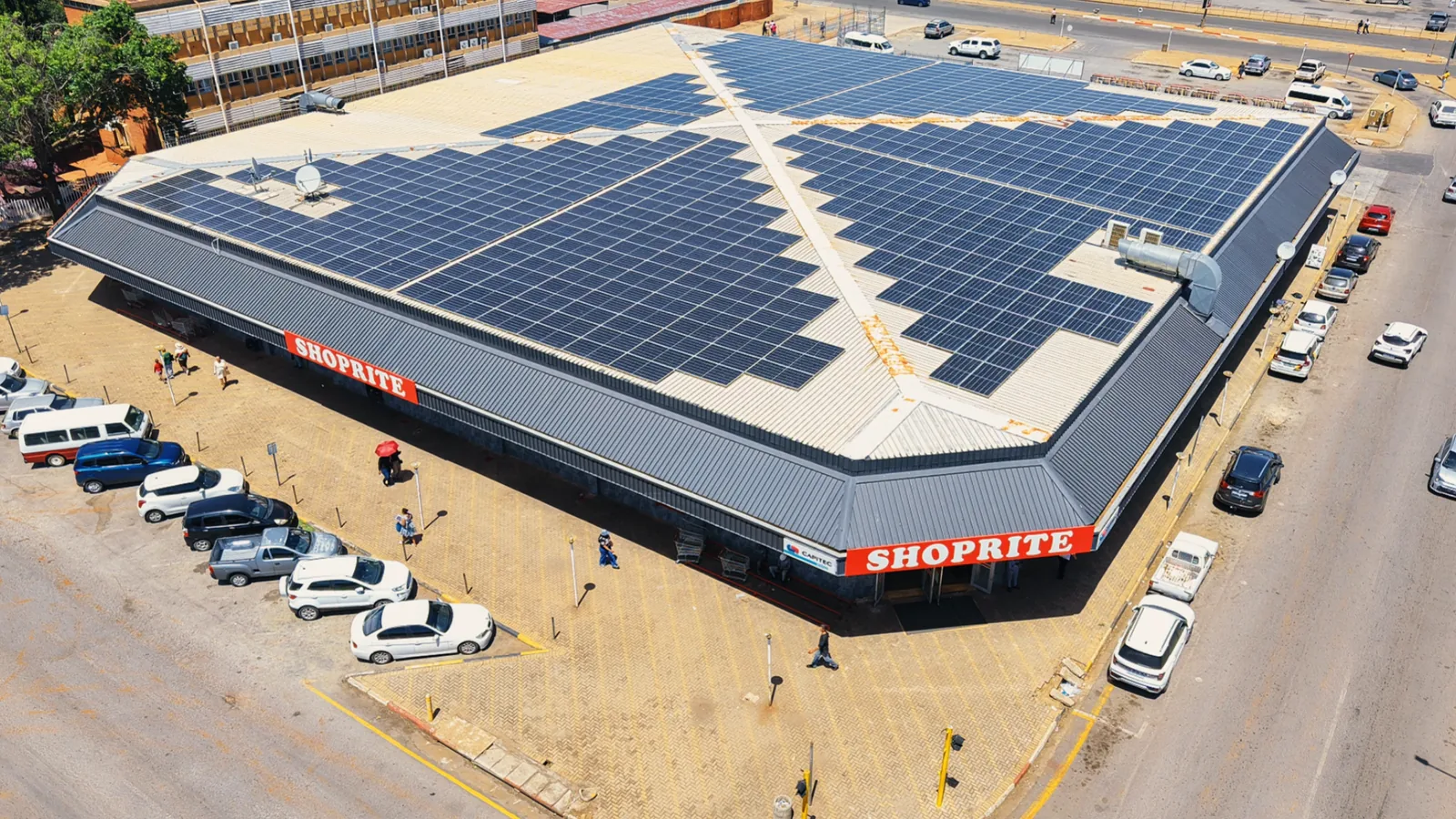
The company more than tripled its installed solar photovoltaic capacity during the year, helping reduce electricity costs and exposure to energy-related risks.
Sustainability and capital investment
- Solar PV capacity: Increased from 5,300kWp to 17,500kWp.
- Avoided carbon emissions: Increased 50% year on year.
- Property refurbishments: R122 million invested.
- Income-generating capital expenditure: R55 million.
- Planned capital expenditure: R250 million over the next 12 - 18 months.
- Further solar expansion: An additional 6,000 - 8,000kWp targeted in FY2027.
Dipula is also implementing water-saving, waste-management and biodiversity initiatives across its portfolio. These investments are intended to improve property performance, contain operating costs and strengthen long-term asset resilience.
Outlook: R14.5 Billion portfolio in sight
Looking ahead, Dipula expects distributable earnings per share to increase by 8% to 10% in FY2027, supported by acquisition-led growth, improved occupancy and operational efficiencies.
Management believes South African property fundamentals are gradually strengthening, with better access to capital, improving valuations and resilient tenant demand in defensive sectors. However, subdued economic growth, inflationary pressures, higher interest rates and persistent municipal service delivery challenges remain important risks.
Dipula nevertheless sees significant opportunities to expand its national retail and industrial footprint.
Petersen says the company’s capital allocation priorities remain focused on growing retail, increasing logistics and industrial exposure, and advancing sustainability programmes. “Our assets will grow from R11bn at the start of the year to almost R14.5bn once the Moolman portfolio transfers.”
He adds that the company’s increased scale, index inclusion and targeted acquisition pipeline provide confidence in its prospects.
The bottom line: Scale, discipline and defensive growth
Dipula’s FY2026 performance demonstrates how strategic acquisitions, active asset management and disciplined capital allocation can combine to deliver stronger shareholder returns.
The company’s 8.6% distributable earnings growth per share, improved occupancy and reduced gearing provide a solid operational foundation, while its R3 billion acquisition programme is positioning the portfolio for its next phase of expansion.
For property investors, the key development is Dipula’s increasingly concentrated exposure to everyday retail and industrial assets, sectors where sustainable tenant demand and effective management can underpin recurring income.
With its portfolio potentially approaching R14.5 billion following the Moolman transfers and earnings growth of 8%–10% forecast for FY2027, Dipula enters its next financial year with greater scale, stronger fundamentals and a clear growth strategy.
Source: Dipula Properties FY2026 financial results and management commentary, 11 November 2026.