






Featherbrooke wins landmark six-year court battle
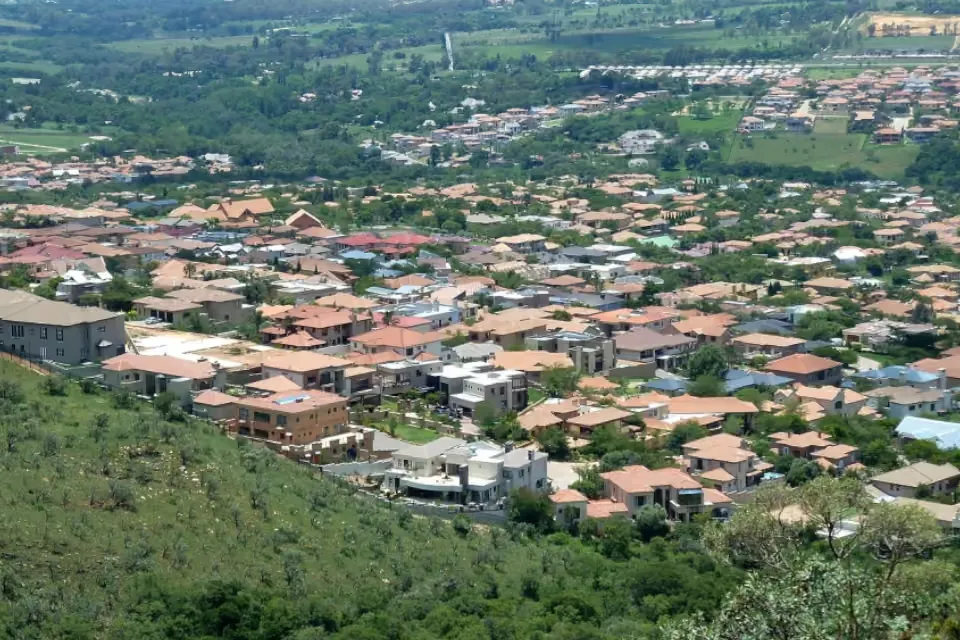
- High Court orders three state entities to repair failing stormwater infrastructure after years of delays, denial and shifting responsibility.
- Judgment establishes a significant precedent for estates and community schemes confronting prolonged municipal inaction.
- Legal experts say the ruling reinforces that government cannot avoid constitutional responsibilities through bureaucratic blame shifting.
High Court delivers landmark victory, Featherbrooke Estate
After six years of litigation, multiple court appearances and repeated flood seasons, Featherbrooke Estate has secured a landmark High Court victory that could reshape how community schemes across South Africa hold government accountable for failing public infrastructure.
In a judgment handed down on 29 May 2026, the Johannesburg High Court ordered Mogale City Local Municipality, the City of Johannesburg and the Johannesburg Roads Agency to jointly repair failing river infrastructure, install gabions to stabilise eroding riverbanks and prepare a comprehensive Stormwater Management Plan.
The ruling follows years of deteriorating infrastructure that threatened residents, damaged estate assets and exposed critical sewer and electrical infrastructure to serious risk.
According to Johlene Wasserman, Director of Community Schemes and Compliance at Van Deventer Dowlath & Marx Incorporated, the judgment extends well beyond a single residential estate.
"Structural interdicts compelling multiple organs of state to act jointly are rare in South African law and are generally reserved for systemic governance failures. This judgment establishes an important precedent for community schemes facing overlapping municipal and departmental inaction."
A river that became a disaster
At the centre of the dispute lies the Muldersdrift se Loop, a river flowing from the Walter Sisulu National Botanical Garden through Featherbrooke Estate towards the Hartbeespoort Dam.
For more than a decade, recurring flooding steadily eroded riverbanks, undermined infrastructure and created escalating safety risks.
According to court papers, erosion exposed sewer pipelines and underground electrical cables while leaving sections of the estate's multimillion-rand security perimeter fence suspended over collapsing embankments.
What began as an infrastructure maintenance issue eventually evolved into a constitutional dispute over government's responsibility to protect public infrastructure and neighbouring communities.
"Try Next Door"
Perhaps the most frustrating aspect of the saga was the repeated refusal by state authorities to accept responsibility.
For years, the homeowners' association approached the Department of Water and Sanitation, Mogale City and the City of Johannesburg, only to be redirected from one authority to another.
As Wasserman describes it: "For more than a decade the answer was effectively the same: 'Not us. Try next door.'"
When Featherbrooke finally approached the courts in 2020, the estate found itself trapped in a lengthy legal process involving procedural setbacks, appeals and multiple hearings before the substantive issues were properly addressed.
State's blame-shifting exposed
One of the most significant findings of the judgment was its criticism of government's failure to act despite longstanding knowledge of the problem.
Evidence before the court revealed that the Department of Water and Sanitation had internally recommended intervention as early as March 2016.
Yet no meaningful action followed. "The judgment makes it clear that constitutional accountability cannot be avoided through technicalities," says Wasserman.
"Government cannot acknowledge a disaster risk, recommend intervention internally and then rely on licensing processes or jurisdictional arguments to avoid taking responsibility. The court saw through years of blame shifting and finally required action."
Six years of litigation
The road to victory proved extraordinarily expensive. To secure the final order, Featherbrooke endured:
- Six years of litigation
- Proceedings across three levels of the court system
- An initial dismissal
- A near-catastrophic legal cost order
- Multiple rainy seasons while infrastructure continued deteriorating
- Millions of rand in legal, engineering and emergency stabilisation costs
A major turning point came in March 2024, when the Supreme Court of Appeal overturned an earlier Full Court decision that had dismissed Featherbrooke's application.
That judgment kept the matter alive and ultimately paved the way for the High Court's final structural interdict.
A national warning for Community Schemes
Wasserman believes the ruling contains valuable lessons for trustees, homeowners' associations, bodies corporate and managing agents throughout South Africa.
- Lesson 1: Act Early
Infrastructure failures should never be viewed as routine maintenance issues.
Stormwater systems, roads, riverbanks and municipal servitudes can quickly become governance and liability risks if left unresolved.
- Lesson 2: Document Everything
Successful litigation depends on maintaining comprehensive engineering reports, correspondence, inspections and expert evidence over extended periods.
Without detailed records, even legitimate claims become difficult to prove.
- Lesson 3: Persistence Matters
Litigation against government requires patience, resources and determination. Even strong cases may take years before meaningful relief is achieved.
As Featherbrooke demonstrated, persistence can ultimately overcome bureaucratic inertia.
A powerful precedent
Beyond securing repairs to critical infrastructure, the judgment establishes an important legal principle.
Public authorities cannot indefinitely avoid their constitutional obligations by shifting responsibility between departments or municipalities while infrastructure continues to deteriorate.
For thousands of community schemes facing similar infrastructure failures, the ruling provides an important roadmap for holding public authorities accountable.
The Ultimate Lesson
Featherbrooke Estate may finally have secured the relief its residents have sought for more than a decade, but the judgment serves as a broader warning about the cost of delayed government action.
For property owners, trustees and managing agents, the case reinforces that infrastructure risk is no longer simply an operational concern, it is a governance, financial and legal issue requiring proactive management.
While Featherbrooke ultimately prevailed, the estate paid a heavy price in time, legal costs and years of uncertainty before securing what the court found should have been government's responsibility all along.