








Beyond Coworking: The human future of work
- Flexible workspaces are becoming strategic assets that improve productivity, innovation, collaboration and talent retention.
- Businesses are prioritising employee experience over long-term leases as workplace expectations fundamentally change.
- WeWork says the future of commercial property is driven by belonging, flexibility and human connection.
Beyond Coworking: The human future of work
The commercial property sector is undergoing one of its most significant transformations in decades. Traditional office models built around long-term leases, fixed workstations and centralised corporate headquarters are giving way to workplaces designed around flexibility, collaboration and employee wellbeing.
Today's organisations are no longer measuring success simply by occupancy costs or floor space. Instead, they are asking whether their workplaces help attract top talent, encourage innovation and create environments where people perform at their best.
What was once viewed as a niche solution for start-ups has evolved into a fundamental shift in corporate real estate strategy. Flexible workspaces have become an increasingly important part of how businesses respond to changing workforce expectations, economic uncertainty and the growing demand for more agile operations.
According to Stefano Migliore, CEO of WeWork South Africa, the conversation has moved well beyond coworking.
"This is not a coworking story anymore. It's about the evolution of work itself. Businesses are no longer asking how much office space they need or what it costs. They're asking what their workplace says about their culture, whether it helps attract and retain exceptional people, and whether it enables teams to do their best work."
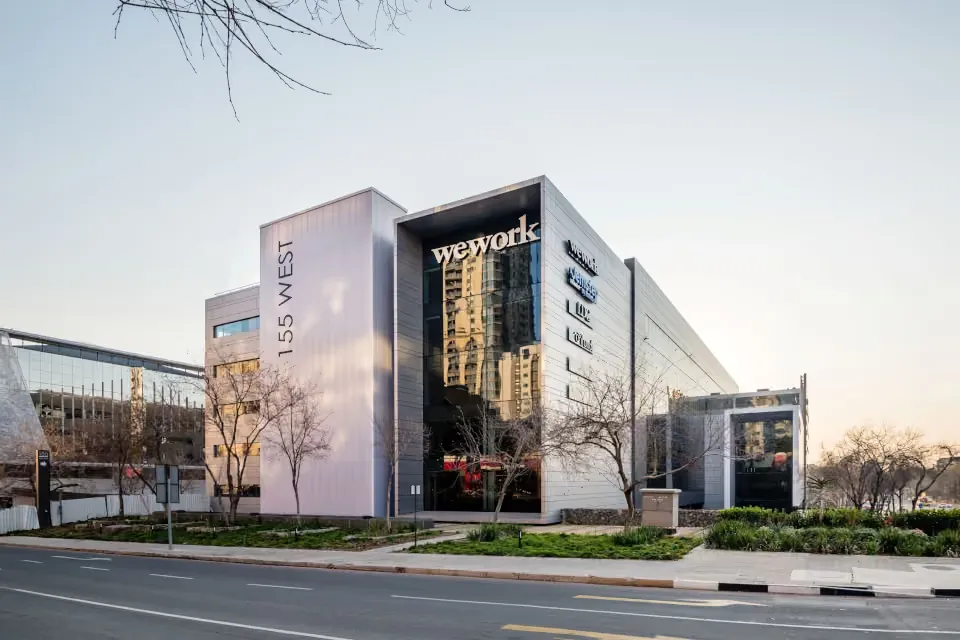
Recognised by TIME Magazine as one of the World's 100 Most Influential Companies for 2026, WeWork has helped redefine expectations around workplace flexibility, quality and experience. Since entering the South African market in 2019, the company has played a leading role in reshaping perceptions of shared workspaces within the country's commercial property landscape.
The workspace revolution is flexible and human
The rise of flexible workspace reflects a much deeper evolution than simply offering shorter leases or shared desks.
Increasingly, businesses recognise that innovation often comes from interaction. Bringing entrepreneurs, corporates, creatives and growing businesses together within a shared environment creates opportunities for collaboration that traditional offices rarely generate.
Unexpected conversations become business opportunities. Referrals happen organically. Partnerships emerge naturally. This "cross-pollination" of ideas has become one of the defining characteristics of modern workplace strategy.
"Our members work alongside start-ups, corporates, entrepreneurs and creatives from completely different industries. Those unexpected conversations, referrals and collaborations simply don't happen in a traditional monoculture office," says Migliore.
The trend is gaining significant momentum globally. According to the Middle East and Africa Flexible Workspace Market Report 2025, 59% of businesses planning to expand their office footprint over the next two years intend choosing flexible workspace rather than traditional leases.
Although flexible offices currently account for only around 1% of South Africa's commercial office stock, industry observers believe this represents substantial growth potential as companies increasingly seek agility, scalability and enhanced employee experiences.
"Flexible workspace has become an economic enabler for entrepreneurs, SMEs and corporate innovators alike. It lowers barriers to growth while giving businesses the ability to scale as market conditions evolve," Migliore explains.
Rewriting the Rules: Why people outweigh property costs
One of the most influential concepts reshaping workplace strategy is the internationally recognised 3-30-300 Rule, often attributed to global real estate advisory firm JLL.
The principle highlights that for every square metre of commercial office space, organisations typically spend approximately:
- $3 on utilities
- $30 on rent
- $300 on employee salaries
For decades, property decisions focused primarily on reducing occupancy costs. Today, forward-thinking organisations recognise that the greatest opportunity lies in improving the productivity, engagement and retention of the people occupying that space.
The conversation has shifted from asking: "How much does this office cost?" to "How much value does this workplace create?"
This represents a profound change in commercial real estate thinking, placing human performance ahead of property economics.
From real estate to belonging
Across South Africa, organisations of every size are reassessing their property footprints in favour of workplaces that prioritise flexibility, collaboration and employee wellbeing.
More than 4,600 professionals currently work across WeWork South Africa's three locations, reflecting growing demand for environments that combine premium office infrastructure with vibrant business communities.
For Migliore, this evolution is about much more than real estate.
"For WeWork South Africa, it has never been about growing office space; it has always been about growing human potential."
He believes the next generation of workplace strategy will be defined not by the size of a lease, but by the quality of the experience it creates.
"We're rewriting the rules of commercial real estate. We're creating places where people feel they belong rather than simply occupy a desk. In today's world, that sense of belonging is worth far more than bricks, mortar or square metres."
A new era for commercial property
As hybrid work becomes the norm and businesses continue adapting to rapidly changing economic conditions, the commercial property sector is entering a new phase where flexibility, experience and community have become strategic assets rather than optional extras.
The office is no longer simply a place to work. It has become a platform for innovation, collaboration and culture. For landlords, developers and occupiers alike, the challenge is no longer how much space to provide, but how to create environments where people and businesses can thrive.
The future of work will not be defined by office buildings alone. It will be shaped by workplaces that place people at the centre of every decision.