









Two property icons reveal 9 secrets to success
Listen · 1-minute summary
0:00 / 1:24
Read the summary
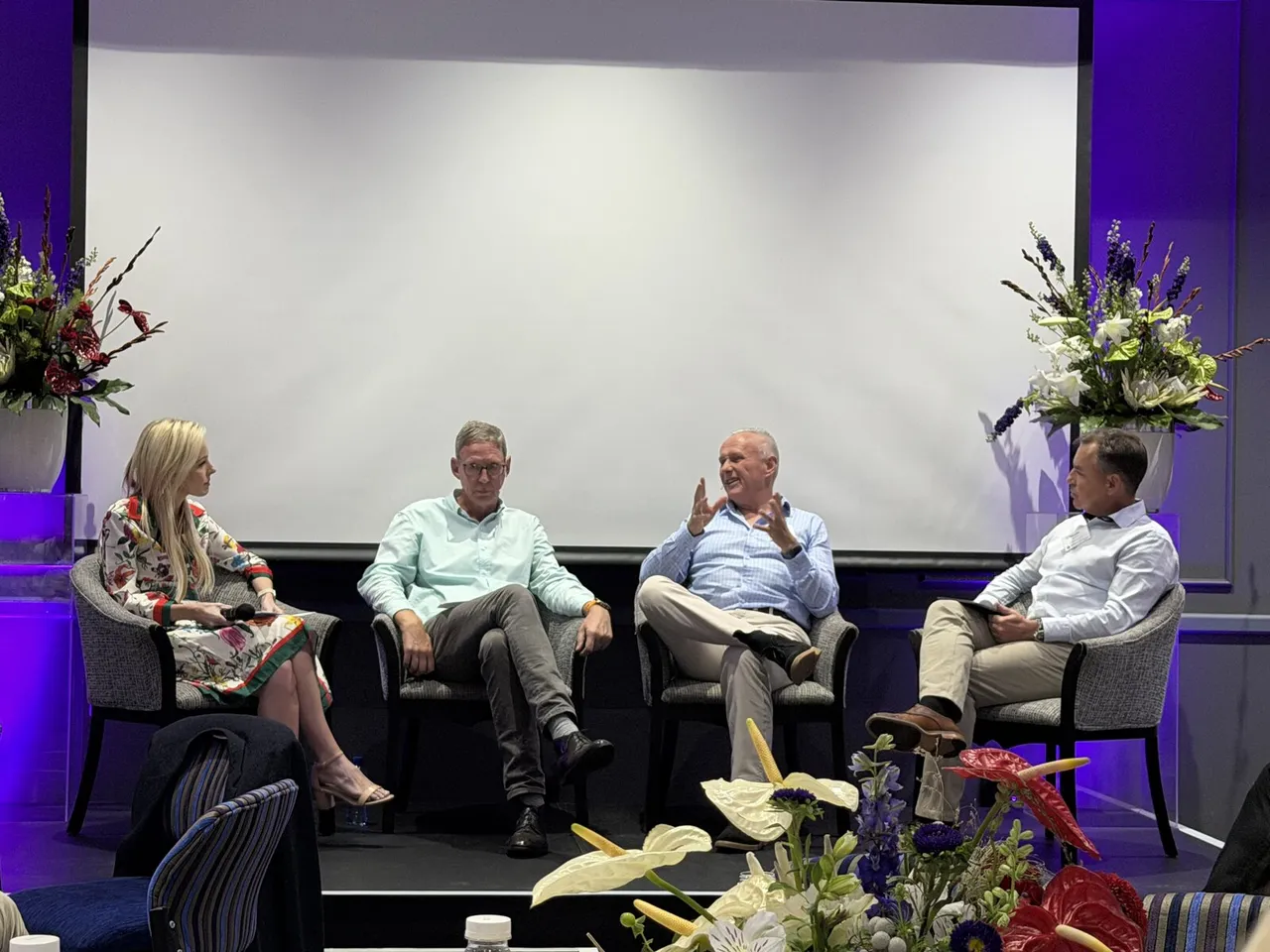
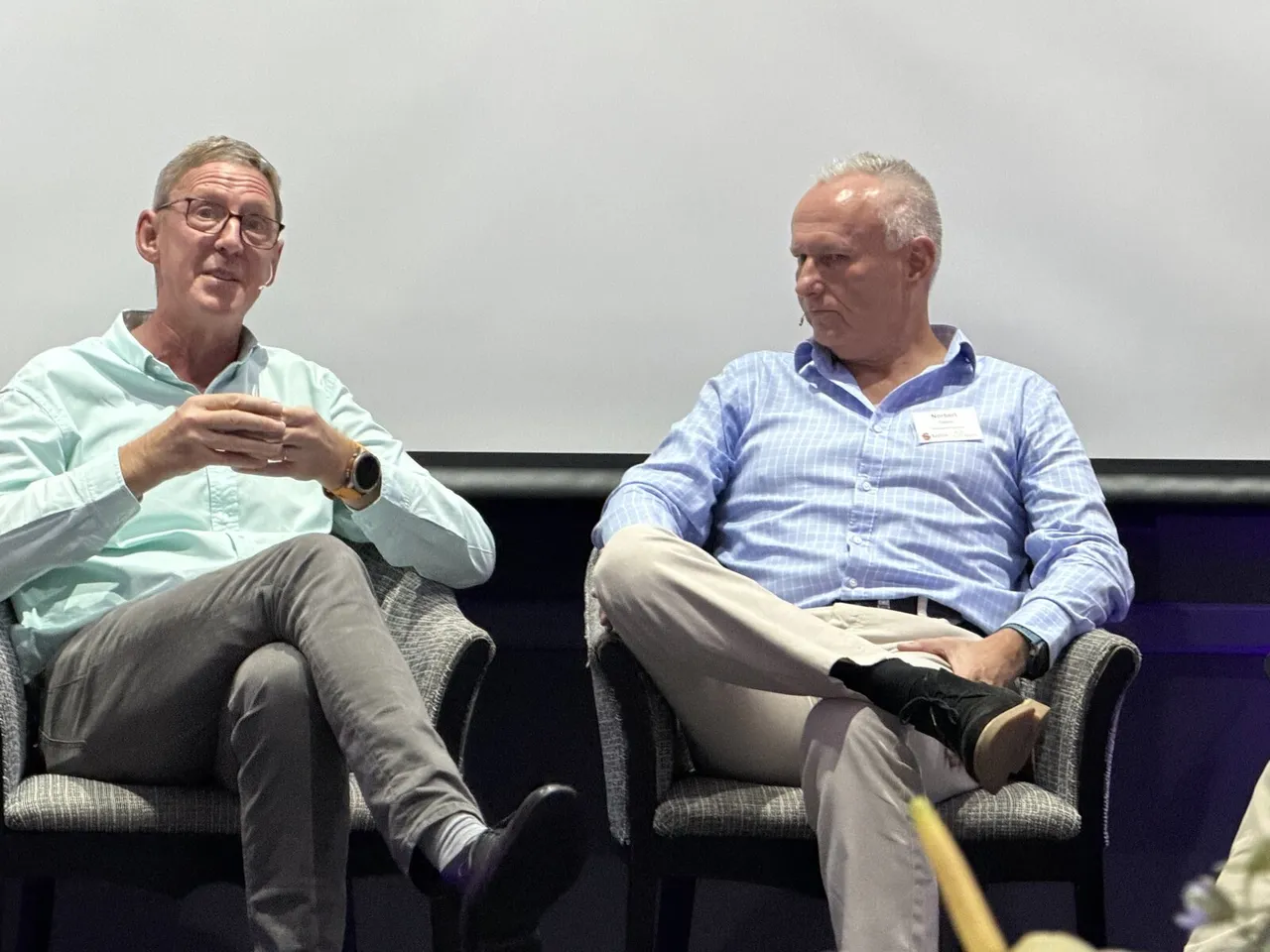
Two property icons reveal 9 secrets to success. Growthpoint's Norbert Sasse and the V&A Waterfront's David Green shared their lessons at the SAPOA Western Cape Breakfast Session in Cape Town on 17 November 2026. Sasse helped restructure Growthpoint when its market capitalisation was approximately R27 million and liquidation was among the options. After the restructuring, it rose to more than R1 billion. Sasse said the group distributed approximately R76 billion to shareholders over roughly 25 years, even through market crises. He also explained how a major UK acquisition of Intu Properties never went ahead. Sasse said: "There would be no Growthpoint today." Intu collapsed into administration in 2020. Green became CEO of the Waterfront in 2009 and guided it for 17 years into a destination combining retail, offices, hotels and residential property. He noted that the Waterfront supports approximately 32,000 workers, which makes the case for more housing close to work. Both leaders see opportunity in tourism, mixed-use precincts and residential densification. Read the full story by Neale Petersen on rei.co.za.
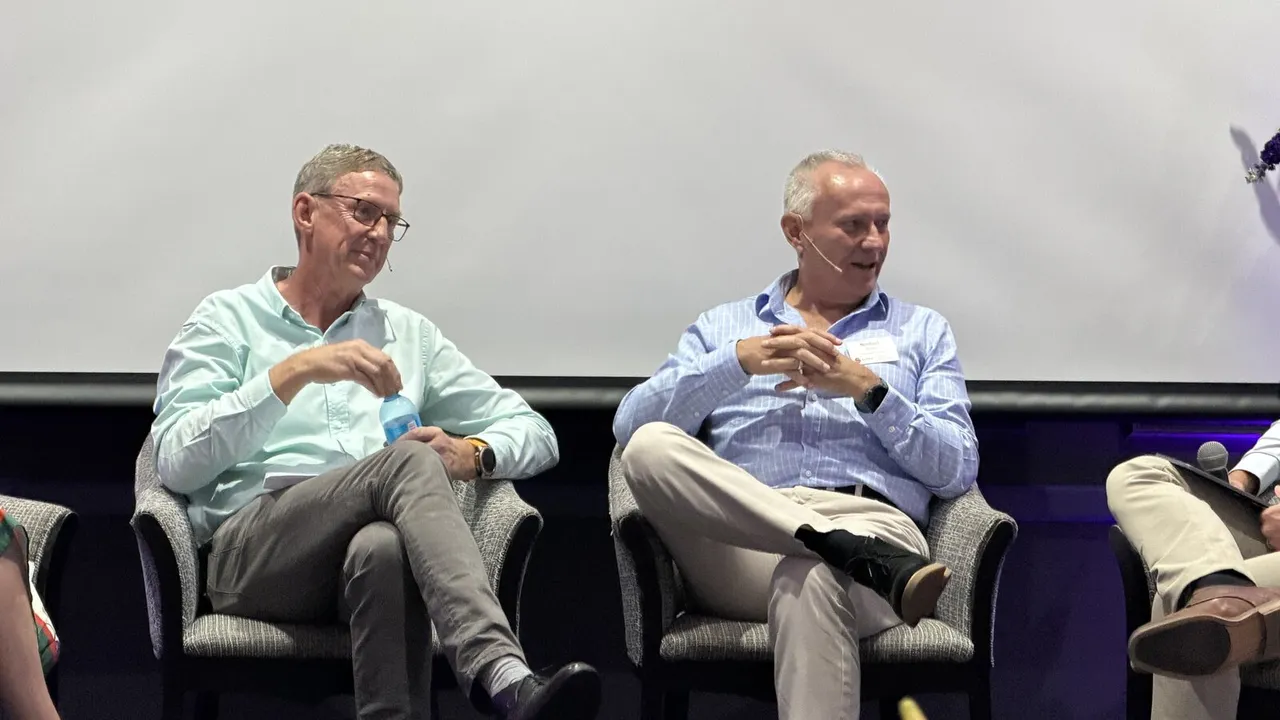
Growthpoint’s Norbert Sasse and the V&A Waterfront’s David Green reveal nine powerful lessons on building property wealth, leadership, risk and resilience.
- Building property empires: Norbert Sasse reveals how Growthpoint grew from near-liquidation into a JSE property giant through strategy, relationships and resilience.
- Beyond bricks and mortar: David Green explains how the V&A Waterfront became a world-class destination through vision, placemaking and people-first leadership.
- The next property boom: Both leaders identify mixed-use precincts, residential densification, tourism and disciplined investment as major opportunities for South Africa.
Two extraordinary careers. One powerful conversation.
What does it take to build one of South Africa’s largest listed property companies? How do you transform a working harbour into one of Africa’s most successful mixed-use destinations? And what separates the property investors who build lasting wealth from those who disappear when markets turn?
These were among the questions explored at the SAPOA Western Cape Breakfast Session, held in Cape Town on 17 November 2026, featuring two of South Africa’s most respected property industry leaders: Norbert Sasse and David Green.
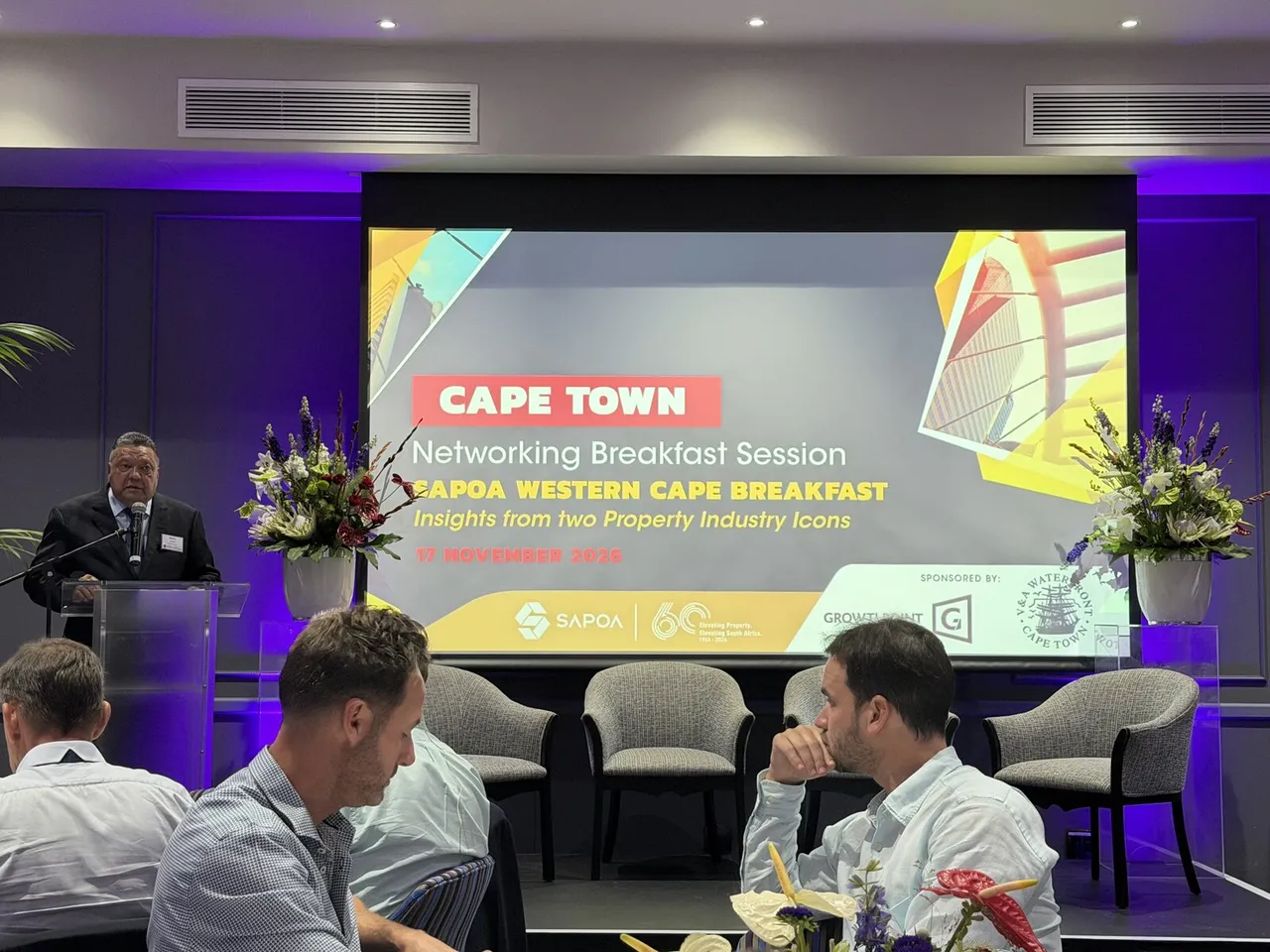
Between them, the two executives have navigated financial crises, major acquisitions, international expansion, changing investment cycles and the transformation of South Africa’s commercial property landscape.
Their conversation offered something more valuable than a conventional market forecast: hard-earned lessons from decades of building businesses, making difficult decisions and recognising opportunities others overlooked. And perhaps the most revealing insight was that neither man’s career followed a carefully scripted path.
Norbert Sasse: From a R27 million company to a property giant
Norbert Sasse’s journey into property began not with a passion for buildings, but with an ambition to become a chartered accountant.
As a teenager, he was inspired by the lifestyle of an accountant he knew through tennis. That early ambition took him through accountancy training, a period with Ernst & Young in the United Kingdom and ultimately into Investec’s corporate finance division after returning to South Africa in 1996.
At the time, property was hardly the most fashionable division within the financial services group. But the downturn in equity markets around the turn of the millennium created an unexpected opportunity.
Working alongside property veterans Sam Hackner and Sam Leon, Sasse became involved in restructuring Growthpoint, a small listed property company facing a deeply uncertain future. According to Sasse, Growthpoint’s market capitalisation was approximately R27 million, and liquidation was among the options being considered.
The restructuring transformed its position, increasing its market capitalisation to more than R1 billion. Sasse subsequently moved from corporate finance into property management, setting in motion a career that would help establish Growthpoint as one of the JSE’s most influential property investment businesses.
The Growthpoint journey in numbers
Approximate market value before restructuring
R27mMarket value following the transaction
R1bn+Cumulative dividends cited by Sasse
R76bnEstimated valuation of total property assets
R160bnLesson 1: Opportunity often arrives disguised as uncertainty
Sasse acknowledged that the initial move into property was not part of a grand career strategy. However, once Growthpoint began expanding, its ambitions became deliberate: build scale, diversify the portfolio, access cheaper capital, enter major share indices and ultimately expand internationally.
The Investment Lesson
Opportunities frequently emerge when an industry is under pressure. The critical advantage is having the expertise, relationships and willingness to act when others are hesitant.
David Green: The man who helped transform the V&A Waterfront
David Green’s career was equally unconventional. Beginning at KPMG in 1980, he spent more than four decades working across finance, manufacturing, international business, ports and property.
His career took him through Europe, the United Kingdom and South America, including a senior role at Peel Ports, where he helped oversee the acquisition and integration of Mersey Docks.
But it was Cape Town’s V&A Waterfront that would become one of his defining professional achievements. Green first visited Cape Town in 1996 and was immediately struck by the city’s potential. By 2008, the Waterfront was facing significant management instability following its acquisition by a consortium involving Dubai World and the Livingstone brothers.
Five of its seven executives had resigned. A recruitment approach led Green to interview for the CEO position, which he assumed in 2009. Over the following 17 years, he helped guide the Waterfront’s evolution into an internationally recognised destination combining retail, offices, hotels, tourism, culture, entertainment and residential property.
Green was awarded an Officer of the Order of the British Empire in December 2025 for his contribution to UK–South Africa relations and serves as chairman of Zeitz MOCAA.
Lesson 2: Great property investment is about creating places, not just buildings
Green believes the greatest value in property development often comes from understanding how buildings, people and experiences interact. For him, the Waterfront’s success rests on a consistent long-term vision rather than short-term financial decisions. One of the central principles was preserving its identity as a working harbour.
The activity, movement and authenticity of the harbour contribute to the destination’s character and commercial appeal. The Waterfront’s success also demonstrates the importance of architecture, design, cultural activity and the careful management of an entire precinct.
The Investment Lesson
A property becomes more valuable when it forms part of a destination people actively want to visit, work in and experience.
The deal that never happened: Sasse’s biggest escape
Perhaps the most remarkable revelation came when Sasse discussed a major international acquisition Growthpoint considered during 2018 and 2019. The company had explored acquiring UK shopping centre owner Intu Properties as part of its international diversification strategy.
Growthpoint undertook extensive due diligence, examined the assets, engaged investors and obtained board approval to pursue the transaction. But the acquisition never proceeded. Sasse reflected that, had Growthpoint completed the deal, the consequences could have been catastrophic.
He said: “There would be no Growthpoint today.”
Intu subsequently collapsed into administration in 2020, following financial difficulties and the severe disruption to retail property markets during the pandemic. The experience illustrates an uncomfortable truth about property investment: sometimes the most valuable transaction is the one you decide not to complete.
Lesson 3: Knowing when to walk away can save billions
Sasse’s account offers three critical lessons for property investors:
- Never fall in love with a transaction
Even board-approved acquisitions must remain subject to disciplined assessment. - Understand the downside
Debt, financing structures and changing market conditions can rapidly undermine an attractive investment thesis. - Protect the balance sheet
The ability to survive a downturn is often more important than maximising short-term growth.
The biggest deal is not necessarily the best deal. Preserving capital and avoiding permanent losses can create greater long-term shareholder value.
Property Cycles: Why Survival matters more than timing
Both leaders challenged the idea that successful property investors can consistently predict market cycles. Sasse reflected on periods when South African interest rates reached extraordinary levels, the global financial crisis and the disruption caused by COVID-19.
His central argument was that resilience, rather than market timing, separates enduring property businesses from speculative investors. Growthpoint’s history provides a striking example.
According to Sasse, the group maintained dividend payments through successive market crises and distributed approximately R76 billion to shareholders over roughly 25 years.
The objective was not simply to grow the business, but to build a company capable of generating income through difficult economic conditions.
Green reinforced this view, arguing that successful leaders surround themselves with capable people, listen carefully and combine informed judgement with experience and instinct.
Lesson 4: Build an investment strategy that can survive the worst
For investors, the implications are practical:
- Maintain prudent gearing and adequate liquidity.
- Avoid depending on continuous asset price appreciation.
- Prioritise sustainable rental income and cash flow.
- Understand refinancing risks and interest rate exposure.
- Retain sufficient financial flexibility to acquire assets during downturns.
REI insight
Investors who survive the difficult years are often best positioned to benefit when the next growth cycle begins.
The Power of relationships: How big deals really happen
The relationship between Sasse and Green also provided an insight into the importance of networking, trust and persistence. Growthpoint initially participated in the bidding process for the V&A Waterfront in 2006 but was unsuccessful.
Rather than abandoning its interest, Sasse continued developing relationships with the Waterfront’s owners.
When a later opportunity emerged, Growthpoint partnered with the Public Investment Corporation to acquire the asset. The transaction helped establish one of South Africa’s most significant institutional property ownership partnerships.
Green recalled being impressed by the professionalism, integrity and expertise of the Growthpoint team. Both executives emphasised the importance of relationships built over time, often long before a transaction becomes possible.
Lesson 5: Your network is part of your investment capital
In property, opportunities rarely arise in isolation. Long-term relationships with investors, financiers, developers, advisers and asset managers can create access to transactions, partnerships and information unavailable through conventional channels.
Equally important is reputation. Trust and integrity can determine whether a potential partner chooses to transact with you when the opportunity arises.
Success beyond the balance sheet: People and purpose
Asked about achievements that mattered most personally, both executives moved away from property valuations and financial performance. Sasse highlighted Growthpoint’s social investment programmes, including Grow Smart, Property Point and Gems.
These initiatives support education, entrepreneurship and opportunities for employees’ families. Property Point, in particular, has helped develop businesses that provide services to the property industry.
Green spoke about the importance of supporting artists, craftspeople and creative talent through the Waterfront. He argued that large property owners have the ability to create platforms that allow entrepreneurs and communities to prosper.
“Property at one level is spreadsheets. It’s numbers, it’s yields. But actually, beneath that, where you make the greatest difference is in people.” David Green
Lesson 6: The greatest property legacy may not appear in financial statements
The most enduring achievements of property businesses are not always measured through net asset value, distributions or development profits.
They can also be measured through jobs created, entrepreneurs supported, communities improved and opportunities provided to the next generation. Both leaders made the case that social investment should remain a long-term commitment, even during difficult economic conditions.
Cape Town’s next decade: Why both leaders are bullish
One of the strongest forward-looking themes of the discussion was the long-term potential of Cape Town and the Western Cape. Green expressed particular optimism about tourism, arguing that the region has considerable room to attract more international visitors.
He suggested that South Africa should focus on removing barriers to tourism, improving visitor access and strengthening the country’s global competitiveness. Tourism, he argued, offers significant employment opportunities, particularly for young people.
Sasse shared a positive outlook, noting that South Africa’s property sector has developed a culture of resilience through repeated economic and operational challenges.
Both recognised that the country faces serious structural constraints, but argued that Cape Town and the Western Cape are comparatively well positioned for long-term growth.
Lesson 7: Tourism is also a property investment strategy
Growth in tourism has implications far beyond hotels. It can support demand for:
- Hospitality and short-term accommodation.
- Retail and entertainment destinations.
- Restaurants and mixed-use developments.
- Transport and supporting commercial infrastructure.
- Residential investment in well-connected urban precincts.
For investors, the opportunity lies in understanding how tourism growth can translate into sustainable property demand rather than relying on visitor numbers alone.
The next property boom: Mixed use precincts and residential densification
The discussion turned to a critical question: what structural change could drive South Africa’s next major property cycle?
Both executives identified mixed-use development and urban densification as important opportunities. Sasse argued that successful precincts increasingly depend on the interaction between residential, office, retail, hospitality and public spaces.
Rather than treating each property category as a separate investment, developers should consider how the various uses complement one another. Green identified substantial potential for additional residential development in central Cape Town.
He argued that a more vibrant, 24-hour city requires more permanent residents living close to employment, retail, entertainment and transport.
Importantly, he also highlighted the need for rental and affordable accommodation accessible to people working within major commercial precincts.
The Waterfront, he noted, supports approximately 32,000 workers, creating a strong case for housing options that allow more employees to live closer to their workplaces.
However, Green cautioned against allowing excessive private residential ownership to undermine the flexibility and character of mixed-use precincts.
Lesson 8: The next opportunity is in connected communities
The future of urban property investment may increasingly favour developments that combine:
- Residential accommodation and rental housing.
- Employment and flexible commercial space.
- Retail, leisure and hospitality.
- Safety, security and effective precinct management.
- Walkability, accessibility and quality public spaces.
For developers and investors, the opportunity is not simply to build more apartments, but to create sustainable communities where people can live, work and spend time.
International expansion: Property is always local
Sasse also offered an important warning to South African property companies expanding internationally. Although diversification can reduce concentration risk, property remains fundamentally local.
Every market has its own regulatory environment, investment culture, operating practices and tenant expectations. He explained that Growthpoint’s Australian business was structured as an Australian company, managed by Australians, with local assets and governance.
The same principle applies within South Africa. Developers entering unfamiliar cities or regions should not assume that experience in one market automatically translates into success elsewhere.
Lesson 9: Diversify internationally, but invest with local expertise
The central message was that international expansion requires more than capital. It requires trusted local partners, market knowledge, appropriate governance and the discipline to respect the characteristics of each property market.
For South African investors, this is particularly relevant when considering offshore property acquisitions, international REITs and cross-border development opportunities.
REI Perspective: Nine Lessons from Two Property Legends
The conversation between Sasse and Green offered a compelling reminder that successful property investment is not simply about acquiring assets. It is about the decisions, relationships and principles that determine what happens to those assets over time.
Nine secrets to lasting property success:
- Recognise opportunities during uncertainty.
- Create places that people value, not just buildings.
- Know when to walk away from a transaction.
- Prioritise resilience and sustainable cash flow.
- Invest in relationships and protect your reputation.
- Measure success through people as well as profits.
- Recognise tourism as a driver of property demand.
- Position for mixed-use development and urban densification.
- Diversify with discipline and local market expertise.
For South Africa’s next generation of property investors, developers and industry leaders, these lessons are particularly relevant as the market navigates changing interest rates, evolving tenant demand, international uncertainty and new investment opportunities.
The Last Word: Great property leaders build more than buildings
Norbert Sasse helped transform a struggling listed property company into an industry powerhouse. David Green helped guide one of South Africa’s most recognisable destinations through a period of remarkable growth and transformation.
Their careers followed different paths, but their leadership philosophies share striking similarities. Both believe in long-term thinking, disciplined decision-making, strong relationships and the importance of surrounding themselves with capable people.
Both have experienced moments when major decisions could have produced very different outcomes. And both recognise that the greatest value created through property often extends far beyond the balance sheet.
As South Africa’s property sector looks towards 2027 and beyond, their message is clear: lasting property wealth is built not by chasing every opportunity, but by recognising the right ones, managing risk, investing in people and having the resilience to stay the course.
For the next generation of property entrepreneurs, that may be the most valuable investment lesson of all.
Source: SAPOA Western Cape Breakfast Session, 17 November 2026.